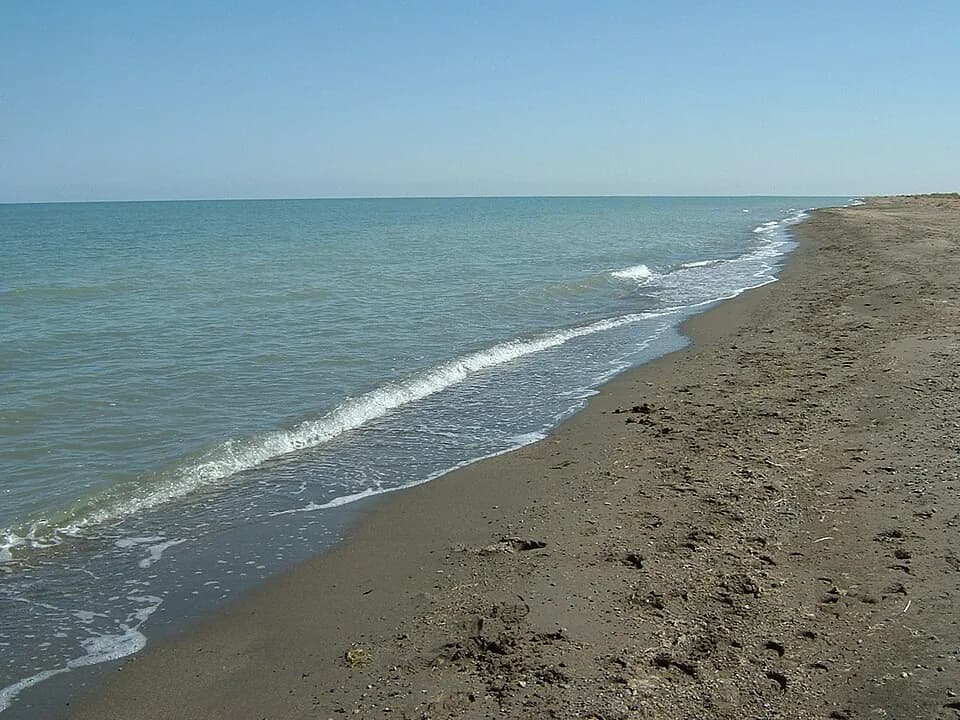
Mongolia's largest lake, a UNESCO biosphere reserve.
Uvs Nuur is Mongolia's largest lake by area, about 3,350 km² of shallow, salty water at 759 m in the north-west of the country, about 30 km from the provincial centre of Ulaangom. The lake is roughly 84 km long and 79 km wide, but only about 6 m deep on average. It is the homeland of the Dörvöd and Bayad, two Oirat Mongol groups.
A protected basin
Uvs Nuur sits at the bottom of a closed basin of about 70,000 km² that straddles the border with Russia's Tuva Republic. The Tes river and smaller streams from the surrounding ranges flow in, but nothing flows out, so evaporation has made the lake saline, about half as salty as the sea. The basin is a UNESCO biosphere reserve and, since 2003, a World Heritage Site shared with Russia; the lake and its wetlands have been a Ramsar site since 2004. In a small area it brings together glaciers, alpine tundra, mountain taiga, steppe, semi-desert and sand dunes, including Böörög Deliin Els, one of the northernmost dune fields in the world. Snow leopard, argali and ibex live in the mountains, waterbirds gather on the shores, and the basin is home to demoiselle cranes and Mongolian larks.
Visiting the lake
Most visitors come for birdwatching and a swim in the warm, salty shallows in midsummer, then head into the Kharkhiraa mountains or the dunes. Two or three days is enough for the lake and dunes; add several more for a mountain trek. Birdwatching is best during the spring and autumn migrations.
Weather and care
The lake freezes from about October to May, and winters here are among the coldest in Mongolia. Keep vehicles on existing tracks, stay back from nesting birds, and camp away from the water's edge to avoid disturbing them.
Photo: Original uploader was Jan Sysel at cs.wikipedia · GFDL · Wikimedia Commons
Things to do at Uvs Lake
4 activities · best season: Summer, Autumn
Birdwatching · Half day
Go birdwatching
The lake and its marshes, part of the UNESCO-listed Uvs Nuur Basin, draw large numbers of water birds in spring and autumn.
Swimming · 1–2 h
Swim in a salt lake
Uvs is a shallow salt lake that warms up in midsummer.
Dunes · Half day
Explore the Böörög Deliin Els dunes
A long strip of sand dunes runs south-east of the lake, one of the northernmost dune fields in the world.
Hiking · 2–5 days
Hike in the Kharkhiraa mountains
The snow-capped range west of Ulaangom has multi-day treks through valleys used by herders in summer.
Read the guide →
When to go & how to get there
Weather by month
Getting there
Fly from Ulaanbaatar to Ulaangom, the capital of Uvs province, or take the bus (well over a day). From Ulaangom, the south-west shore is about an hour by car.
Where to stay
Ulaangom has hotels and guesthouses. Around the lake there are few facilities, so most visitors camp or stay with herders.
Gallery
2 photos · tap to enlarge · sources credited on each photo
Where is Uvs Lake?
from Ulaanbaatar from Ulaangom · a dotted end marks a stretch with no road
Uvs province · nearest town: Ulaangom
Guides that mention Uvs Lake
- Mongolian GeographyMongolian geography explained: the Altai, Khangai and Khentii ranges, Lake Khövsgöl, rivers, steppe, the Gobi Desert, the extreme climate and travel tips.
- Mongolia Weather & ClimateMongolia weather and climate by season and region: temperatures, rain and wind in Ulaanbaatar, the Gobi, the north, the Altai and the eastern steppe.
- Mongolia Travel MapMongolia travel map explained: the Gobi, Central Khangai, Khövsgöl in the north, the western Altai and the eastern steppe, with classic routes from Ulaanbaatar.
- Golden Eagle FestivalThe Golden Eagle Festival is held in early October in Bayan-Ölgii. Meet Kazakh eagle hunters, see the contests and learn how to get there and what to pack.
Western Mongolia
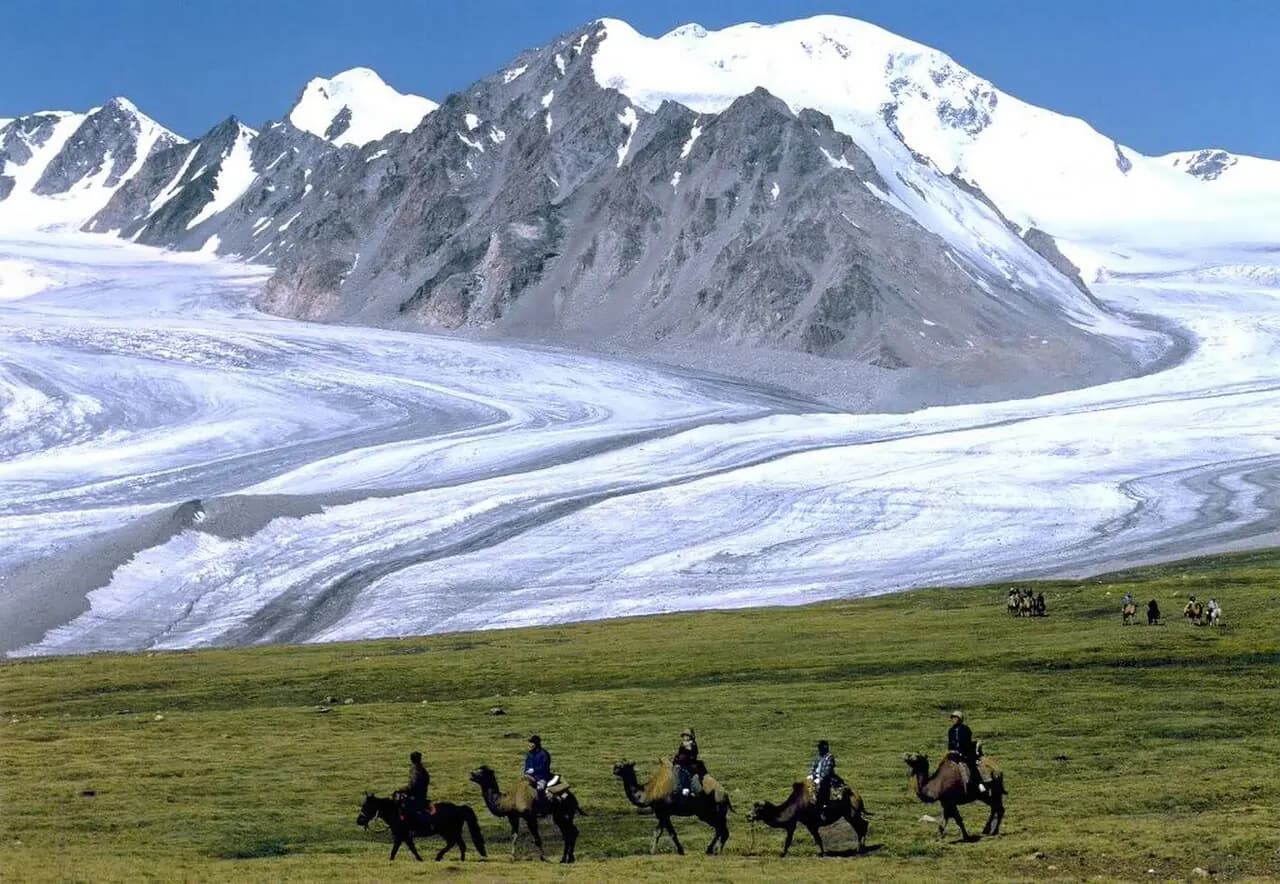
Altai Tavan Bogd
Mongolia's highest peak Khüiten (4,374 m) and the Potanin glacier.
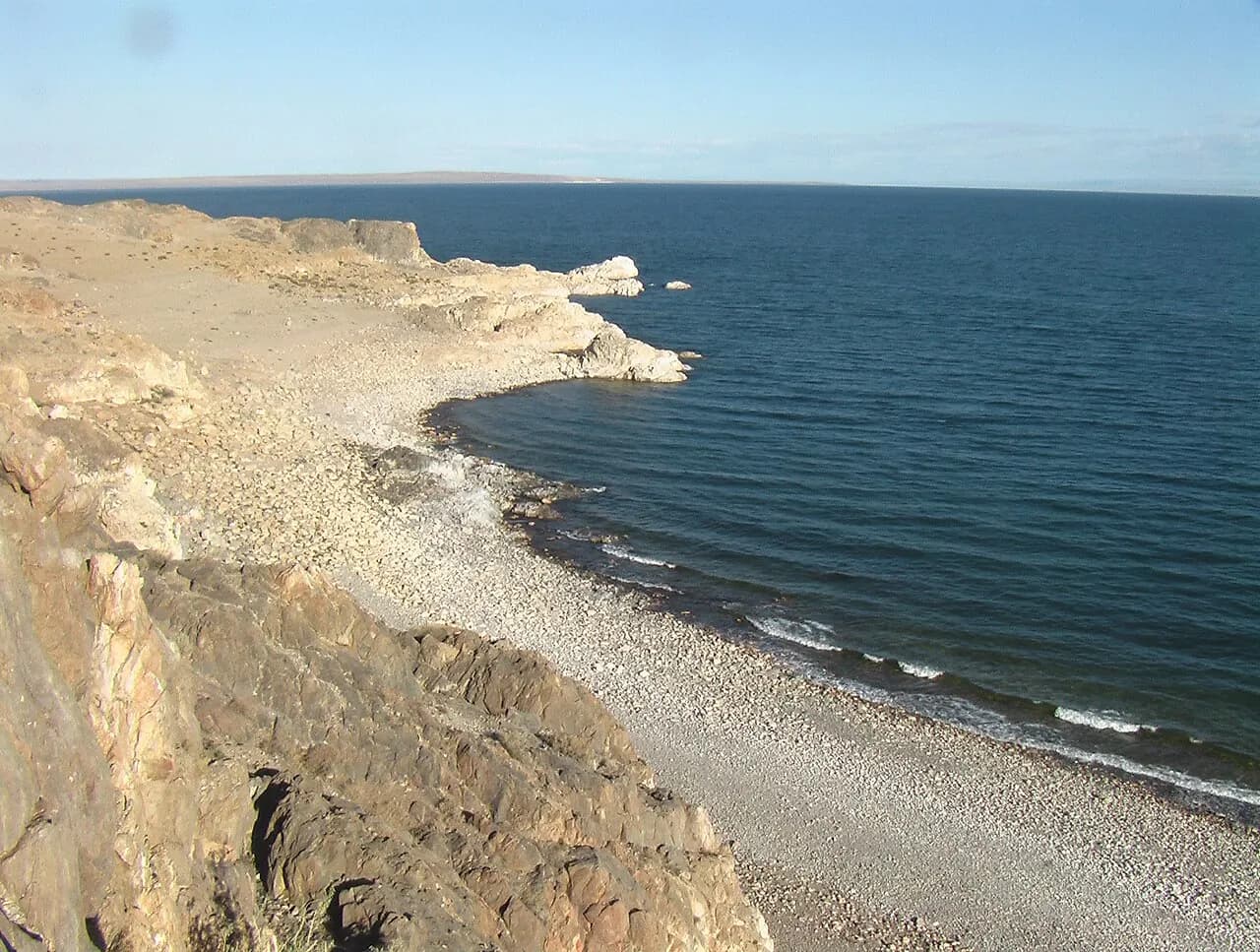
Khyargas Lake & Khetsüü Khad
A sea-like lake in the desert, with a cliff colony of cormorants.
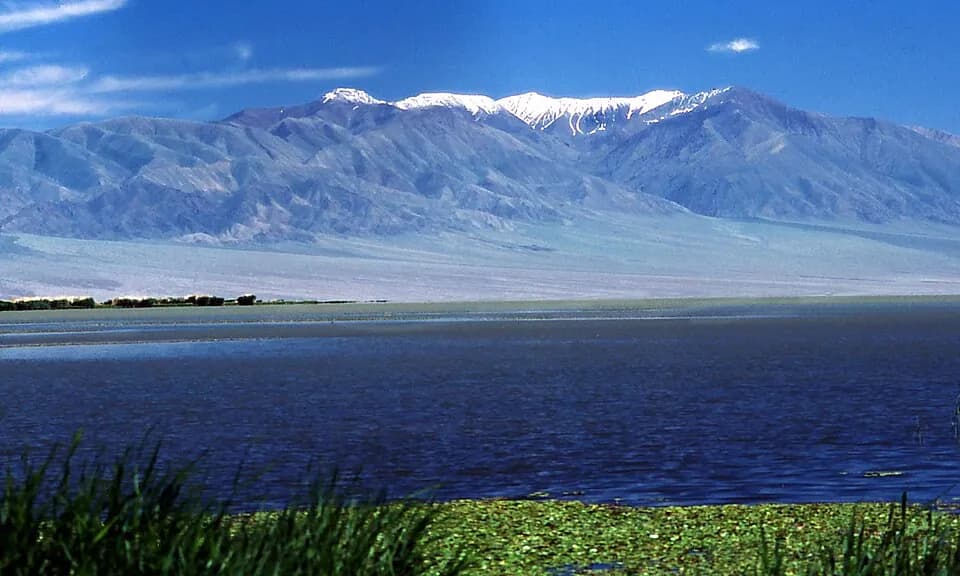
Khar Us Nuur National Park
A vast, shallow freshwater lake and reed-fringed delta east of Khovd, protected for its migratory birds.