
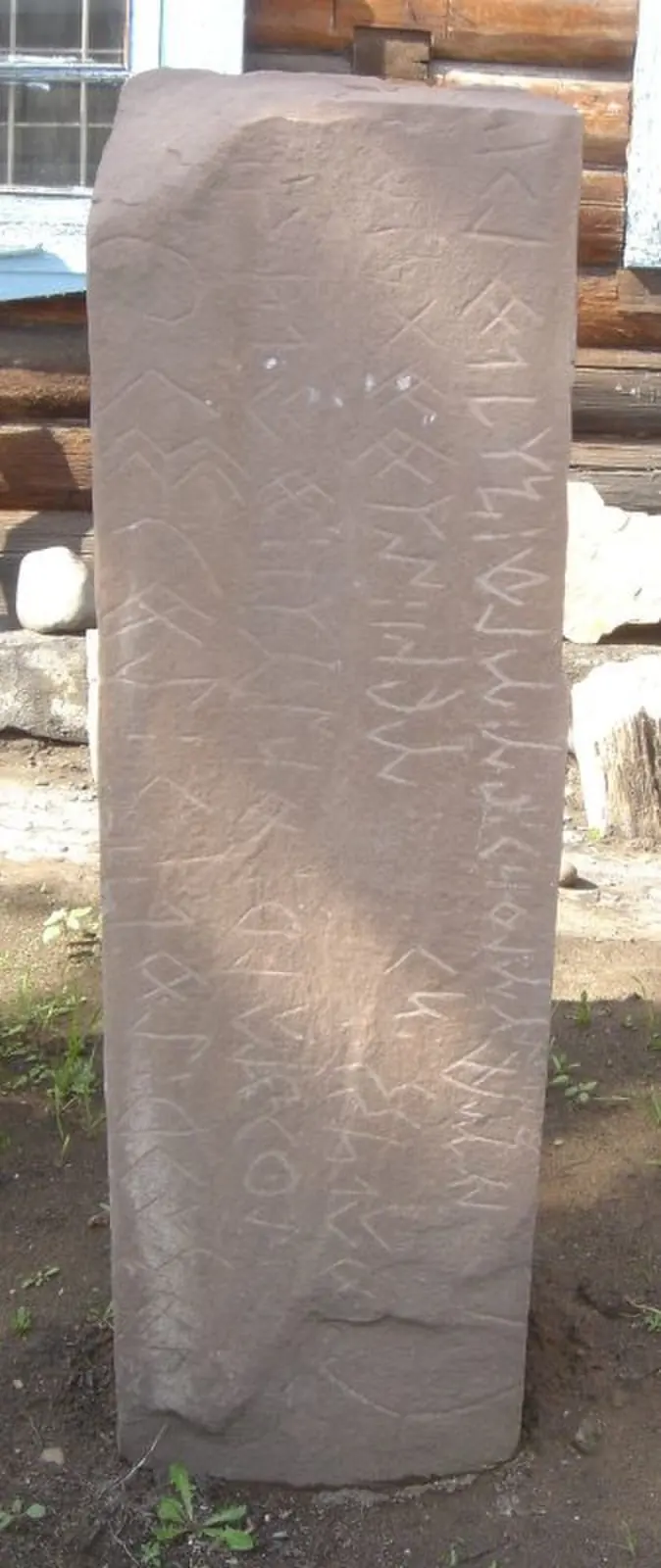
A Brief History of Mongolia
A brief history of Mongolia from the Xiongnu of 209 BC through Chinggis Khaan, Qing rule, 1911 independence and socialism to the 1990 democratic revolution.
History of the Mongolian state · 209 BC – 2026
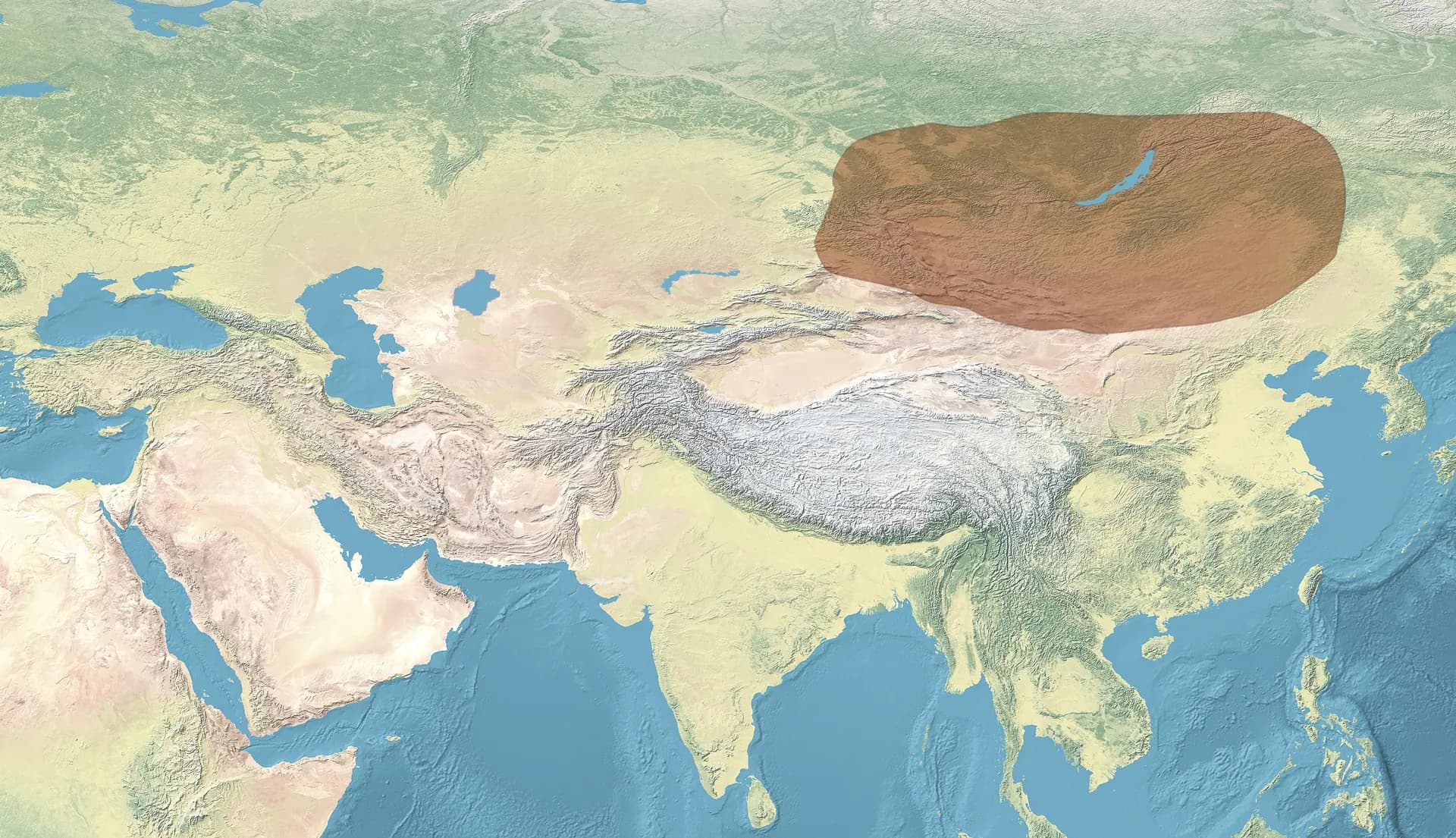
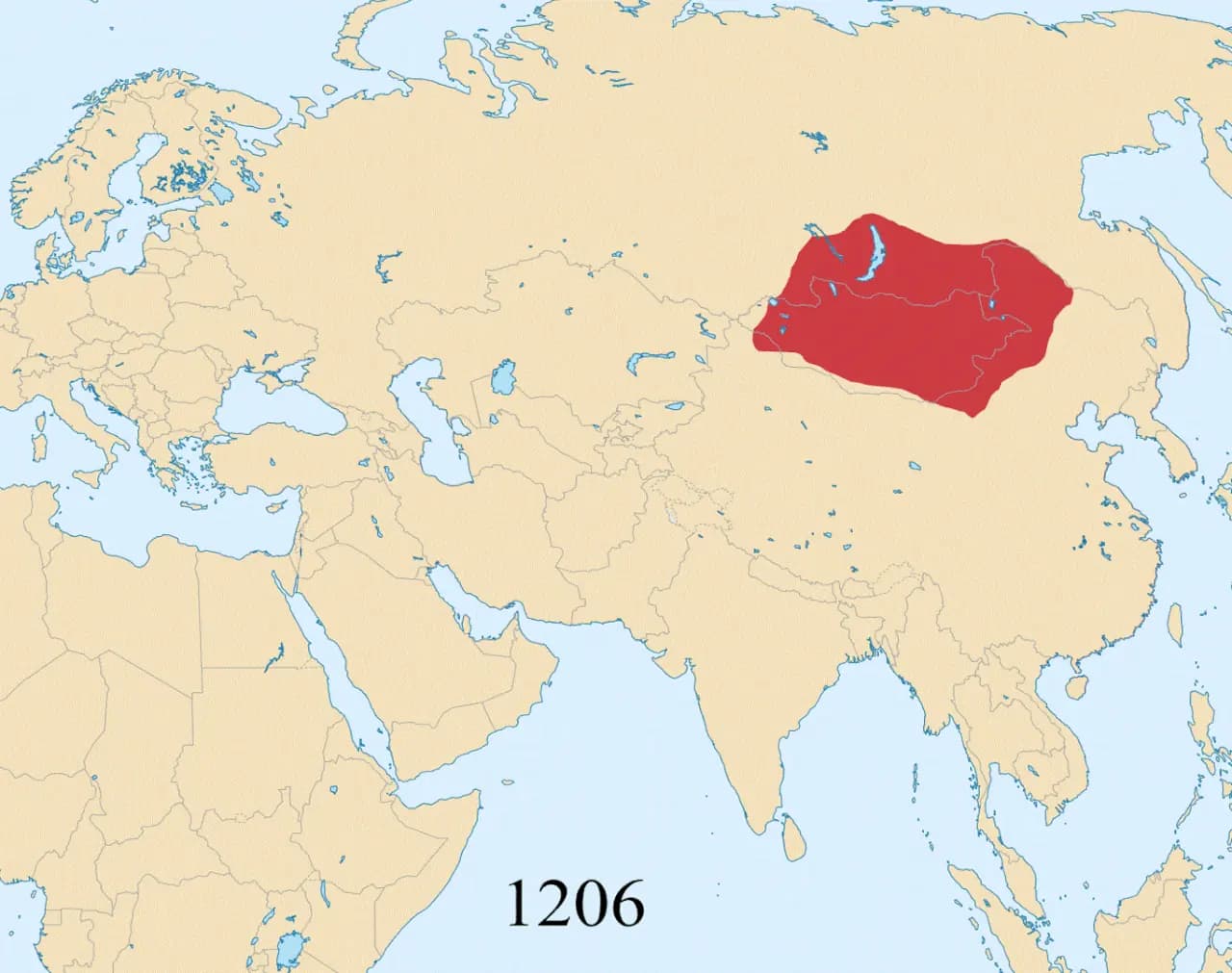
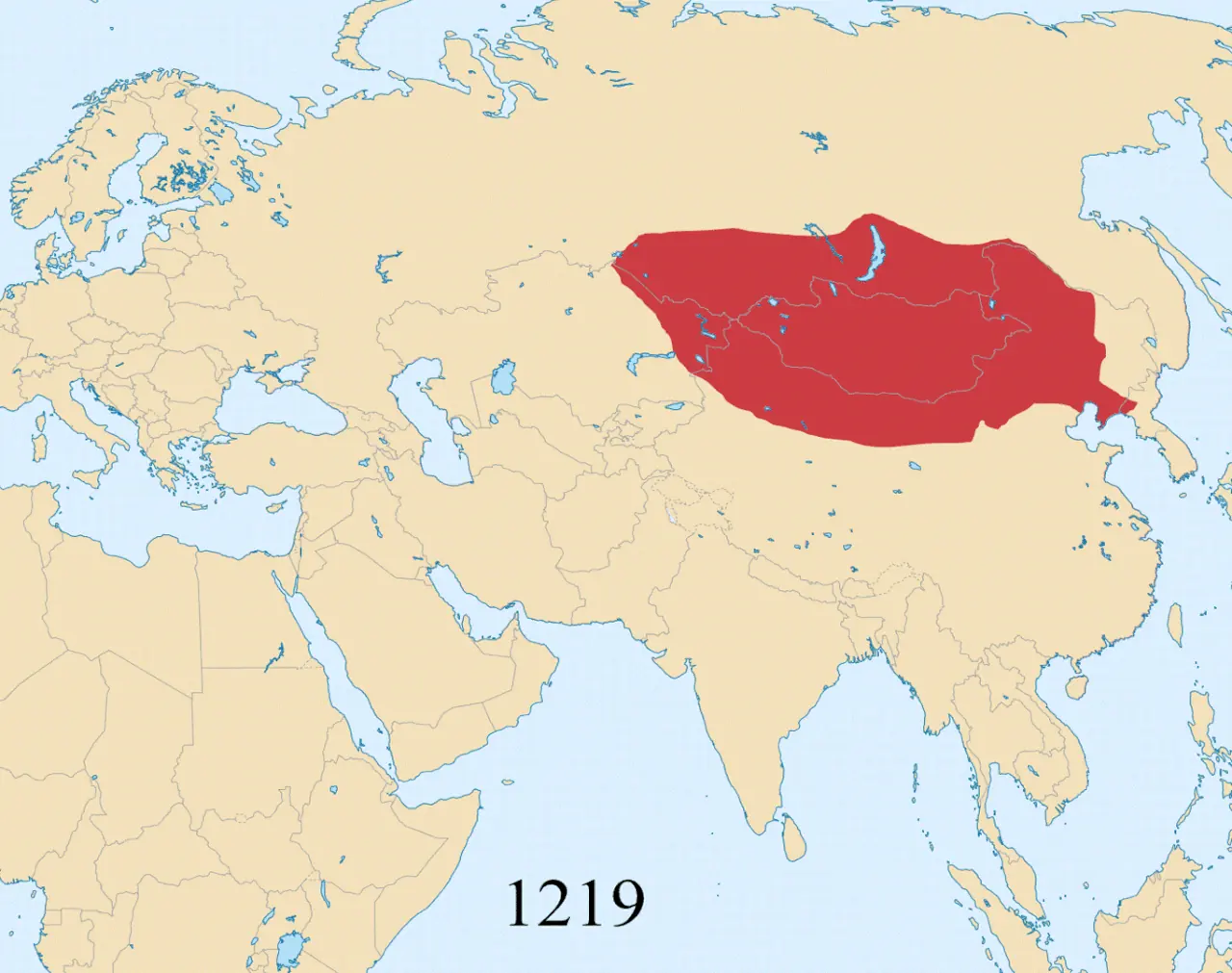
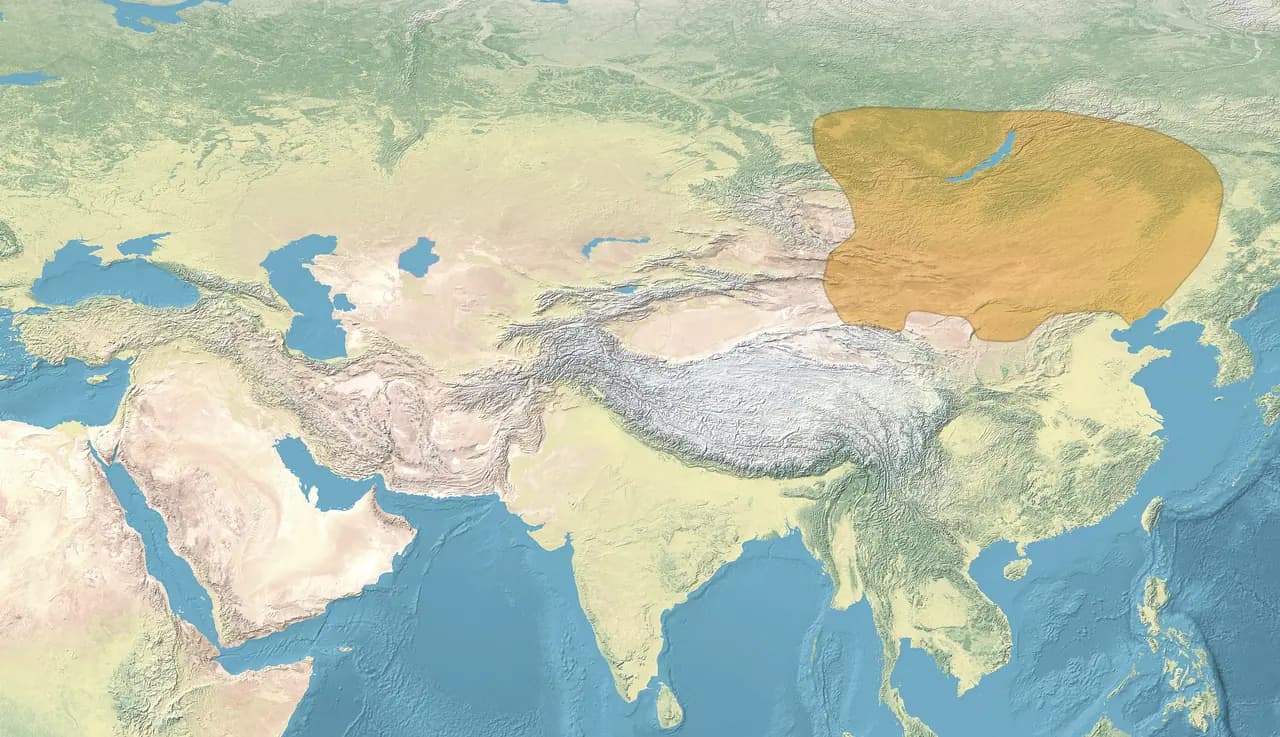
From the gold crown of the Xiongnu to today’s Government Palace. As you scroll, the map behind the text shifts to each era’s territory and its rulers appear beside it.
Chapter I
On the Mongolian steppe, the idea of the state was born fourteen hundred years before Chinggis Khaan.
209 BC – 12th century AD
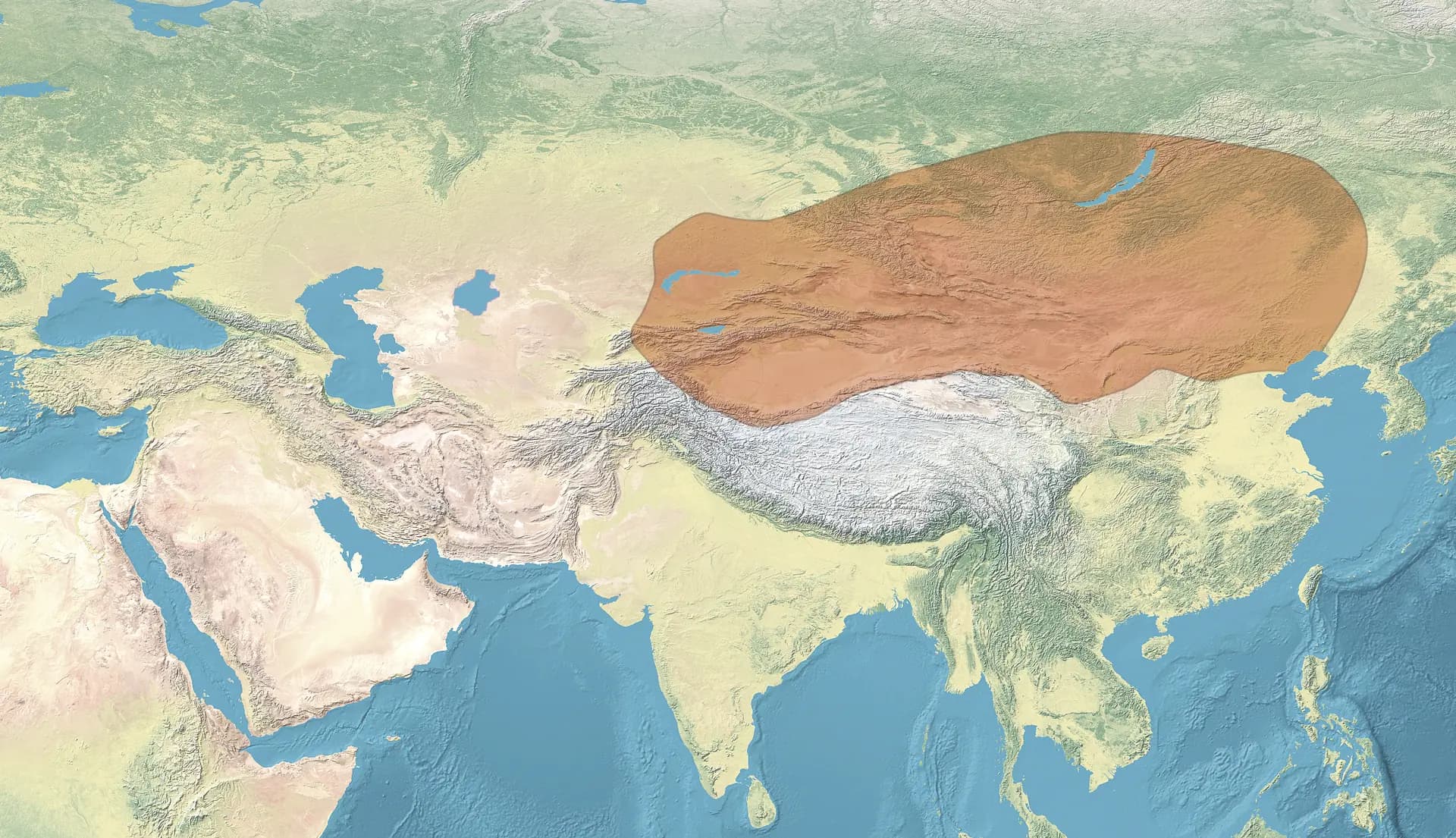
209 BC – AD 93
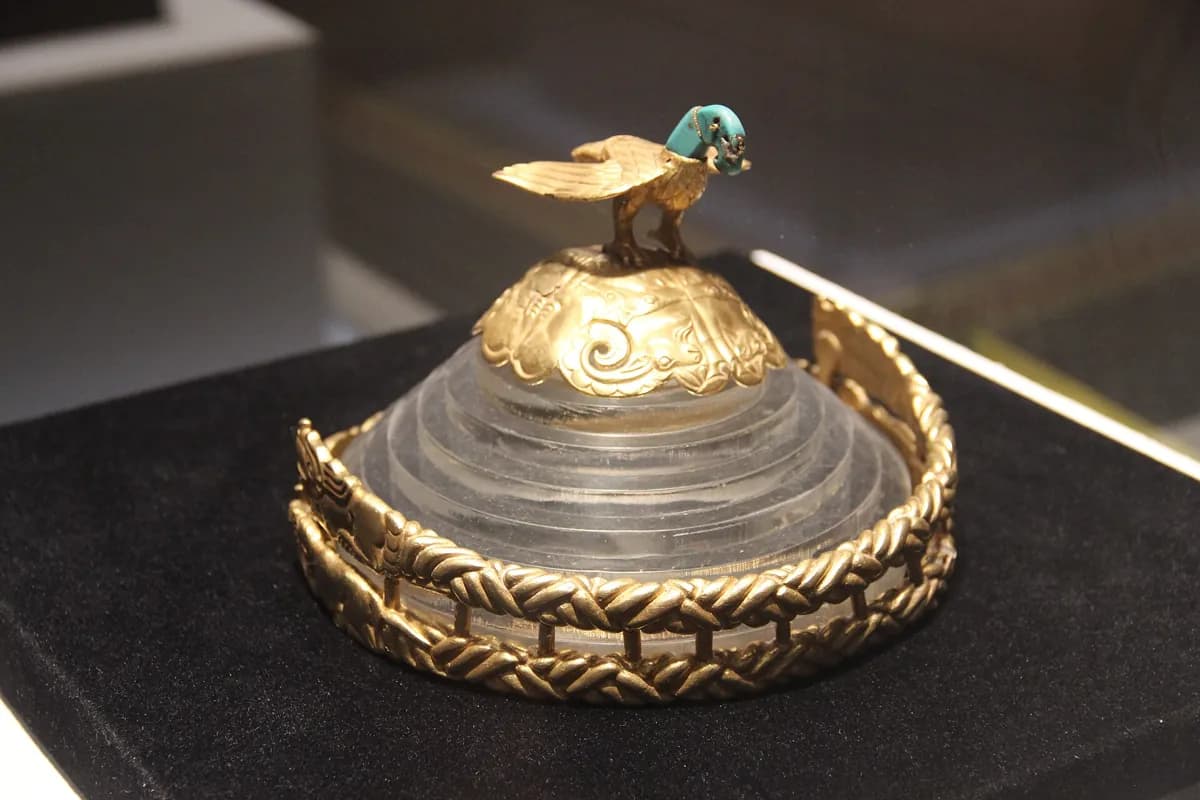
In 209 BC Modu Chanyu united the nomadic tribes and founded the first state in Central Asia. He laid the foundations of the decimal system, the state seal and the principle that land is the foundation of the state, and concluded treaties with China's Han dynasty as an equal.
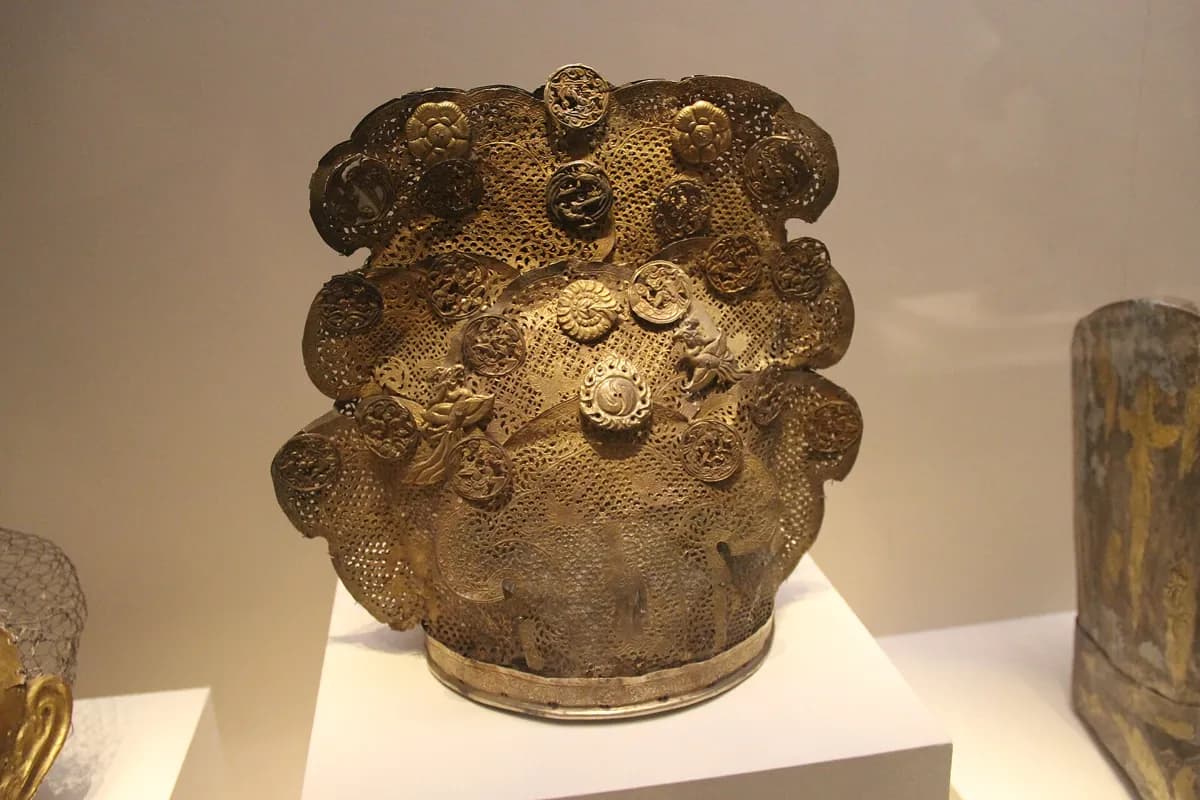
Xiongnu gold crown, found in the Ordos region, 3rd century BC.
209 – 174 BC
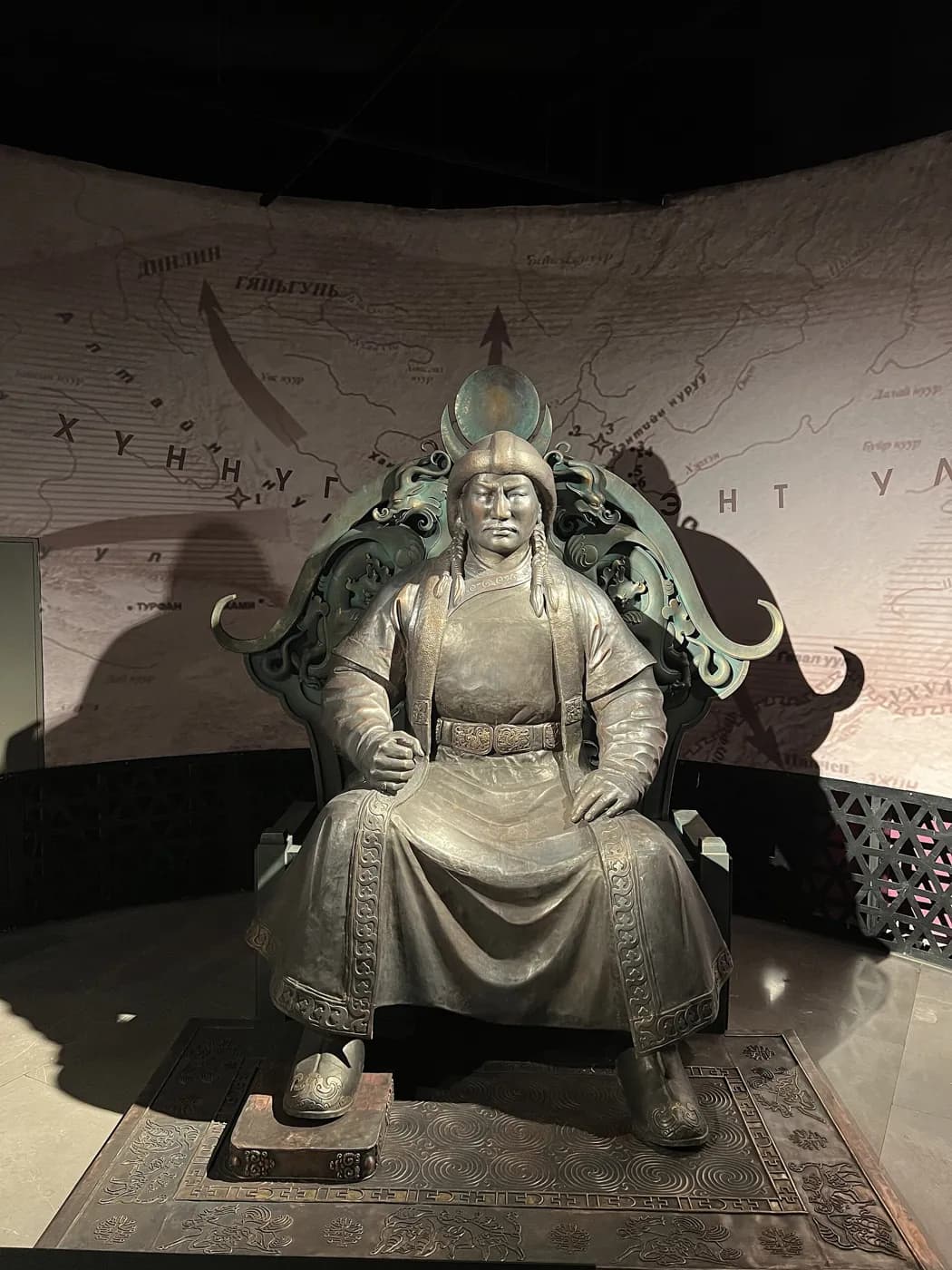
“Land is the foundation of the state — how could we give it away?” Modu Chanyu replied to the Donghu. Those words carry the core principle of Mongolian statehood for the next two thousand years.
Statue of Modu Chanyu.
1st–6th centuries
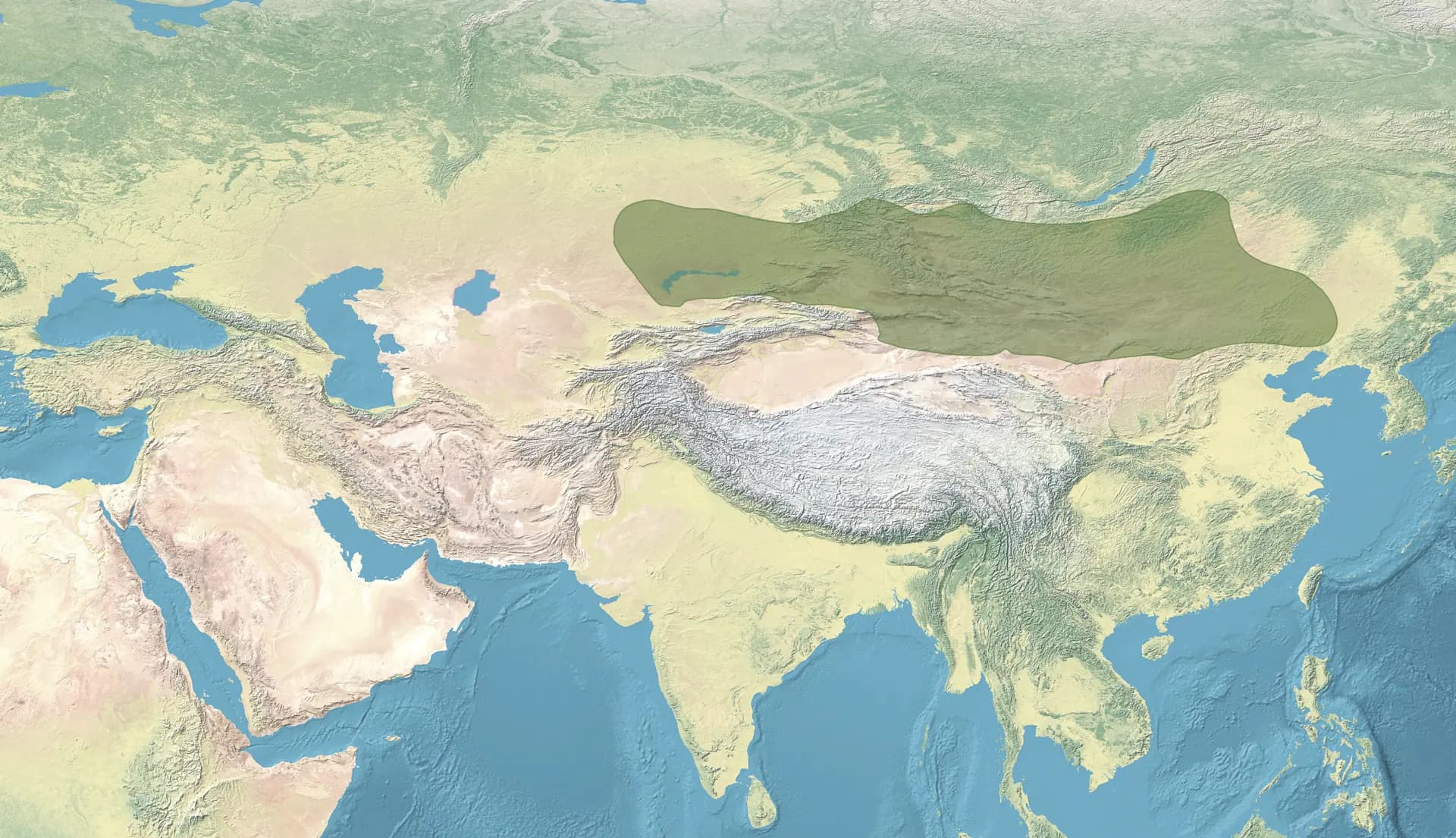
The Xianbei grew powerful under Tanshihuai, and later the Rouran Khaganate (330–555) of the Yujiulü clan was founded. From this time dates the tradition of titling the head of state “Khagan”.
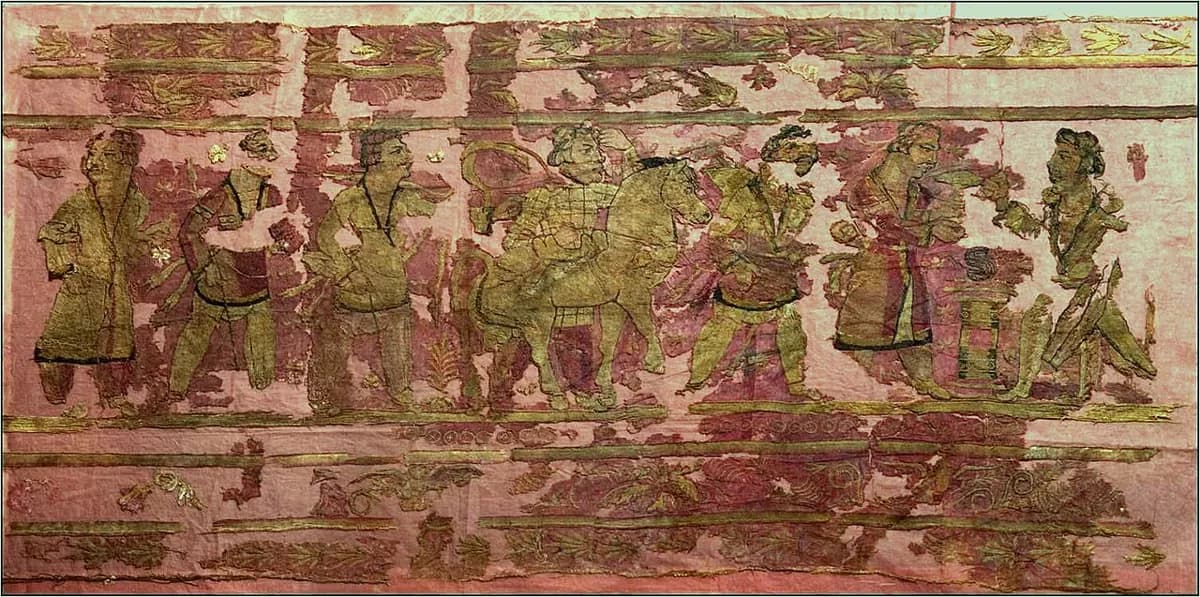
Xiongnu carpet from the Noin-Ula tombs — the continuity of steppe art.
6th–9th centuries
Centred on Mongolian lands, these states raised written culture (the Orkhon-Yenisei inscriptions) and urban life (Khar Balgas, Ordu-Baliq) to a high level in the Orkhon and Selenge valleys.
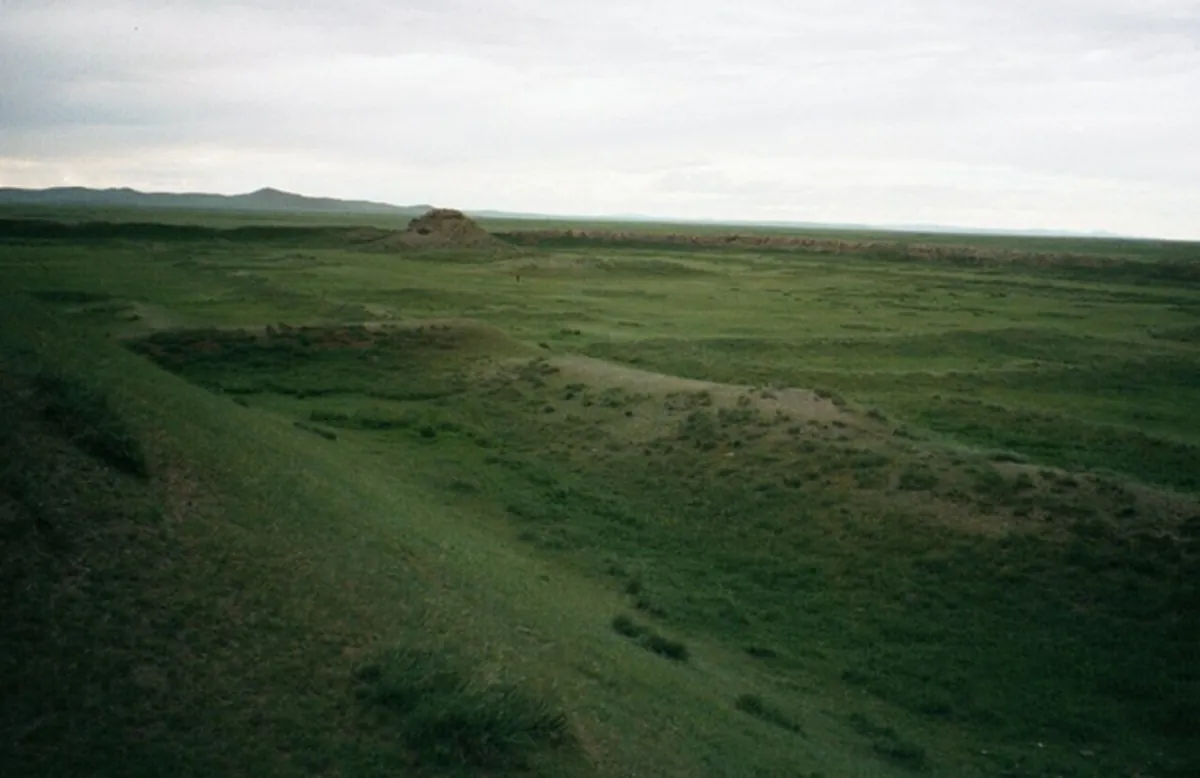
Khar Balgas (Ordu-Baliq) — ruins of the Uyghur Khaganate's capital, Orkhon Valley.
744 – 840
The Uyghurs built the city of Ordu-Baliq in the Orkhon Valley and brought Silk Road trade, writing and religious pluralism to the steppe.
The ruined walls of Ordu-Baliq today.
10th–12th centuries
The Mongolic Khitans founded the Liao dynasty, while in the 12th century Kabul Khan organised the Khamag Mongol state in the basins of the Kherlen, Onon and Tuul rivers — the direct forerunner of the Great Mongol State.
Silver crown of the Khitan Liao dynasty.
Chapter II
A single state proclaimed at the source of the Onon River grew, within ninety years, to stretch from the Pacific to the Danube.
1206 – 1368
1206
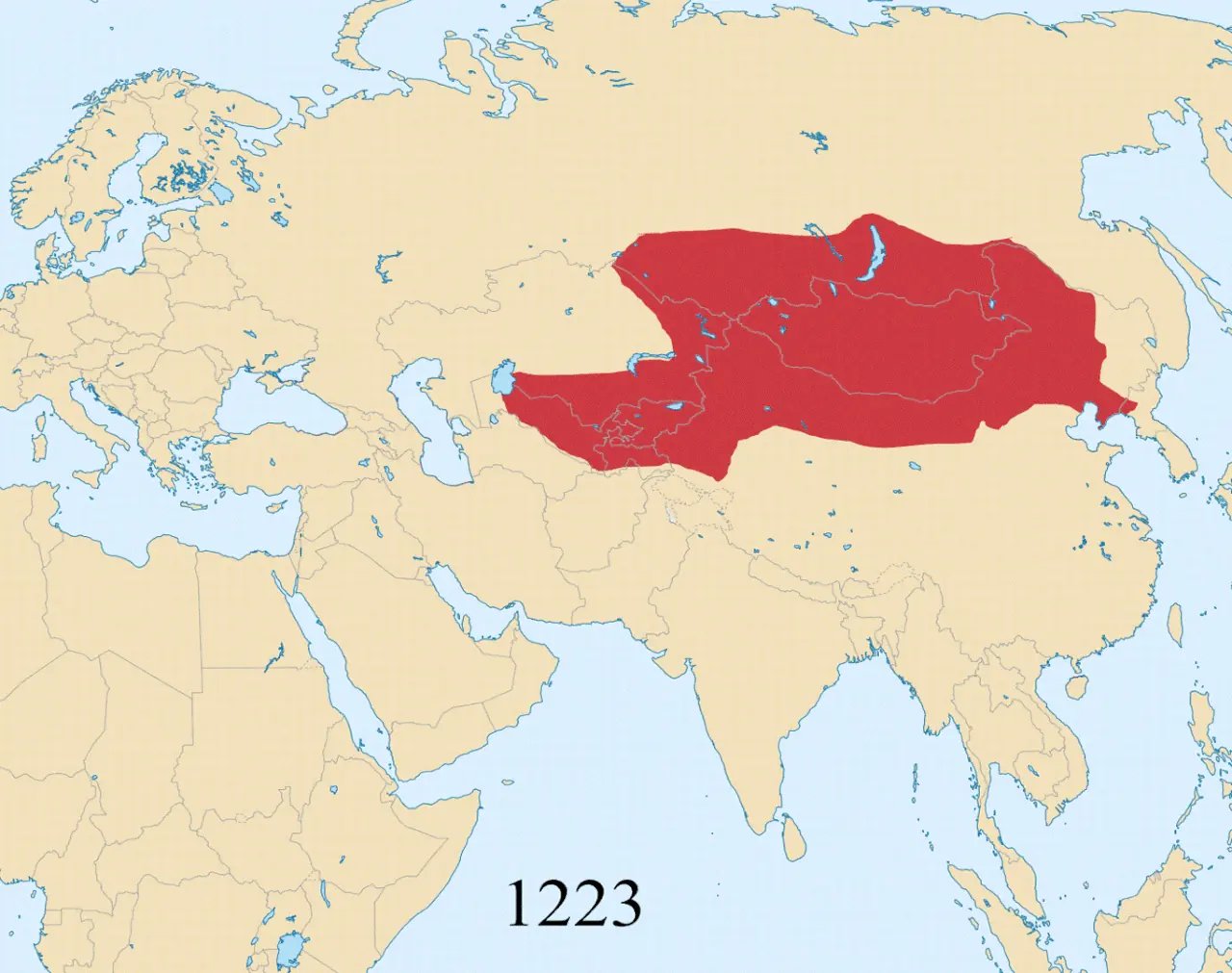
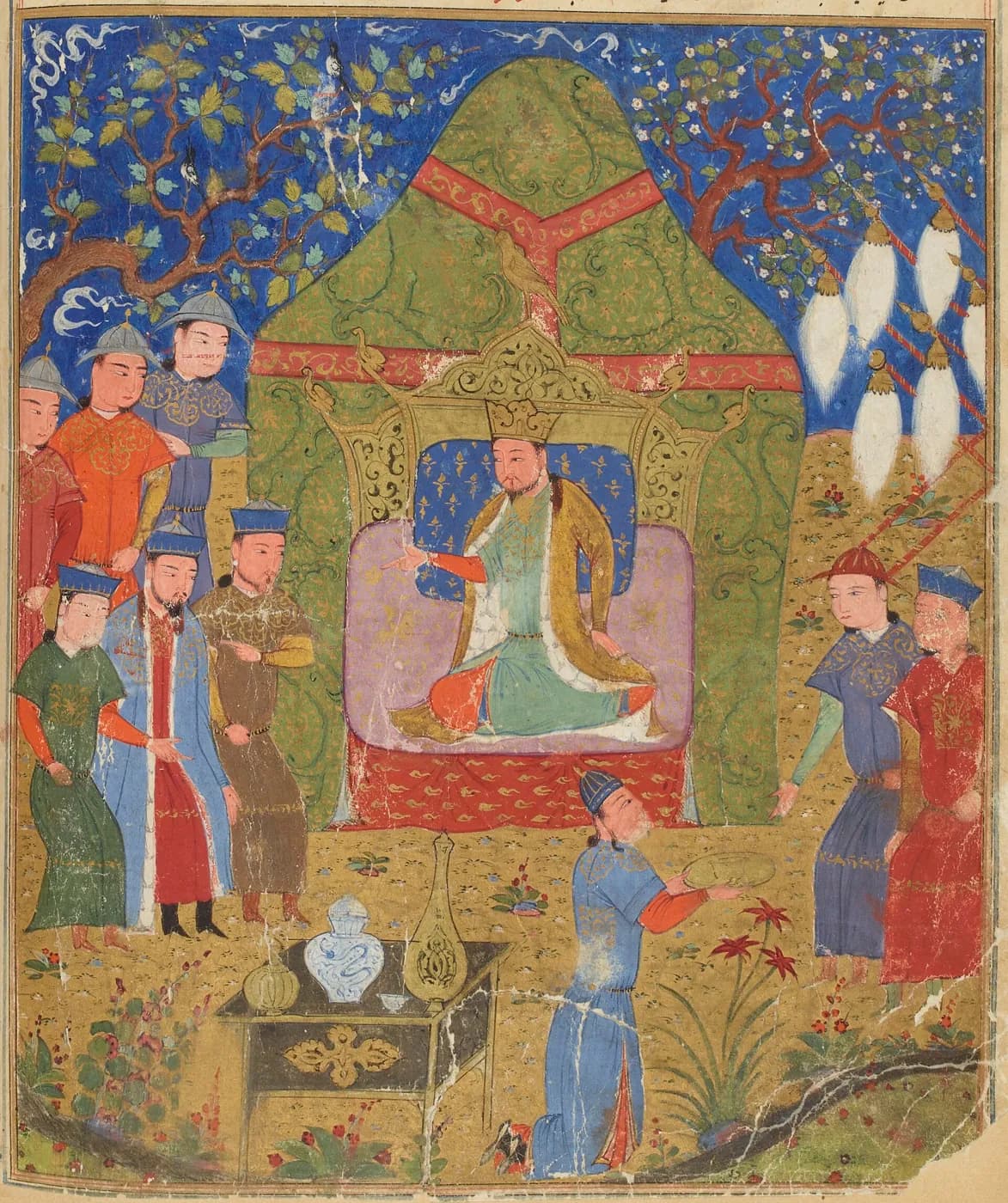
Temüjin united the nomadic tribes of the steppe, was proclaimed Chinggis Khaan at a kurultai at the source of the Onon River, and declared the Great Mongol State (Yeke Mongol Ulus).
The Great Kurultai of 1206. Rashid al-Din's Jami' al-tawarikh, Herat, 15th century.
1206 – 1227
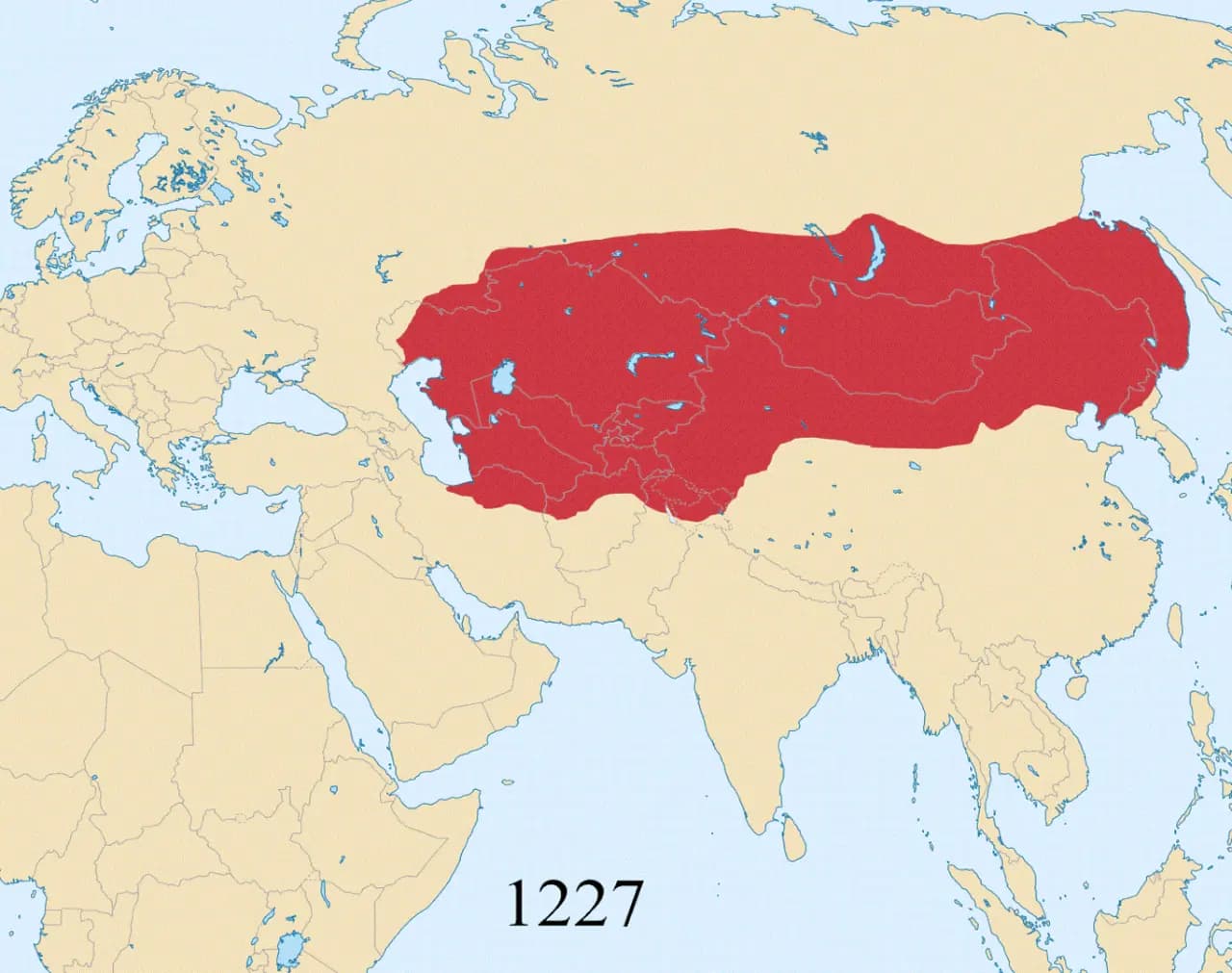
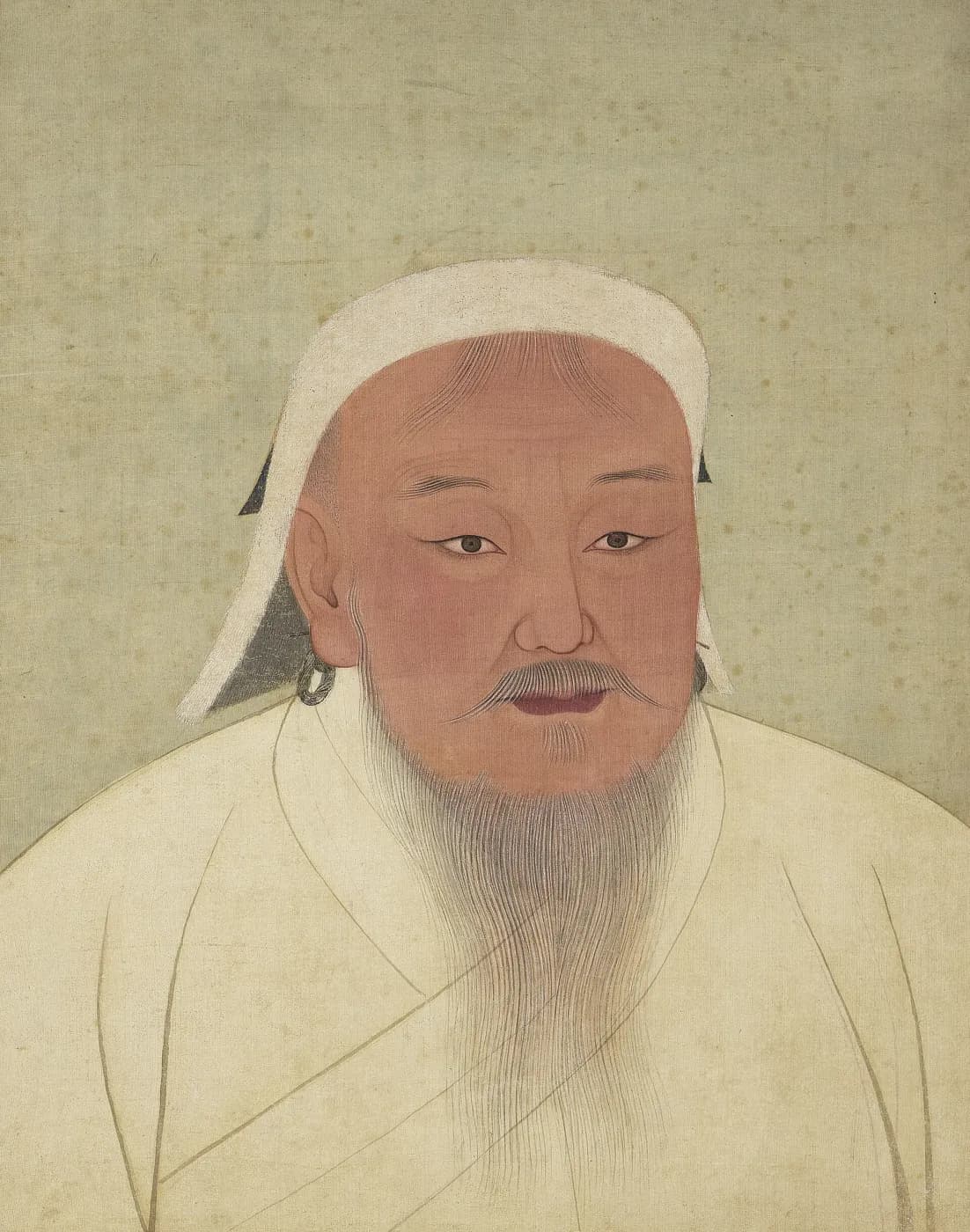
He enacted the Great Yasa, made the Uyghur-derived Mongolian script the script of state, and enshrined in law the Örtöö relay system and freedom of religion.
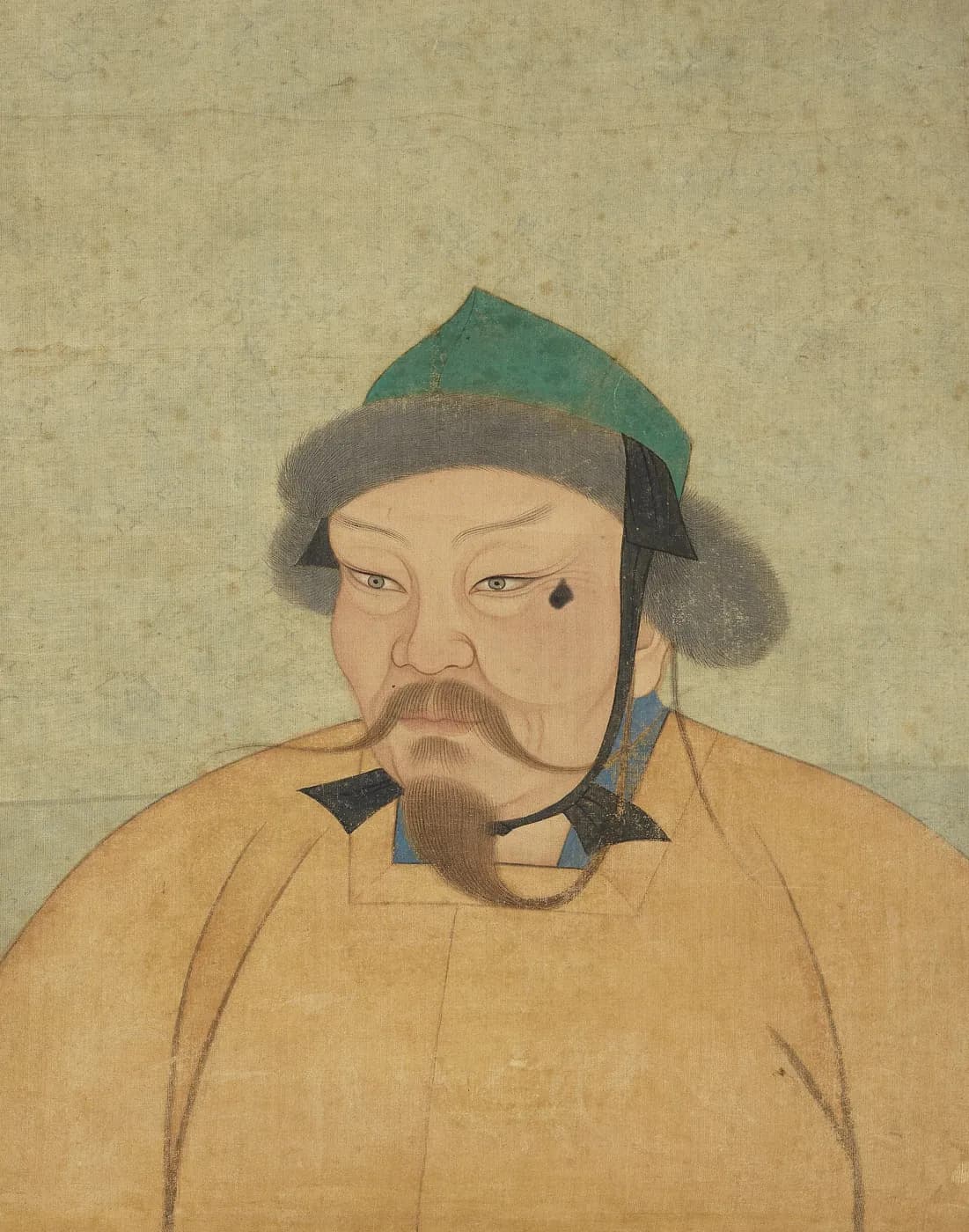
Chinggis Khaan. Yuan imperial portrait album, 14th century. National Palace Museum, Taipei.
1229 – 1259
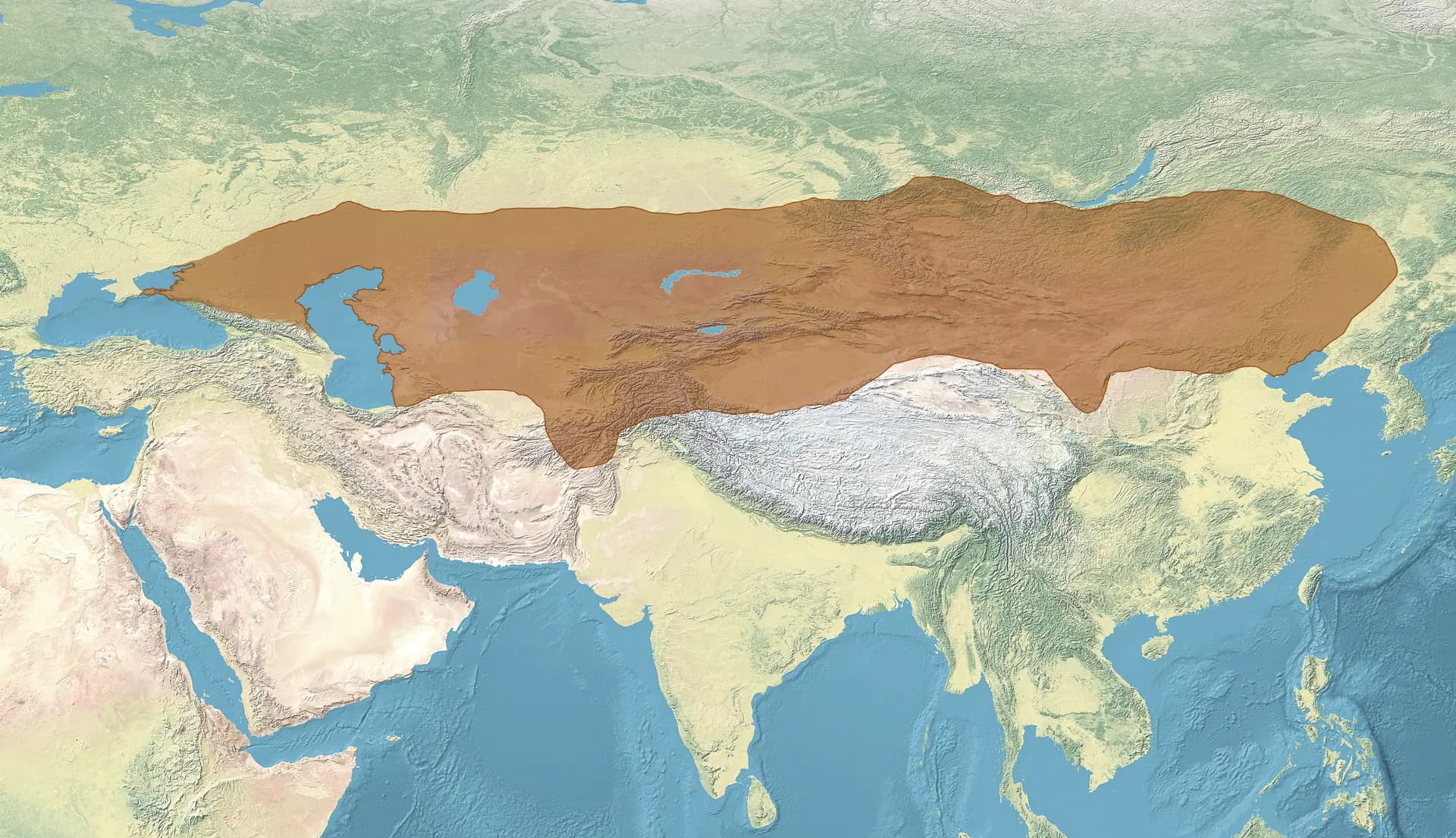
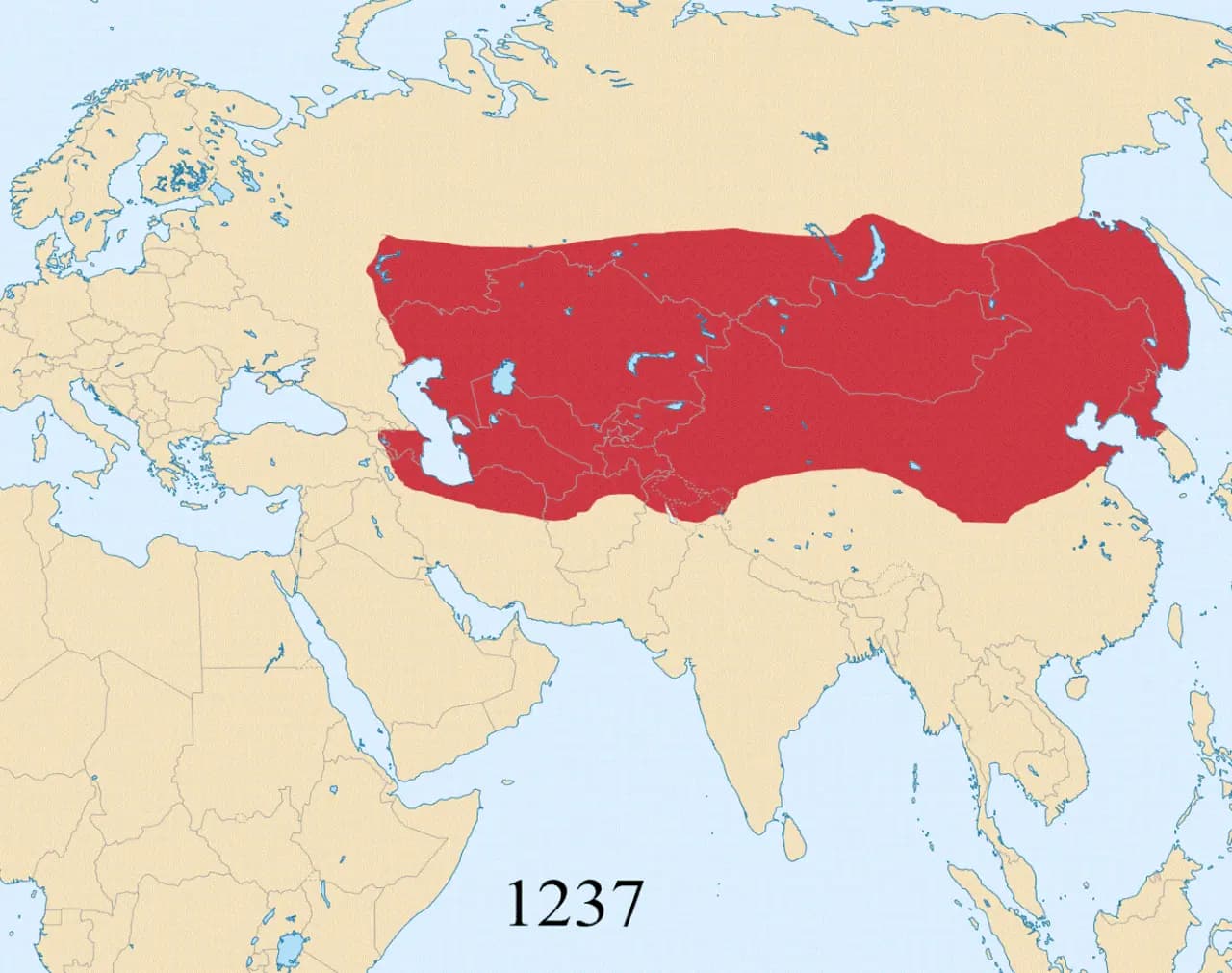
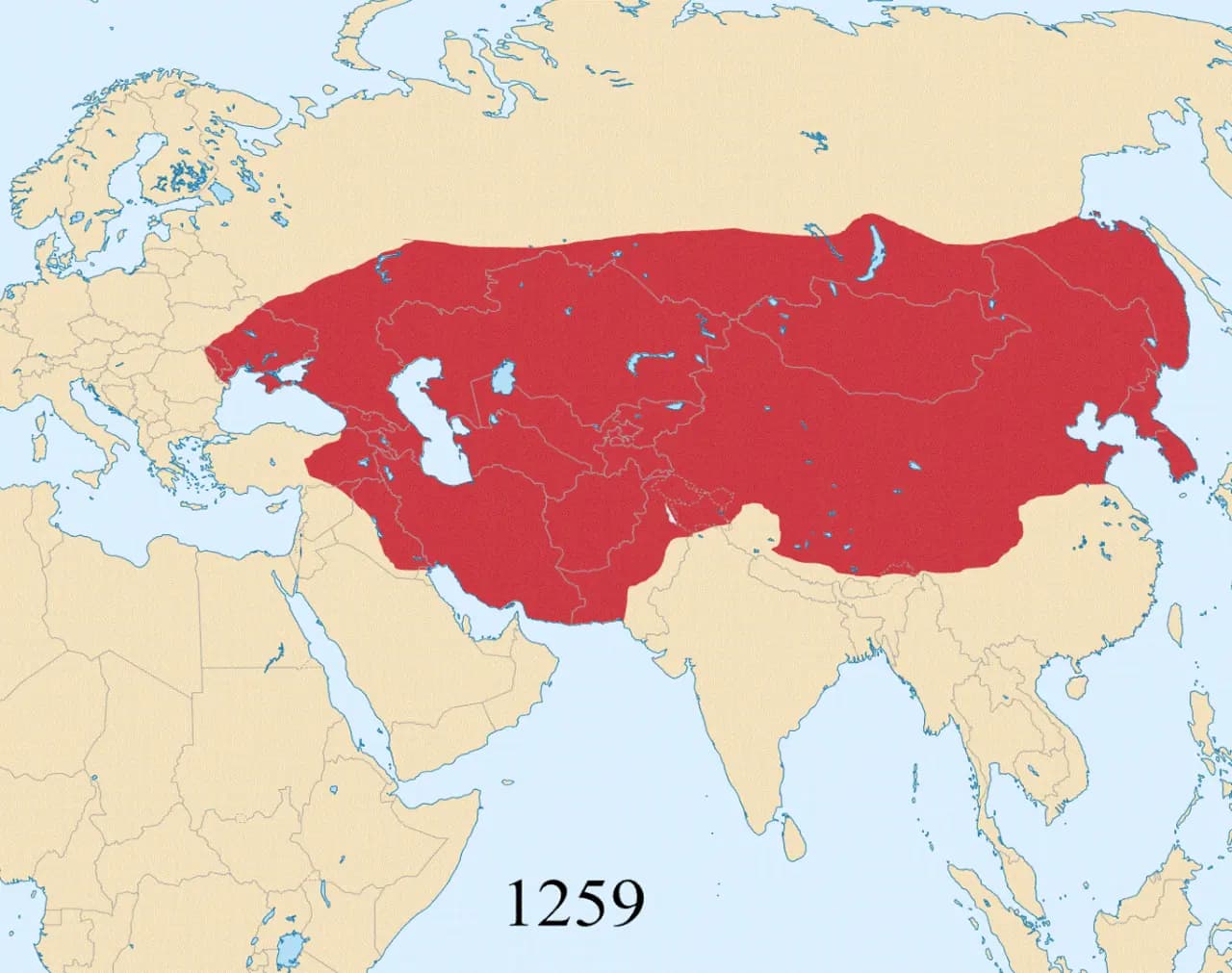
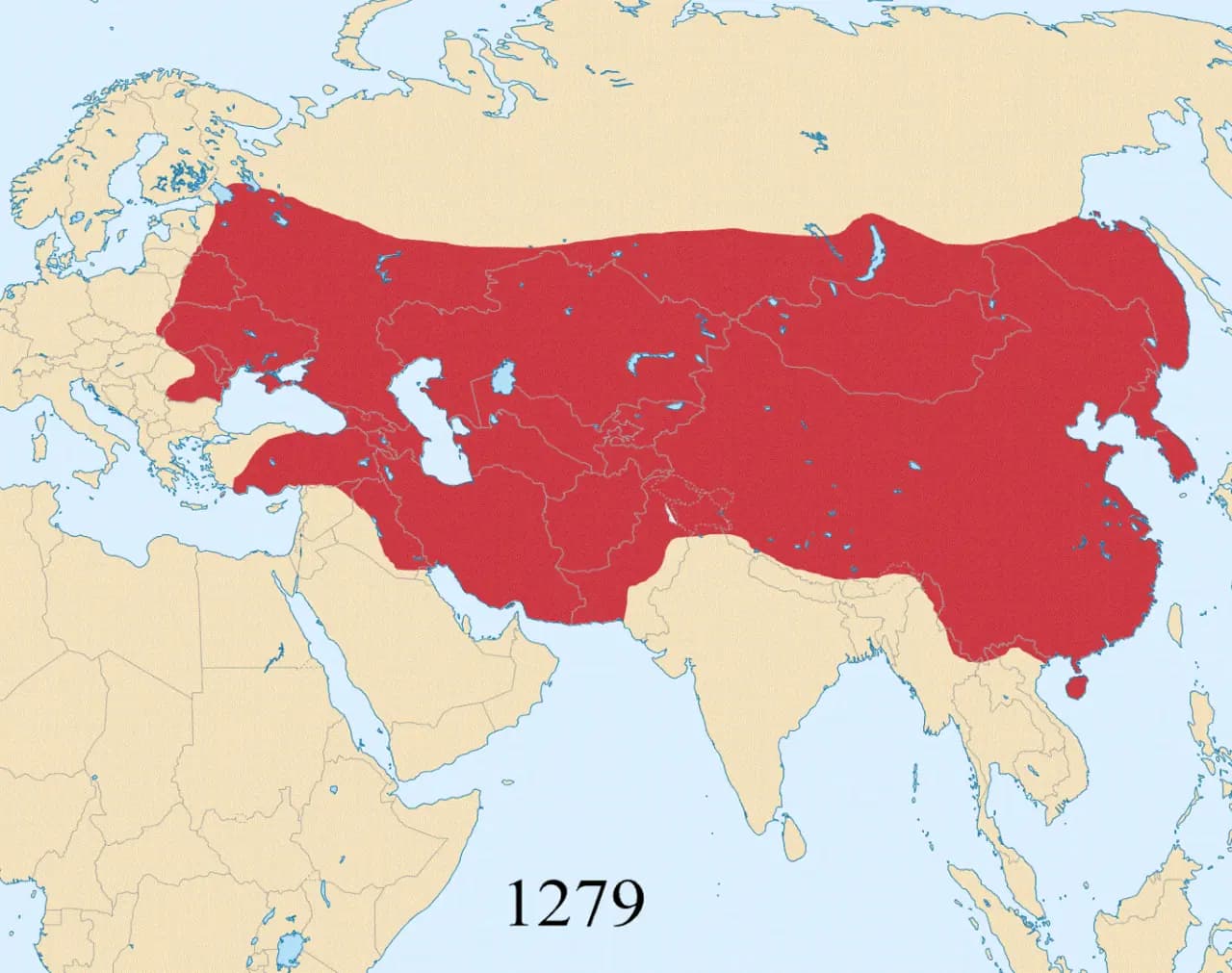
Under Chinggis Khaan and his successors Ögedei, Güyük and Möngke, the realm expanded from the Pacific to the Danube. By securing the Silk Road, it linked trade, culture and diplomacy between East and West as never before.
Ögedei Khan — founder of the capital, Karakorum. Yuan imperial portrait album.
1271 – 1368
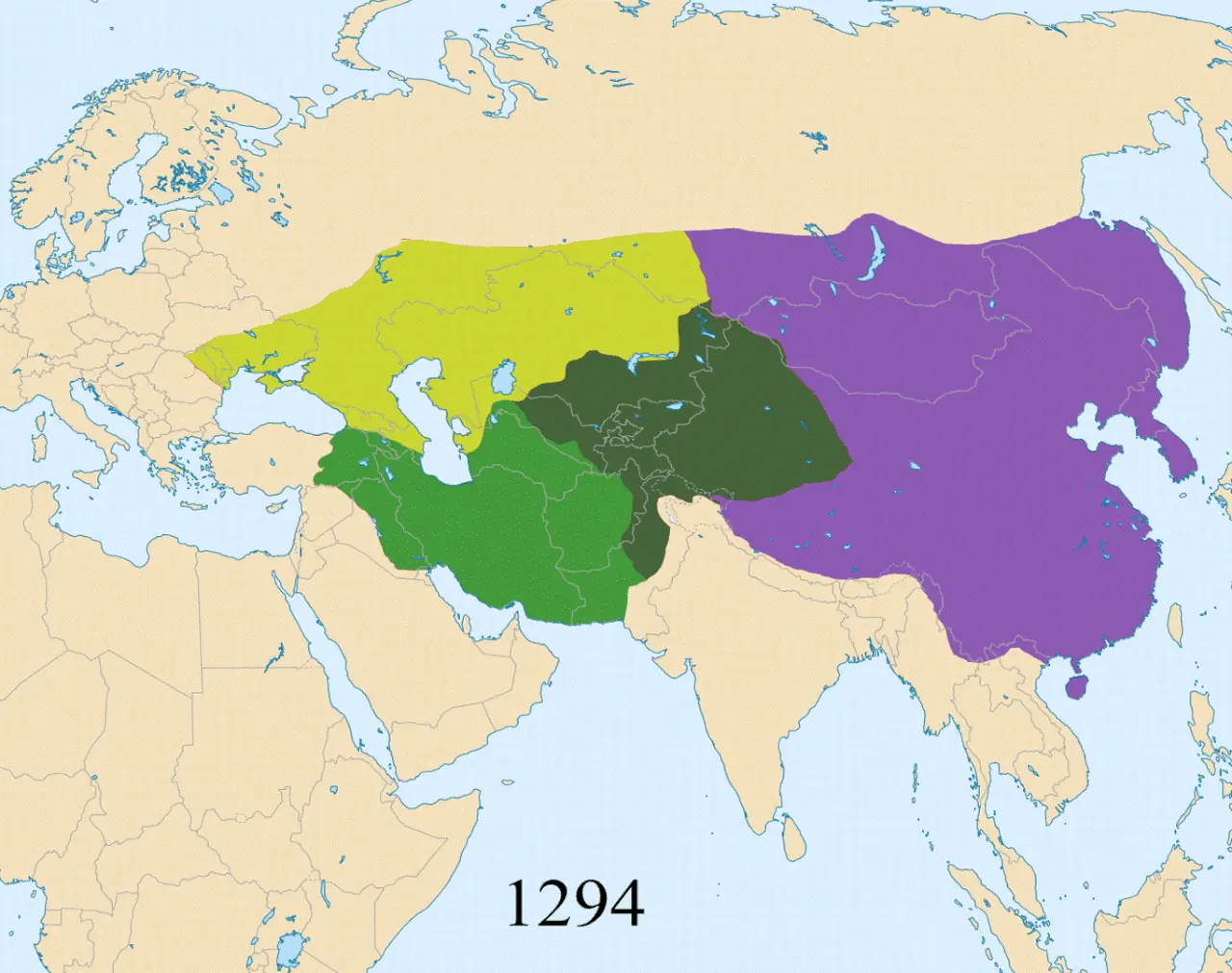
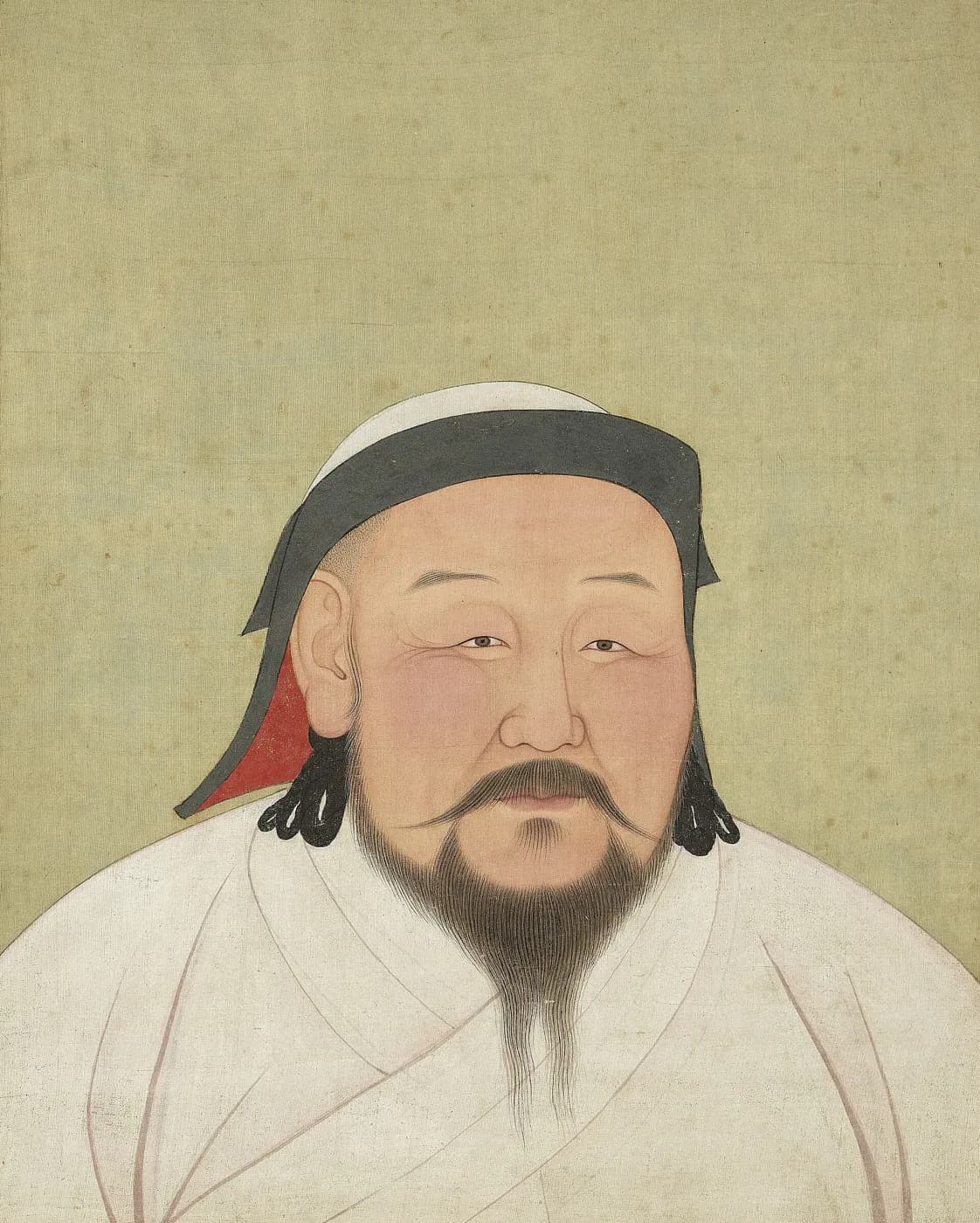
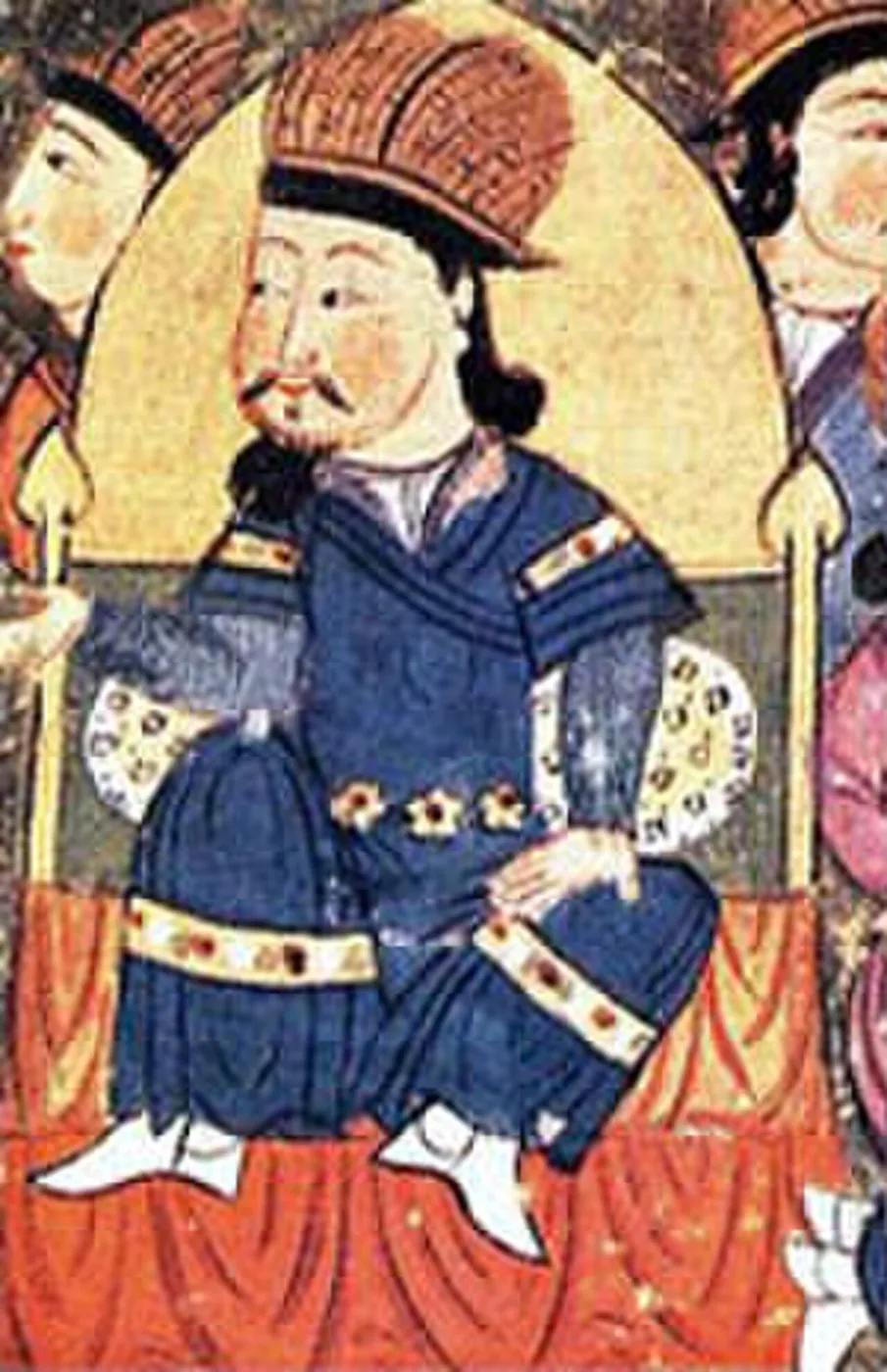
The empire came to exist as separate constituent realms: the Golden Horde, the Ilkhanate, the Chagatai Khanate and the Great Yuan dynasty (1271–1368) founded by Kublai Khan.
Kublai Khan. By Anige, 1294.
Chapter III
The empire fell apart, yet in the homeland its statehood, script and faith endured. Then came two centuries behind closed doors.
1368 – 1911
1368 – 17th century
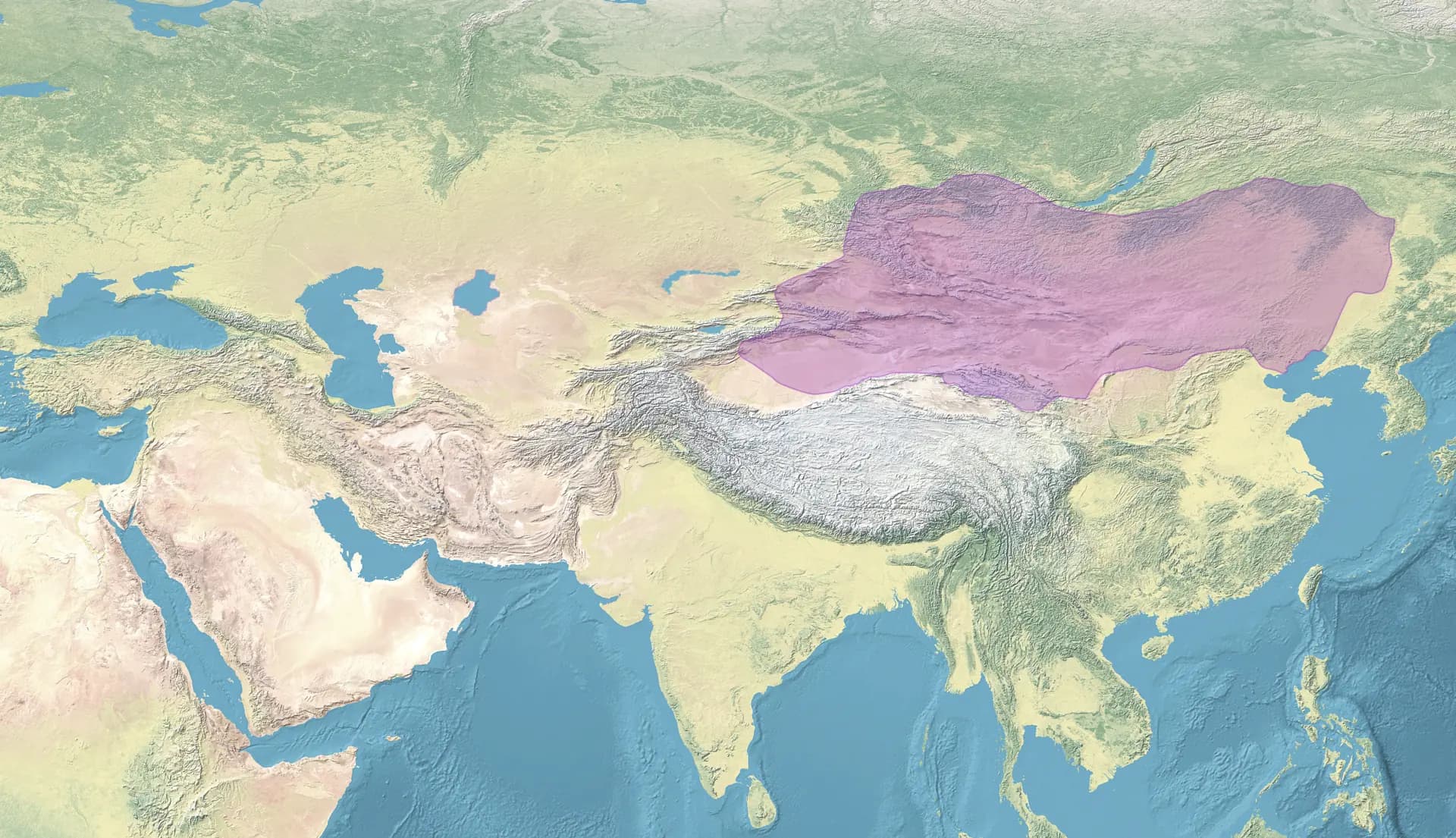
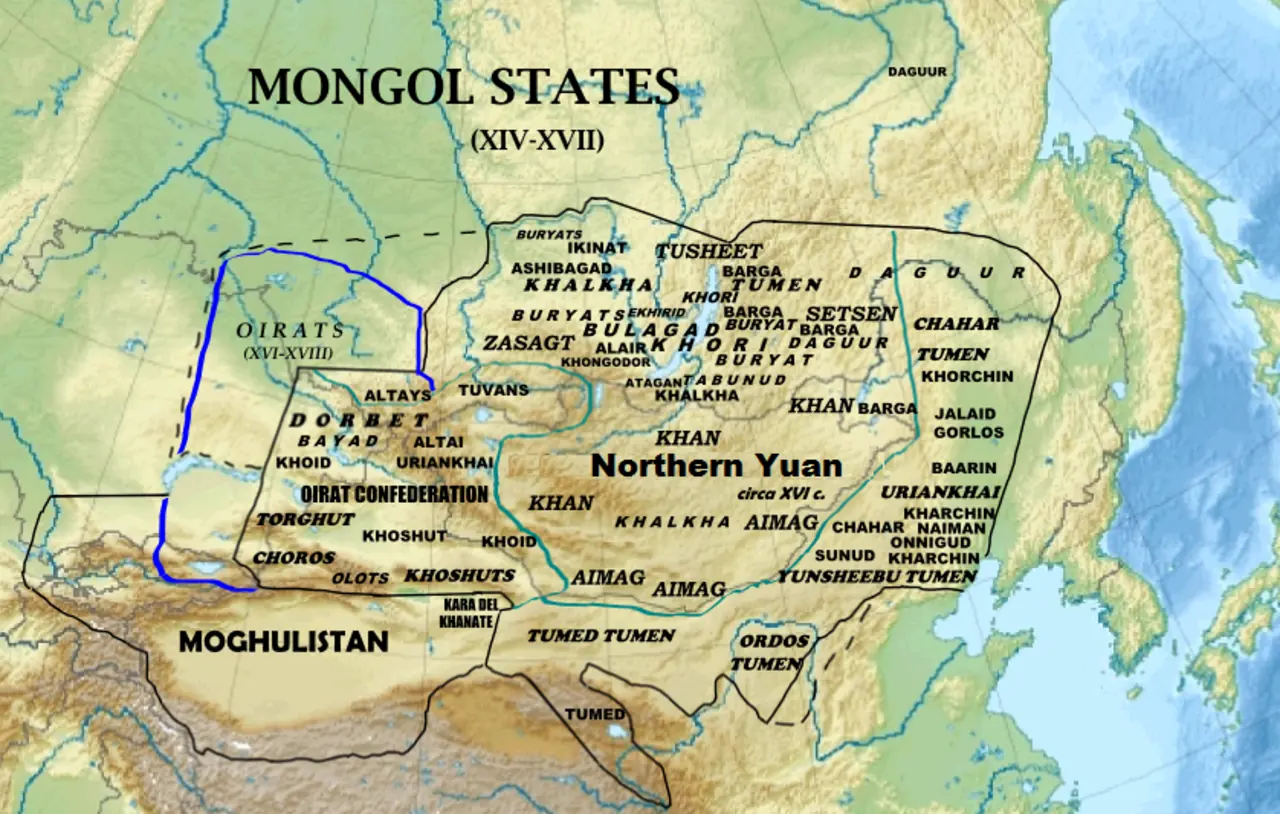
In 1368 Toghon Temür left Dadu and returned to the Mongol homeland, beginning the Northern Yuan and the age of the lesser khans. A struggle for power unfolded between the Eastern and Western (Oirat) Mongols.
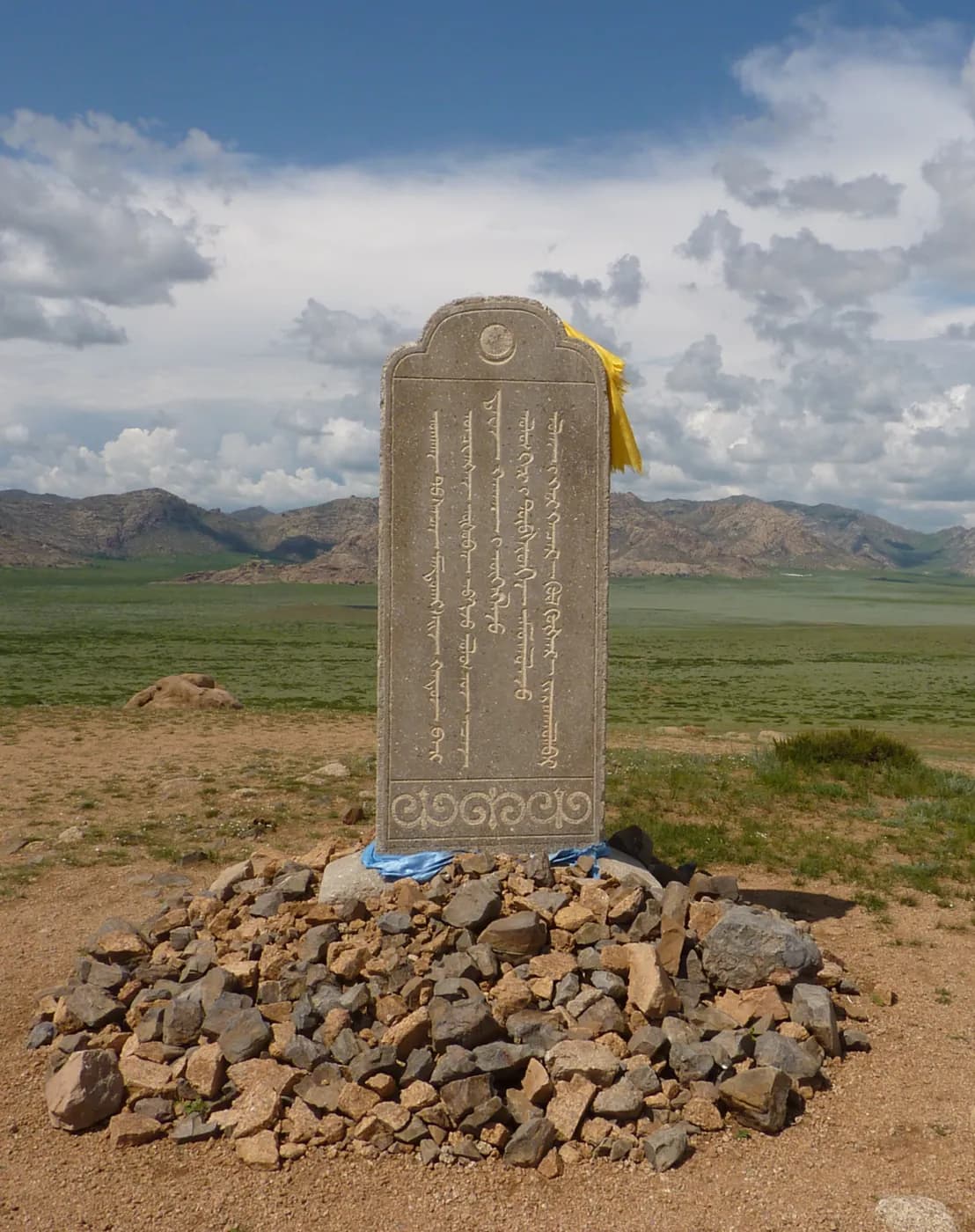
Memorial stele to Mandukhai Setsen Khatun. With Dayan Khan (Batmönkh), she reunited Mongolia in the late 15th century.
1479 – 1517
Mandukhai the Wise (Mandukhai Setsen Khatun) and Dayan Khan (Batmönkh) reunited Mongolia in the late 15th century, bringing the Six Tümens under the rule of the Chinggisid line.
Altan Khan — grandson of Dayan Khan and lord of the Tümed. He led the way in making the Gelug school the state religion.
16th–17th centuries
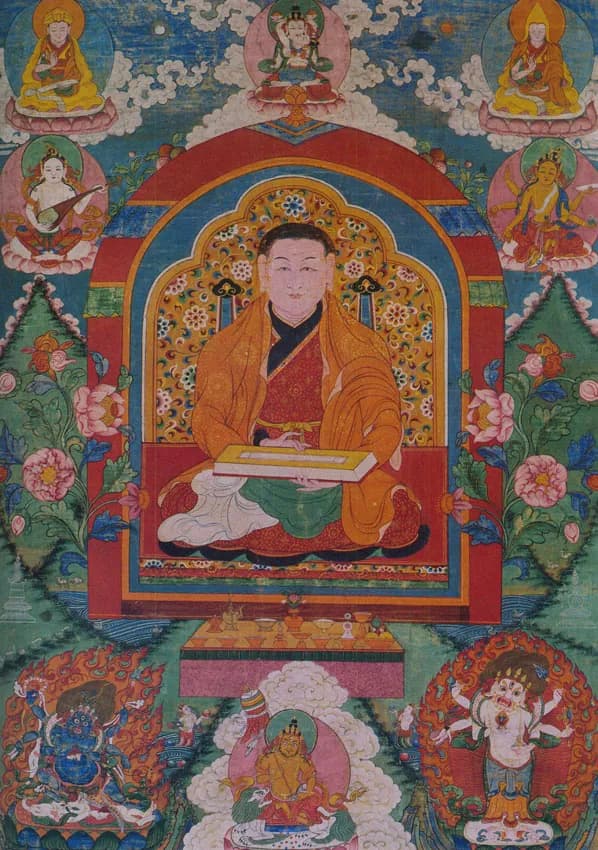
In the 16th century, under Altan Khan and Abtai Sain Khan, the Gelug school of Tibetan Buddhism spread through Mongolia as the state religion. Öndör Gegeen Zanabazar was enthroned as the First Jebtsundamba Khutuktu and launched a renaissance in art and culture.
Self-portrait of Öndör Gegeen Zanabazar.
1586
Abtai Sain Khan founded Erdene Zuu Monastery on the ruins of ancient Karakorum — a new faith built on the stones of the old capital.
Erdene Zuu Monastery, Kharkhorin.
1636 – 1911
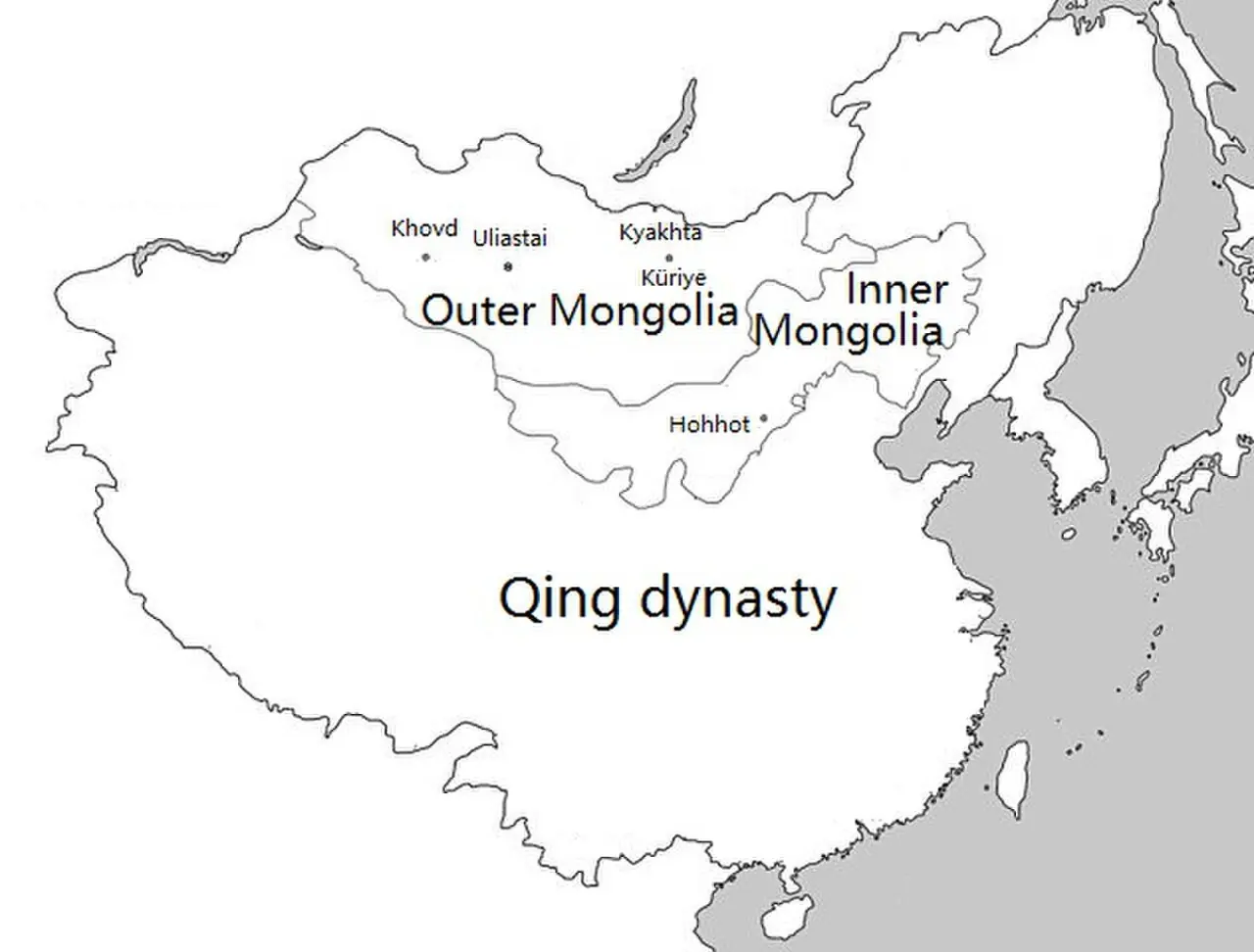
Weakened by internal strife, Inner Mongolia (1636), Khalkha (the Dolonnuur assembly of 1691) and the Dzungar Khanate (1755–1758) fell one after another under the Manchu Qing dynasty. Cut off from the outside world, the Mongols lived under Manchu domination for more than 200 years.
Outer and Inner Mongolia as part of the Qing dynasty.
Chapter V
A peaceful revolution that began on a winter square. The story goes on.
1990 – today
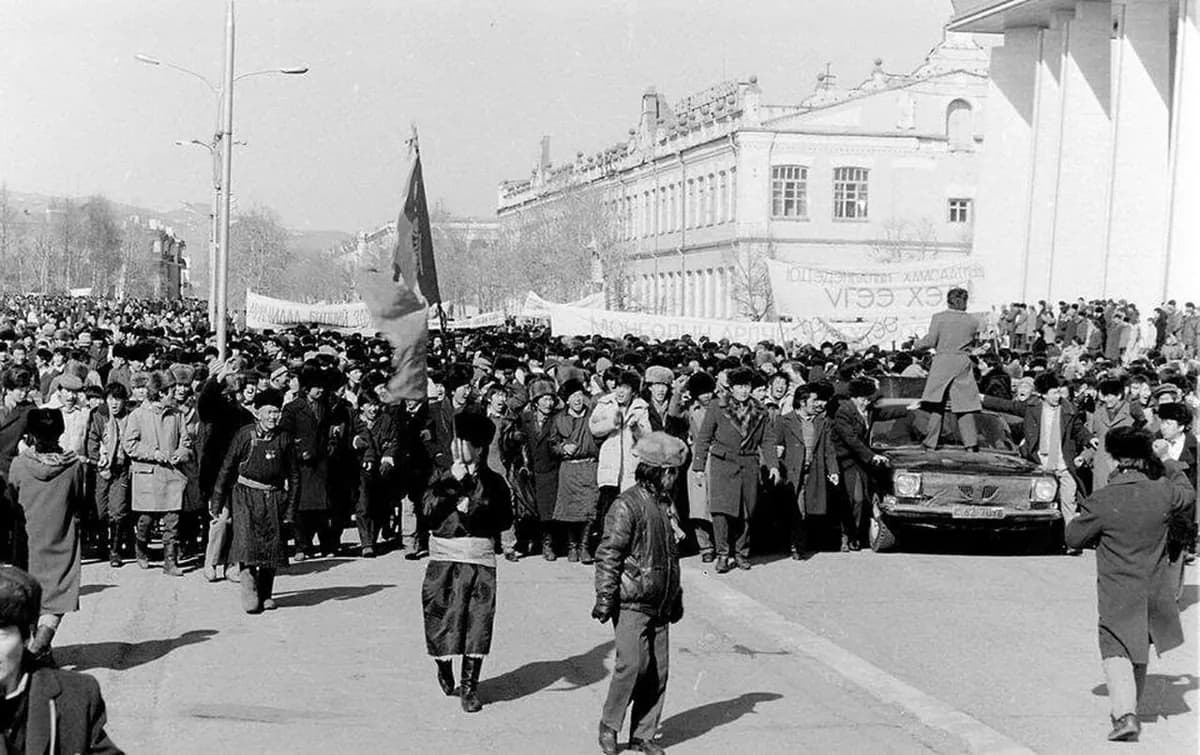
1990
Mongolia ended the one-party system and made a peaceful, bloodless transition to human rights, pluralism and a free-market economy.
Demonstration near Sükhbaatar Square, 4 March 1990.
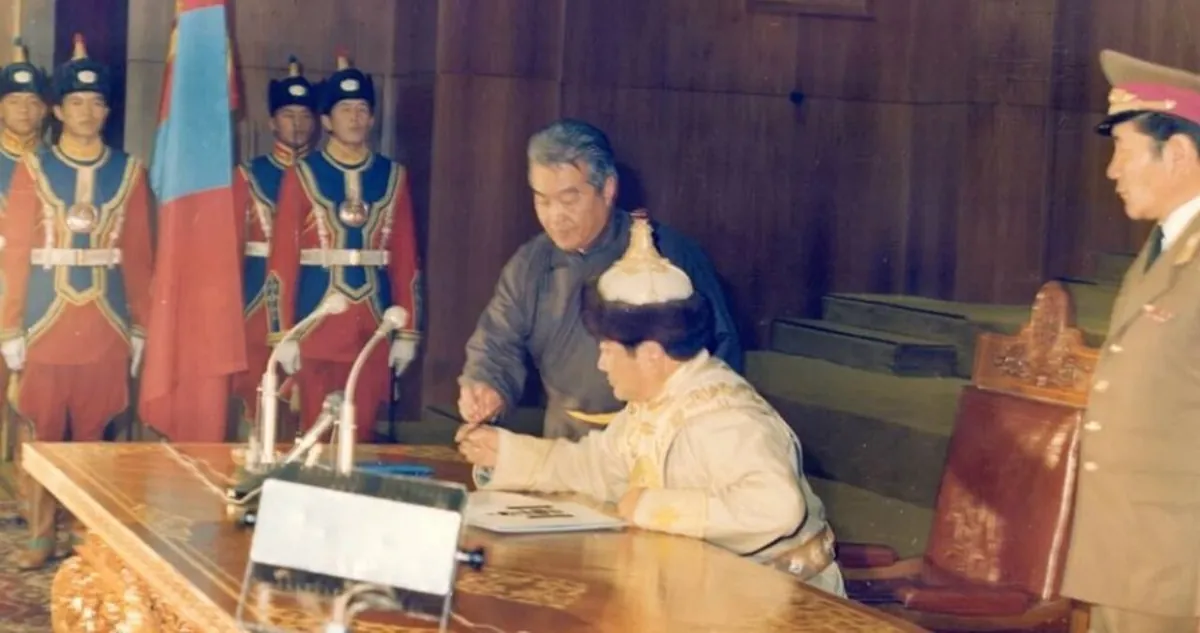
1992
The Constitution of Mongolia renamed the country “Mongolia” and guaranteed parliamentary government, private property, and freedom of religion and of speech.
President P. Ochirbat signing the 1992 Constitution.
21st century
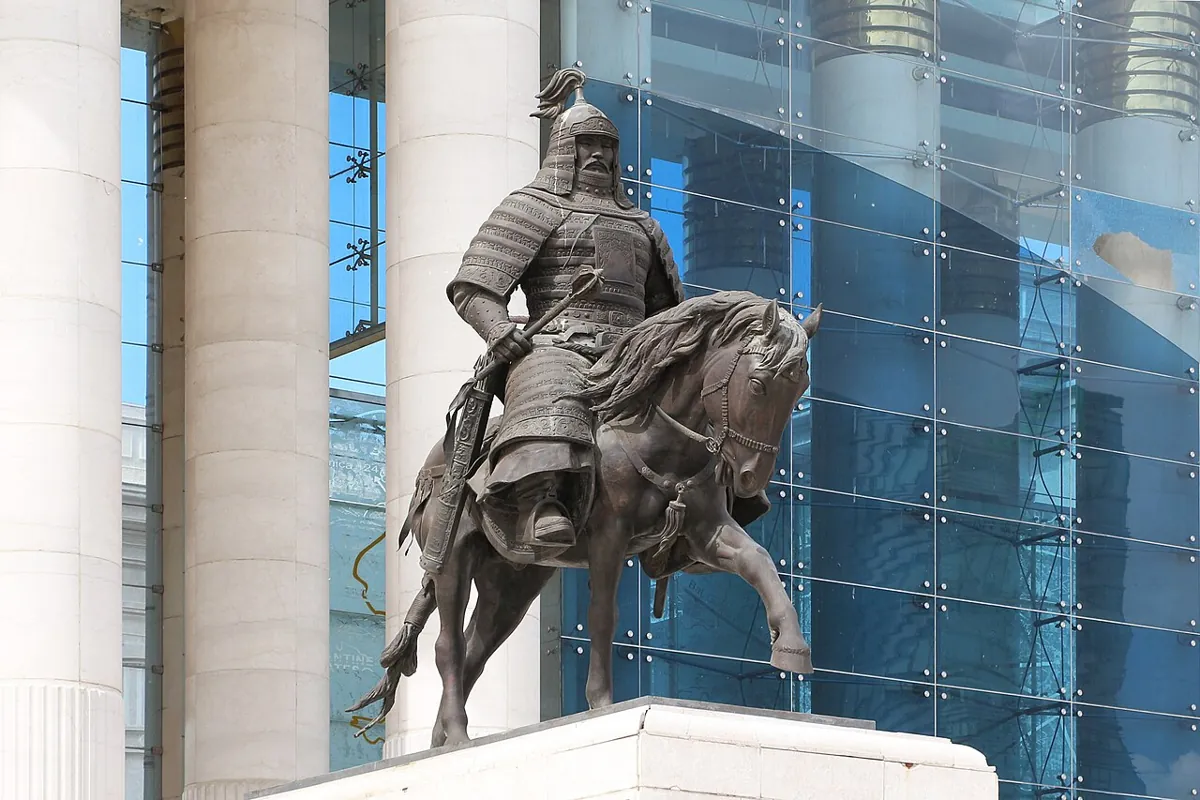
Pursuing its “third neighbour” policy, Mongolia engages openly with countries around the world and is charting its 21st-century course through mining, digital transformation and the revival of its cultural heritage.
Statue of Chinggis Khaan in front of the Government Palace, Ulaanbaatar.
Since 209 BC the map has changed many times. The idea of the state never broke.
Five chapters, 2,235 years
A brief history of Mongolia from the Xiongnu of 209 BC through Chinggis Khaan, Qing rule, 1911 independence and socialism to the 1990 democratic revolution.
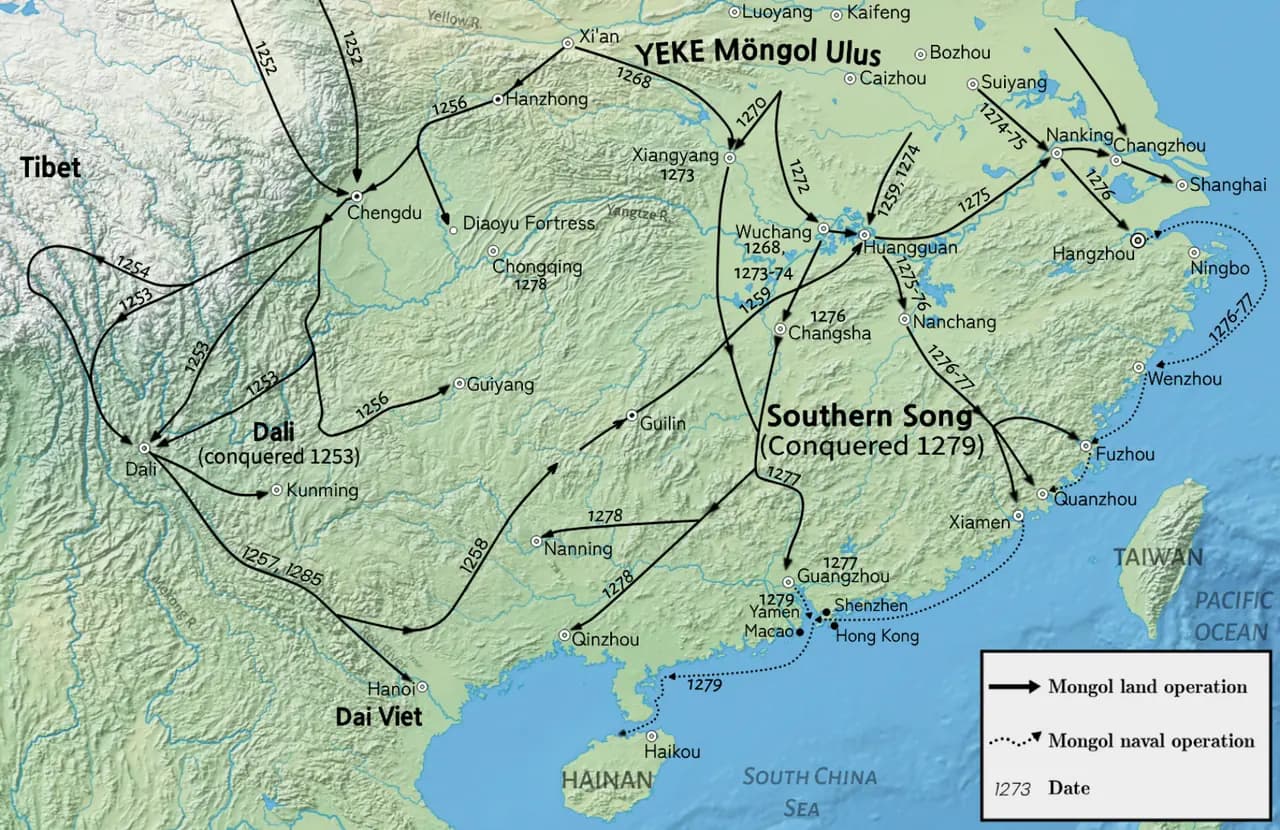
The Mongol Empire, history's largest contiguous land empire: its rise under Chinggis Khaan, expansion, governance, its division and where to see its traces.
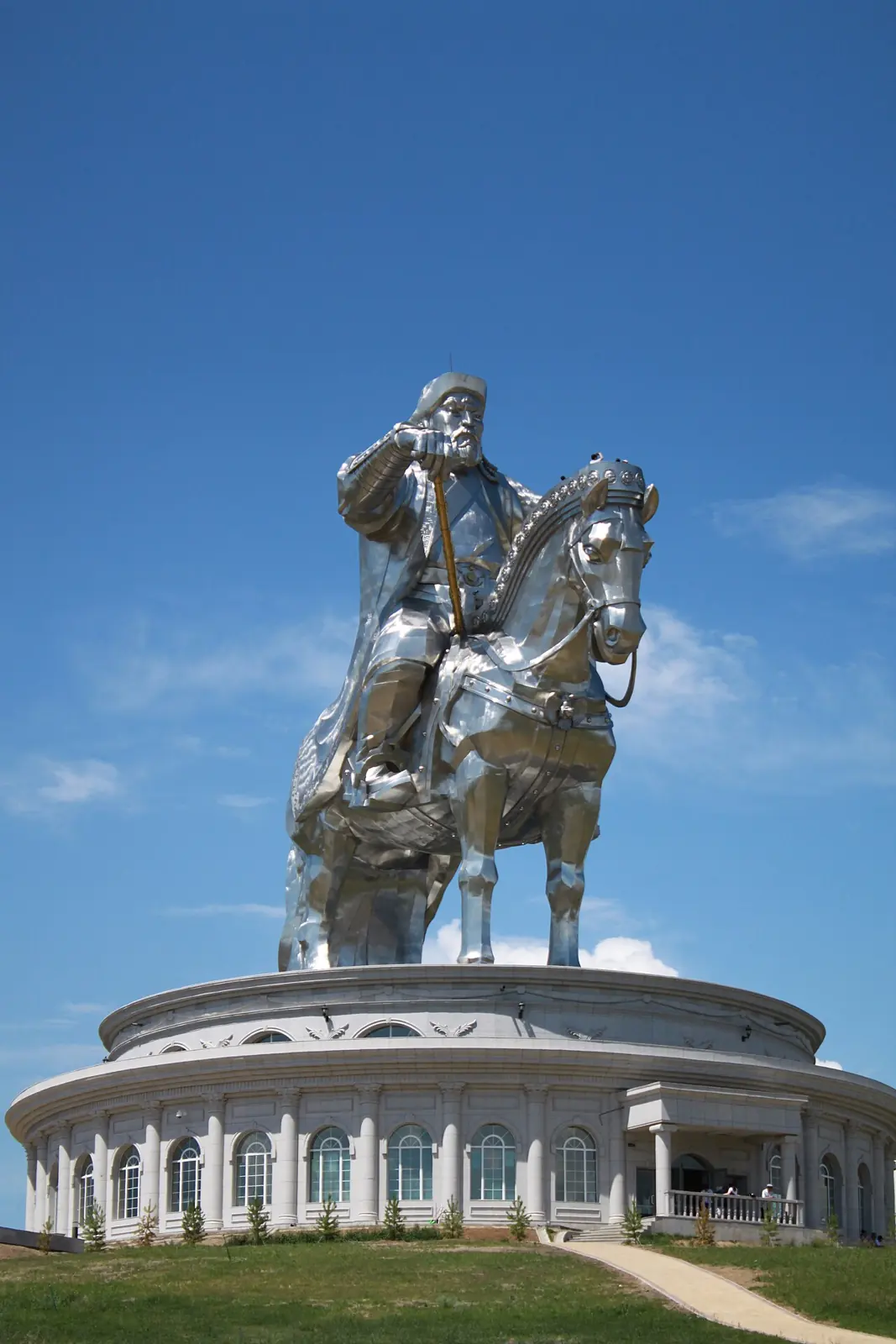
Genghis Khan, or Chinggis Khaan: Temüjin's early life, his rise to khan in 1206, his campaigns, the Secret History and his legacy and sites in Mongolia today.
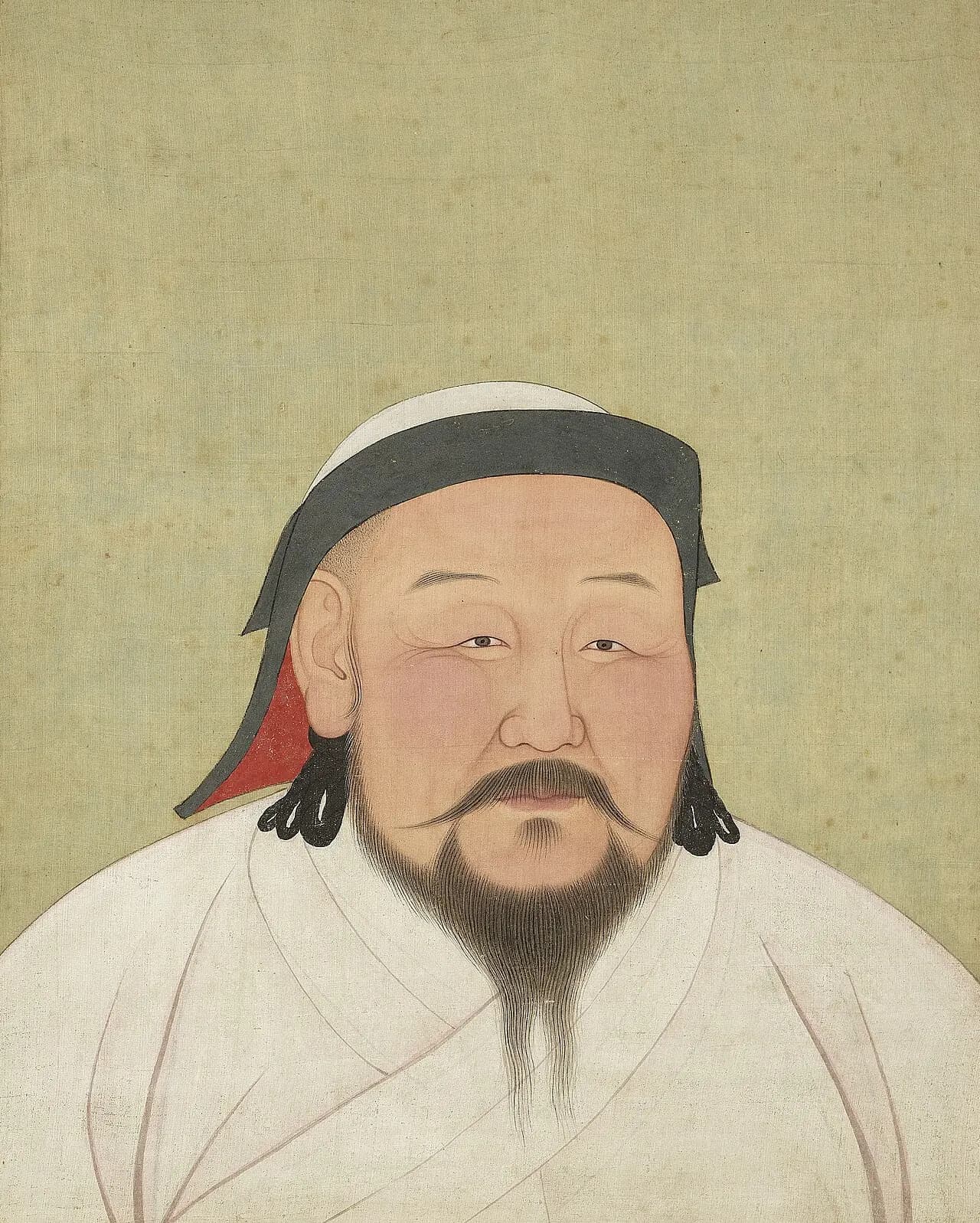
Kublai Khan, Chinggis Khaan's grandson and founder of the Yuan dynasty: his rise, Khanbaliq and Xanadu, the Japan invasions, Marco Polo and his legacy.
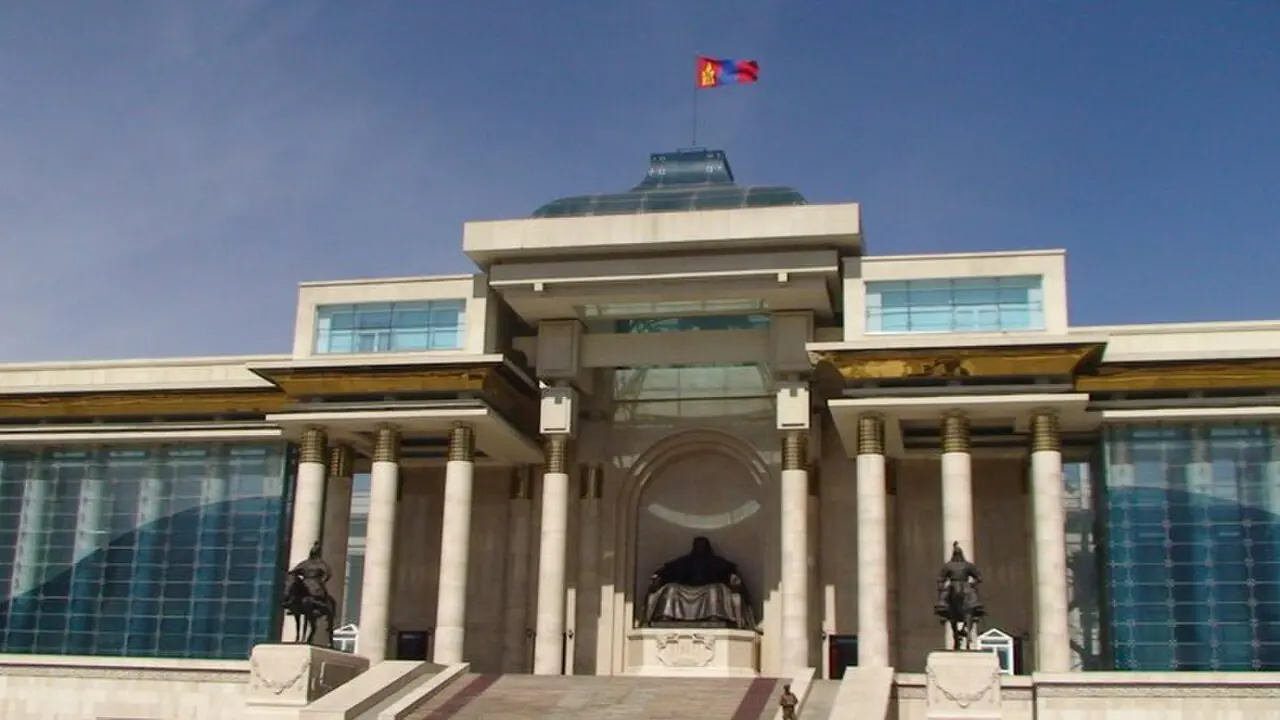
Democracy in Mongolia: the peaceful 1990 revolution, the 1992 constitution, and how the State Great Khural, government and president share power today.
Sources
Every map and portrait comes from Wikimedia Commons; author and licence are listed below. Many of the maps (by Ktrinko) share one base map, so the transitions within a chapter look continuous.
Chapter IV
Independence Restored and the Socialist Era
After two centuries, the Mongols once again proclaimed a state of their own. The next seventy years were spent winning the world's recognition of that independence.
1911 – 1989
The 8th Jebtsundamba Khutuktu — Bogd Khan of the Bogd Khanate of Mongolia.
29 December 1911
The National Liberation Revolution
The Mongols overthrew Manchu rule, enthroned the 8th Jebtsundamba Khutuktu as Bogd Khan, and proclaimed the Bogd Khanate of Mongolia.
The 8th Jebtsundamba Khutuktu — Bogd Khan of the Bogd Khanate of Mongolia.
1921 – 1924
The People's Revolution and the Mongolian People's Republic
Mongolia drove Chinese troops and Russian White Army forces from the country and secured its independence. On 26 November 1924 it adopted its first Constitution and proclaimed the Mongolian People's Republic.
Damdin Sükhbaatar — leader of the 1921 People's Revolution.
1924
The First Constitution
The First State Great Khural debated and adopted the first Constitution, and Mongolia became one of the first republics in Asia.
Delegates to the First State Great Khural, 1924.
1930 – 1945
Defending Independence
Mongolia endured the harsh years of the great political repressions of the 1930s. At the Battles of Khalkhin Gol in 1939, together with the USSR, it repelled Japanese aggression. Through the 1945 Yalta agreement and a nationwide referendum, Mongolia's citizens secured their independence.
Khalkhin Gol, 1939: Kh. Choibalsan and G. Zhukov.
1961 – 1989
Recognition and Social Transformation
In 1961 Mongolia became a full member of the United Nations, winning recognition on the international stage. Universal literacy was achieved, and the modern foundations of healthcare, education, industry and urbanisation (Ulaanbaatar, Darkhan, Erdenet) were laid.
Sükhbaatar Square, 1960s–70s.