A Brief History of Mongolia
A brief history of Mongolia from the Xiongnu of 209 BC through Chinggis Khaan, Qing rule, 1911 independence and socialism to the 1990 democratic revolution.
3 min read · Updated
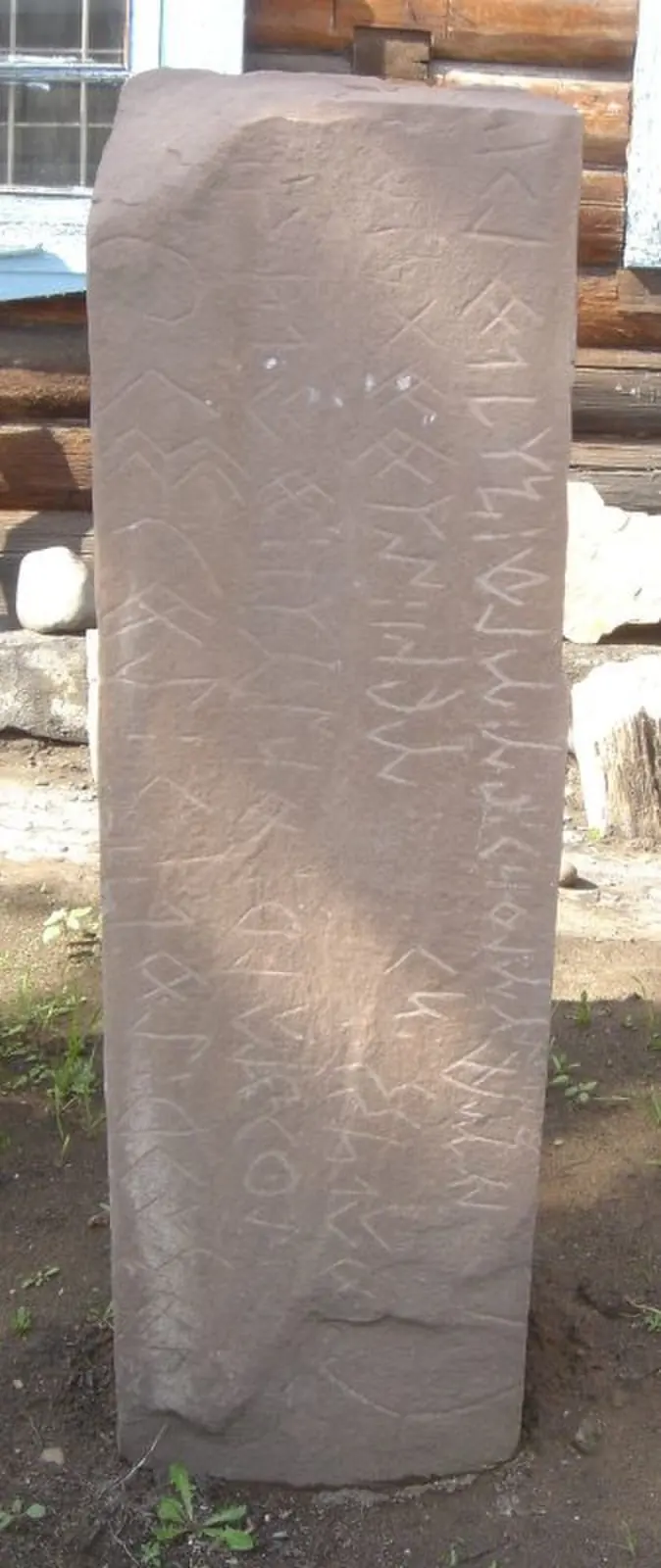
Photo: Philipp Roelli · GFDL · Wikimedia Commons
Mongolia's recorded history spans more than 2,200 years, from the Xiongnu empire founded in 209 BC to today's parliamentary democracy. In between came a succession of steppe empires, the world-changing Mongol Empire of Chinggis Khaan, two centuries of Qing rule, independence in 1911 and nearly seven decades of socialism before the peaceful democratic revolution of 1990.
Early steppe empires (209 BC – 12th century)
People have lived on the Mongolian plateau since the Stone Age, leaving rock art, deer stones and burial mounds that travellers still see today. In 209 BC Modun Chanyu united the tribes into the Xiongnu empire, a powerful rival to Han China, and Mongolians count this as the beginning of their statehood. Later the Xianbei, the Rouran, the Turkic Khaganates (from 552), the Uyghur Khaganate (744–840), with its capital Ordu-Baliq in the Orkhon Valley, and the Khitan Liao dynasty ruled the region in turn. The 8th-century Orkhon inscriptions, carved in Old Turkic script, still stand at Khöshöö Tsaidam.
The Mongol Empire (1206–1368)
In 1206 Temüjin was proclaimed Chinggis Khaan at a great assembly (kurultai) on the Onon River. He and his successors created the largest contiguous land empire in history, stretching from Korea to Eastern Europe. His son Ögedei built a capital at Karakorum, near today's Kharkhorin. The empire later divided into four realms; Chinggis's grandson Kublai Khan founded the Yuan dynasty, which ruled China until 1368, after which the Mongol court retreated to the steppe.
Buddhism and Qing rule (16th century – 1911)
Divided into rival khanates, the Mongols turned again to Tibetan Buddhism in the late 16th century, when Altan Khan met the Tibetan lama Sonam Gyatso and gave him the title Dalai Lama (1578). Erdene Zuu Monastery was founded at Karakorum in 1585, and the artist-monk Zanabazar (1635–1723) became the first Bogd Gegeen, head of Mongolian Buddhism. Under pressure from the Oirat Dzungars, the Khalkha Mongols submitted to the Manchu Qing dynasty in 1691, and Mongolia remained under Qing rule for more than two centuries.
Independence and the socialist era (1911–1990)
As the Qing collapsed, Mongolia declared independence on 1 December 1911, and on 29 December, now marked as Independence Day, the Eighth Bogd Gegeen was enthroned as the Bogd Khaan. In 1921 revolutionaries led by Damdin Sükhbaatar, backed by the Soviet Red Army, took power, and in 1924 the Mongolian People's Republic was proclaimed, becoming a close Soviet ally. In the late 1930s, purges under Khorloogiin Choibalsan killed tens of thousands of people, many of them monks, and most monasteries were destroyed. Mongolian and Soviet forces defeated Japan at Khalkhin Gol in 1939. After a 1945 referendum, China recognised Mongolia's independence in 1946, and Mongolia joined the United Nations in 1961.
Democracy and modern Mongolia (1990 – today)
Peaceful protests in the winter of 1989–1990 ended one-party rule. The first multiparty elections were held in 1990, and a new constitution was adopted in 1992. Since then Mongolia has held regular competitive elections, moved to a market economy and pursued a foreign policy that balances its two large neighbours with "third neighbours" such as Japan, South Korea, the United States and the European Union.
Practical tips: seeing history on your trip
- Start at the National Museum of Mongolia and the Chinggis Khaan National Museum in Ulaanbaatar for context.
- In the Orkhon Valley, a UNESCO World Heritage cultural landscape, visit Kharkhorin, Erdene Zuu Monastery and the Kharakhorum Museum.
- Deer stones and Turkic monuments are scattered across the countryside; do not climb on or touch them.
- Opening hours change with the seasons, so confirm with each museum or site before you travel.
Places in this guide
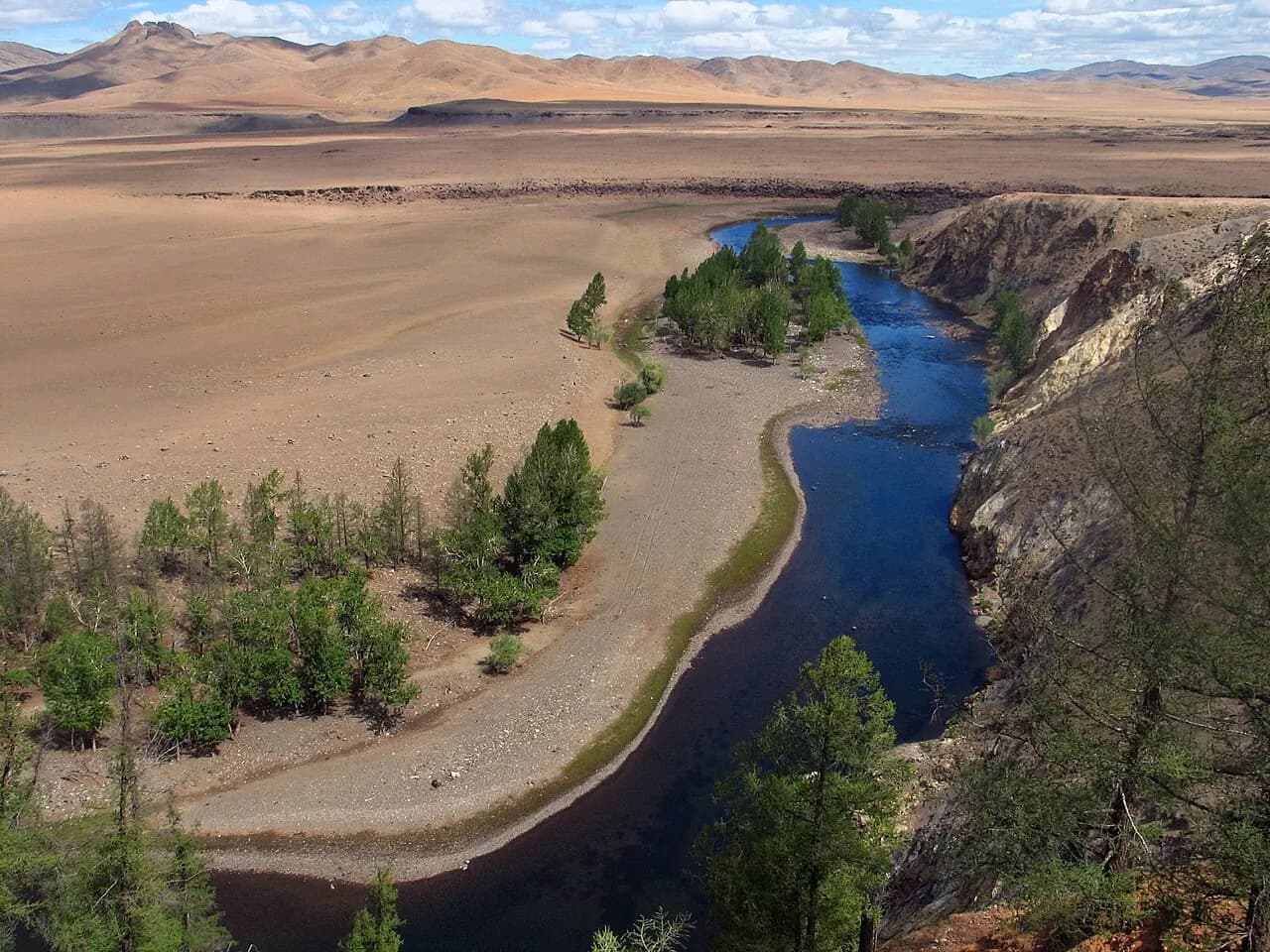
Orkhon Valley & Ulaan Tsutgalan
A 20 m waterfall, nomad summer camps and Tövkhön monastery.
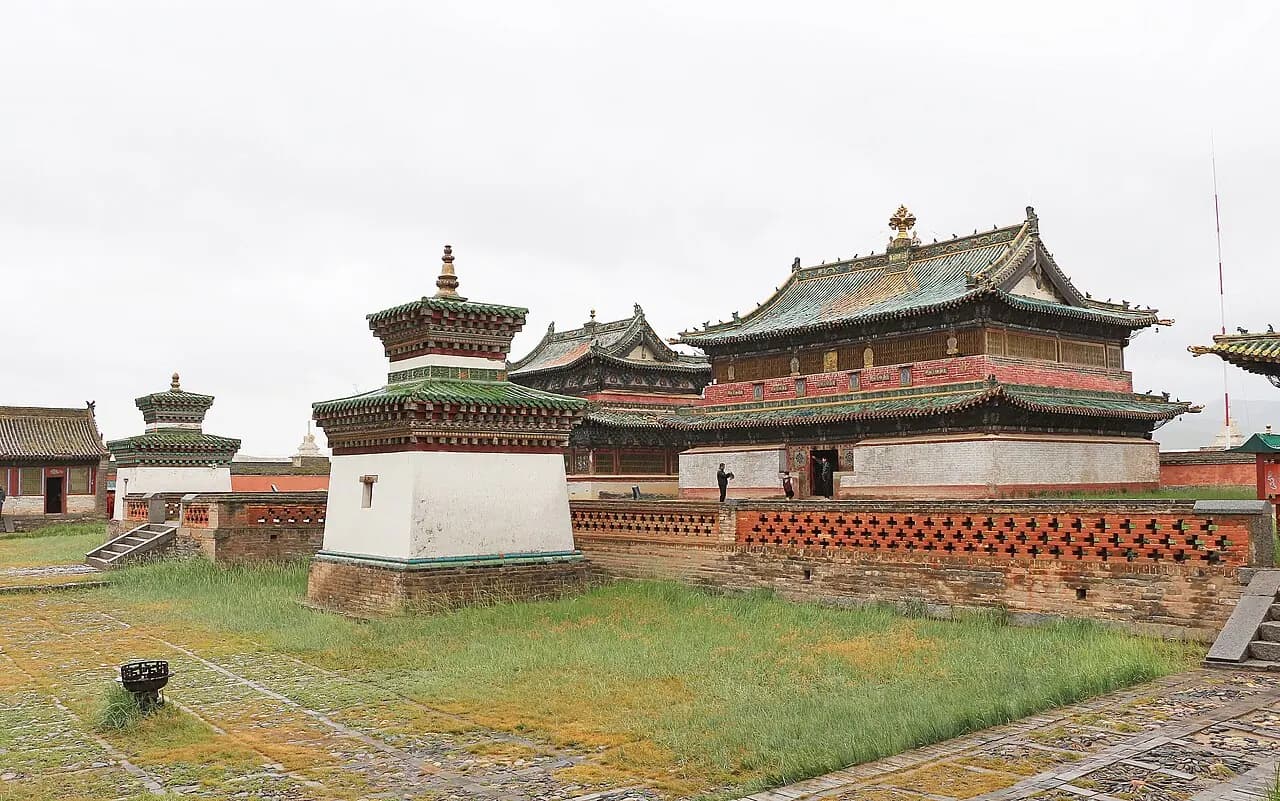
Kharkhorin & Erdene Zuu
Mongolia's oldest surviving Buddhist monastery, built on the ruins of the imperial capital Karakorum.
Frequently asked questions
When did Mongolia become independent?
Mongolia declared independence from the Qing on 1 December 1911, and the Bogd Khaan was enthroned on 29 December, now marked as Independence Day. China recognised it in 1946 after a 1945 referendum, and Mongolia joined the UN in 1961.
What was the first state in Mongolia?
Mongolians regard the Xiongnu empire, founded by Modun Chanyu in 209 BC, as the beginning of their statehood.
When did Mongolia become a democracy?
A peaceful democratic revolution in 1990 ended one-party rule, and a new constitution was adopted in 1992.