Democracy in Mongolia
Democracy in Mongolia: the peaceful 1990 revolution, the 1992 constitution, and how the State Great Khural, government and president share power today.
3 min read · Updated
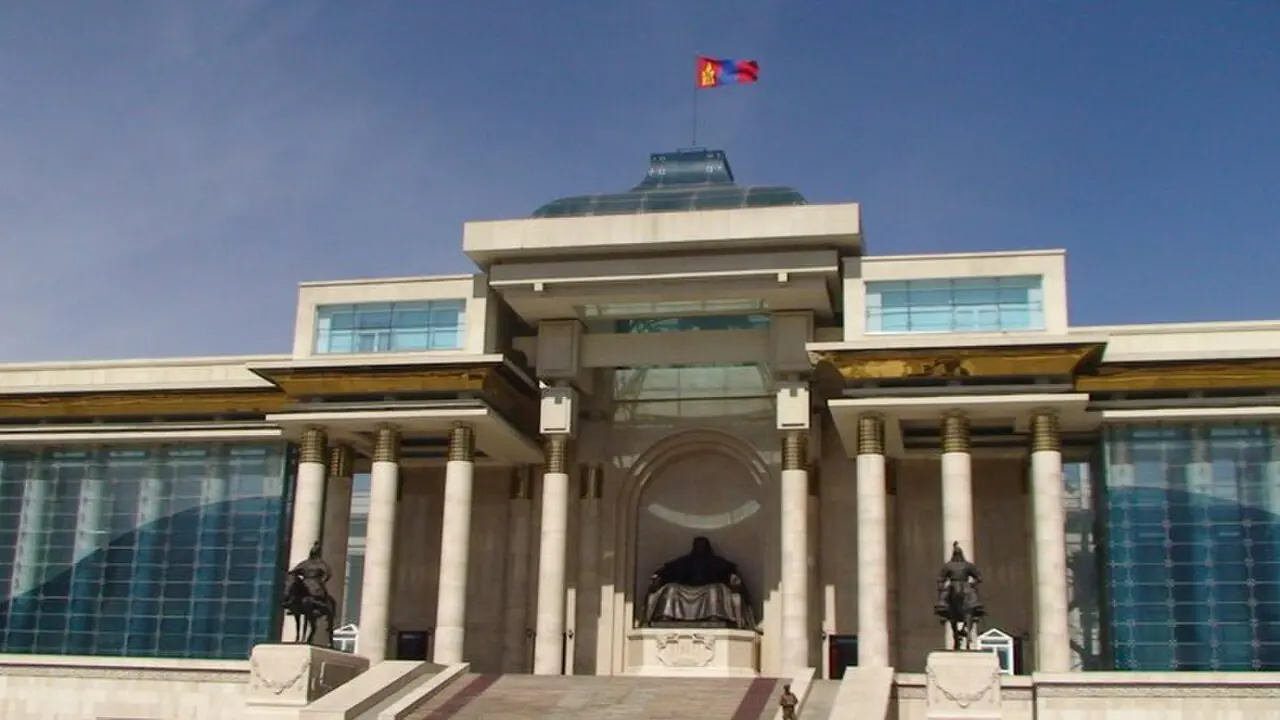
Photo: PranjalBorah · CC BY-SA 3.0 · Wikimedia Commons
Mongolia became a democracy through a peaceful revolution in 1990, when protests in Ulaanbaatar ended nearly 70 years of one-party communist rule without bloodshed. A new constitution in 1992 created a parliamentary system, and today power is shared between the State Great Khural (parliament), a government led by the prime minister, and a directly elected president.
The 1990 democratic revolution
Inspired by perestroika in the Soviet Union and the changes sweeping Eastern Europe, young Mongolians held the first open pro-democracy rally on 10 December 1989, International Human Rights Day, outside the Youth Cultural Centre in Ulaanbaatar. The Mongolian Democratic Union, with leaders such as Sanjaasürengiin Zorig, organised growing demonstrations on Sükhbaatar Square through a bitterly cold winter. In March 1990 activists began a hunger strike, and on 9 March the Politburo of the ruling Mongolian People's Revolutionary Party (MPRP) resigned. The party's constitutional monopoly on power was soon abolished, opposition parties were legalised, and the first multiparty elections were held in July 1990.
Zorig is remembered as the "Golden Swallow of Democracy". He was murdered in 1998, and a statue of him stands in central Ulaanbaatar.
The 1992 Constitution of Mongolia
Adopted on 13 January 1992 and in force from 12 February that year, the constitution:
- renamed the country from the Mongolian People's Republic to Mongolia;
- guaranteed human rights, including freedom of speech, religion and assembly, and the right to private property;
- made the unicameral State Great Khural the highest organ of state power;
- created a directly elected president as head of state and a Constitutional Court (the Tsets).
A new national flag without the socialist star was adopted the same year. Constitution Day is marked on 13 January, and significant amendments in 2019 and 2023 rebalanced the powers of state institutions.
The parliamentary system today
- State Great Khural — the parliament, enlarged from 76 to 126 members from the 2024 election under a 2023 amendment. Members are elected every four years under a mixed system of constituency and party-list seats.
- Government — headed by a prime minister appointed by parliament; the cabinet is accountable to the State Great Khural.
- President — directly elected and, since the 2019 amendment, limited to a single six-year term. The president is head of state and commander-in-chief and can veto laws, which parliament can override with a two-thirds vote.
- Courts — an independent judiciary, with the Constitutional Court ruling on constitutional disputes.
The largest parties are the Mongolian People's Party, the successor to the MPRP, and the Democratic Party, with smaller parties and independents also winning seats. Power has changed hands peacefully between parties several times, though Mongolia has also seen political crises, frequent changes of prime minister, protests over corruption and deadly riots after the 2008 election.
Democracy and daily life
Election turnout is generally high, the press and social media are lively, and protests on Sükhbaatar Square are a regular part of public life. Key debates focus on how mining revenues are shared, corruption, air pollution and the gap between Ulaanbaatar and the countryside. Mongolia's record is often cited as a rare democratic success in a region dominated by authoritarian governments.
Practical tips
- The Government Palace, seat of parliament and the president's office, faces Sükhbaatar Square; you can photograph the exterior, but public access inside is limited.
- Demonstrations on the square are usually peaceful, but keep your distance from large crowds and follow local news.
- Election periods can bring rallies and temporary bans on alcohol sales; check dates if your trip overlaps with a parliamentary or presidential election.
- The Zorig statue and the modern-history galleries of the National Museum of Mongolia tell the story of 1990.
Frequently asked questions
When was Mongolia's democratic revolution?
The first rally was held on 10 December 1989, and the ruling party's Politburo resigned on 9 March 1990. The first multiparty elections followed in July 1990.
Is Mongolia a presidential or parliamentary system?
Mongolia is a parliamentary system: the government is led by a prime minister appointed by parliament, while a directly elected president holds significant powers such as the veto.
How many members does the State Great Khural have?
Since the 2024 election the State Great Khural has 126 members, up from 76 previously.