Kublai Khan / Хубилай хаан
Kublai Khan, Chinggis Khaan's grandson and founder of the Yuan dynasty: his rise, Khanbaliq and Xanadu, the Japan invasions, Marco Polo and his legacy.
3 min read · Updated
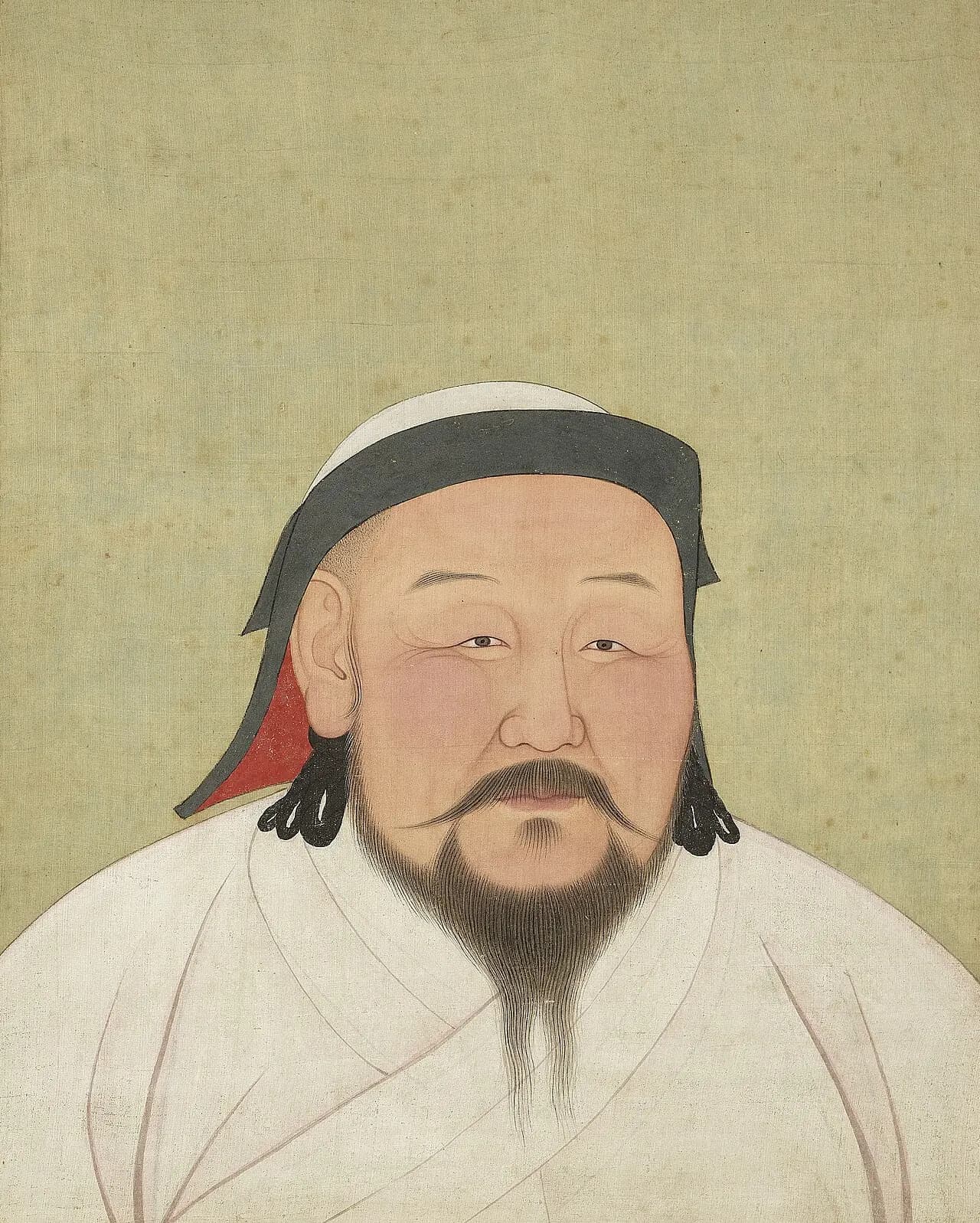
Photo: Unknown · Public domain · Wikimedia Commons
Kublai Khan (Хубилай хаан, 1215–1294) was a grandson of Chinggis Khaan and the fifth Great Khan of the Mongol Empire. In 1271 he founded the Yuan dynasty, and by 1279 he had conquered the Southern Song, becoming the first non-Chinese ruler of all of China. He governed from Khanbaliq, on the site of modern Beijing, and from his summer capital Shangdu — the "Xanadu" of European legend.
Family and rise to power
Kublai was the son of Tolui, Chinggis Khaan's youngest son, and Sorghaghtani Beki, a remarkably capable Kereit princess who secured the throne for her sons. Under his elder brother Möngke Khan, Kublai governed lands in northern China and led a campaign in the south-west that conquered the Dali kingdom, in today's Yunnan, in 1253. When Möngke died in 1259, Kublai was proclaimed Great Khan in 1260, but his younger brother Ariq Böke was also proclaimed at Karakorum. Kublai won the resulting civil war in 1264, yet the western Mongol realms never fully accepted his authority, and the empire divided.
Founding the Yuan dynasty
In 1271 Kublai adopted the Chinese dynastic name Yuan, meaning "origin" or "primal". He built a new capital, Dadu — known to Mongols and Turks as Khanbaliq, "city of the khan" — while Shangdu, in present-day Inner Mongolia, served as his summer residence. With the fall of the Southern Song in 1279 he ruled all of China and Mongolia, with Tibet under Yuan administration and Korea as a vassal.
His government combined Mongol and Chinese traditions. He employed advisers of many backgrounds — Chinese, Central Asian Muslims, Tibetans, Uyghurs and a few Europeans — while a ranked social order favoured Mongols. The Yuan issued paper money on a large scale, extended the Grand Canal and maintained the yam postal network. Kublai patronised Tibetan Buddhism and made the Sakya lama Phagpa his imperial preceptor; in 1269 Phagpa's square script was introduced as an official writing system for the empire's languages.
Failed campaigns overseas
Not every campaign succeeded. Two invasions of Japan, in 1274 and 1281, were defeated by Japanese resistance and storms — the origin of the "kamikaze", or divine wind, legend. Campaigns against Đại Việt and Champa in today's Vietnam, and an expedition to Java in 1293, brought heavy losses and few lasting gains.
Marco Polo and the image of Kublai Khan
The Venetian Marco Polo's account of his years at Kublai's court made the khan famous in Europe, describing the splendour of Khanbaliq and Shangdu, paper money and the postal relay system. Some details of Polo's story are debated, but it shaped European ideas of Asia for centuries and later inspired Coleridge's poem "Kubla Khan". Kublai died in 1294; the Yuan dynasty lasted until 1368, when the Ming drove the Mongol court back to the steppe.
Kublai Khan in Mongolia today
Mongolians remember Kublai as one of the great khans. His statue sits beside those of Chinggis Khaan and Ögedei on the façade of the Government Palace on Sükhbaatar Square. Most physical traces of his reign lie outside Mongolia: the ruins of Shangdu, a UNESCO World Heritage site in China's Inner Mongolia, and the historic layout of central Beijing.
Practical tips
- For Yuan-era artefacts in Mongolia, visit the Chinggis Khaan National Museum and the National Museum of Mongolia in Ulaanbaatar.
- Pair this history with a trip to Kharkhorin, the old imperial capital that lost its role after Kublai moved the centre of power to China.
- Visiting the Shangdu ruins means travelling in China, which needs separate planning; check current entry rules with the Chinese embassy.
- On Mongolian museum labels his name appears as Khubilai Khaan (Хубилай хаан).
Places in this guide
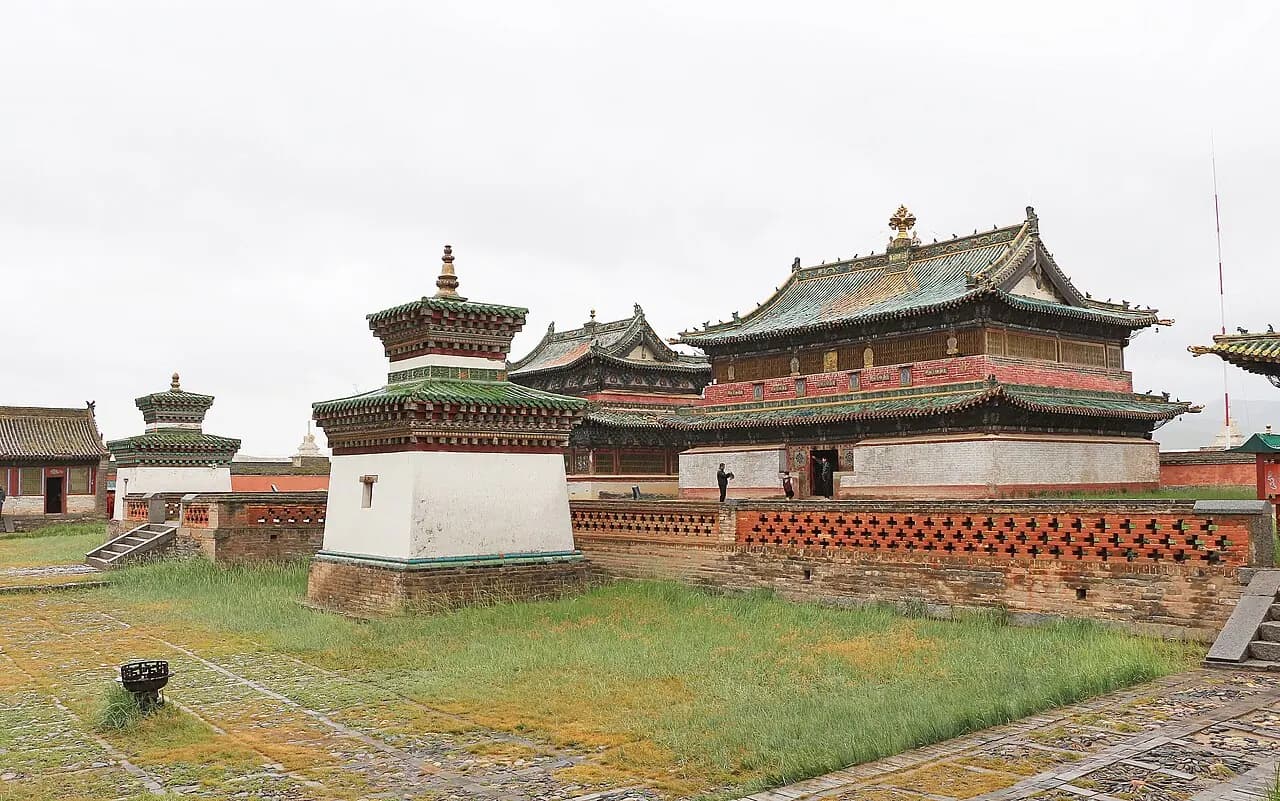
Kharkhorin & Erdene Zuu
Mongolia's oldest surviving Buddhist monastery, built on the ruins of the imperial capital Karakorum.
Frequently asked questions
How was Kublai Khan related to Genghis Khan?
Kublai was Chinggis Khaan's grandson, the son of his youngest son Tolui and Sorghaghtani Beki.
Where was Kublai Khan's capital?
His main capital was Dadu, or Khanbaliq, on the site of modern Beijing, and his summer capital was Shangdu (Xanadu) in Inner Mongolia.
Did Kublai Khan conquer Japan?
No. His invasions of 1274 and 1281 both failed because of Japanese resistance and destructive storms.