Genghis Khan / Чингис хаан
Genghis Khan, or Chinggis Khaan: Temüjin's early life, his rise to khan in 1206, his campaigns, the Secret History and his legacy and sites in Mongolia today.
3 min read · Updated
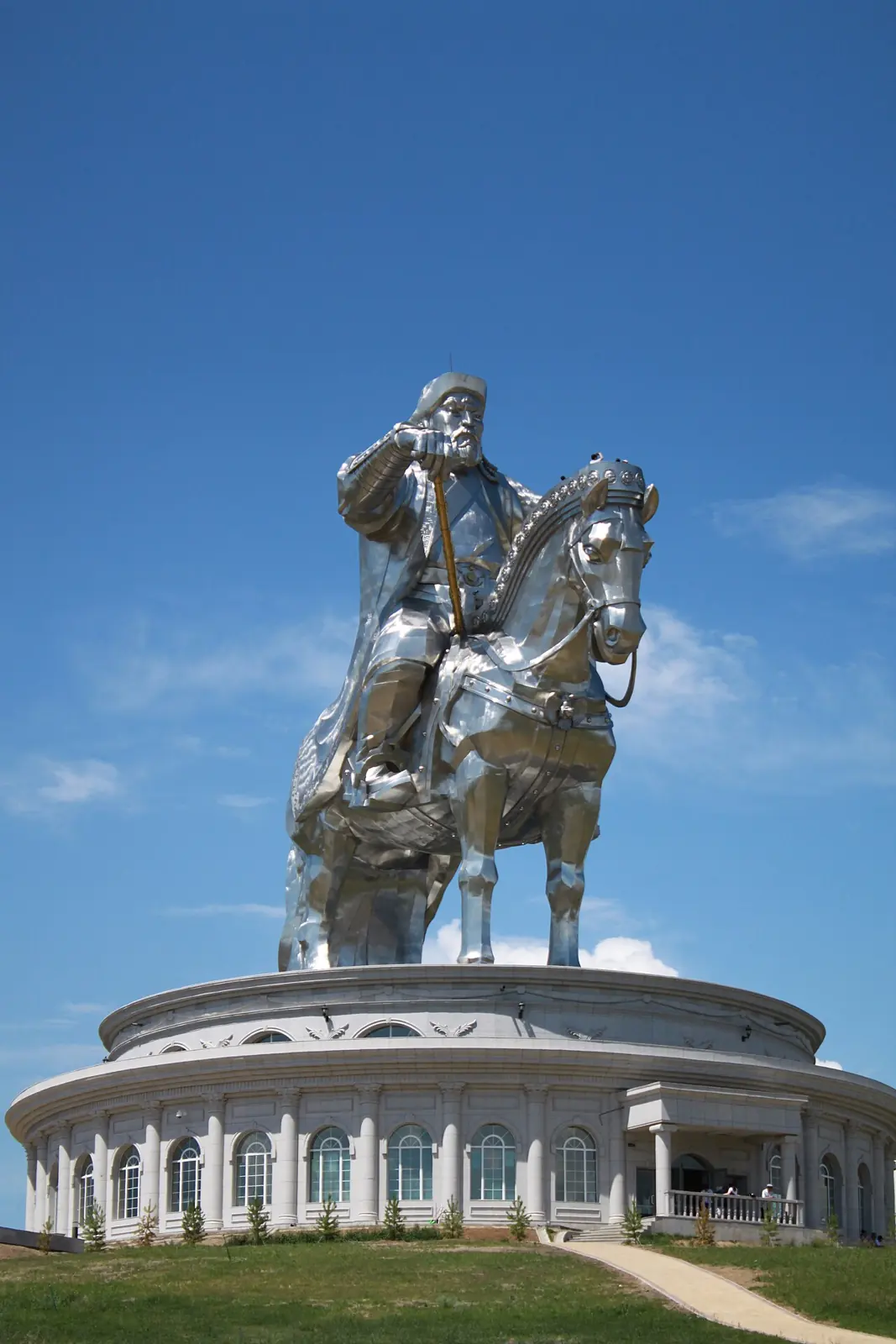
Photo: Chinneeb · CC BY 4.0 · Wikimedia Commons
Genghis Khan — known in Mongolia as Chinggis Khaan (Чингис хаан) — was the founder of the Mongol Empire. Born Temüjin around 1162 (sources differ), he united the feuding tribes of the Mongolian steppe, was proclaimed khan in 1206 and launched the conquests that created the largest contiguous land empire in history. He died in 1227, and his burial place has never been found.
Early life: from outcast to khan
Temüjin was the son of Yesügei, a chief of the Borjigin clan, and his wife Hö'elün. Tradition places his birth near the Onon River in today's Khentii province; Dadal and the hill of Deluun Boldog are the best-known claimants. When he was about nine, his father was poisoned by Tatars, and the family, abandoned by their clan, survived by hunting, fishing and gathering. As a young man Temüjin was captured by rivals and escaped. Later his wife Börte was abducted by the Merkits and rescued with the help of his sworn brother (anda) Jamukha and the Kereit ruler Toghrul, also known as Ong Khan.
Over two decades Temüjin defeated his rivals — the Tatars, the Kereits, the Naimans and finally Jamukha. In 1206 a great assembly (kurultai) at the source of the Onon River proclaimed him Chinggis Khaan, a title whose exact meaning is debated but is often rendered as "universal" or "firm" ruler.
Building a nation and an empire
Chinggis Khaan broke old tribal loyalties by organising his people into decimal units led by commanders chosen for loyalty and ability. He adopted a script for Mongolian adapted from the Uyghur alphabet — the origin of the traditional Mongolian script — and issued laws known as the Ikh Zasag. His armies campaigned against the Western Xia (from 1209), the Jin dynasty in northern China (from 1211, taking Zhongdu, near today's Beijing, in 1215) and the Khwarazmian Empire (1219–1221), after its governor killed a Mongol trade caravan and the shah executed his envoy. He died in August 1227 during a campaign against the Western Xia.
The Secret History and a contested legacy
The main Mongolian source on his life is the Secret History of the Mongols, written in the 13th century. Outside Mongolia, Chinggis Khaan is often remembered for the destruction and loss of life caused by his conquests. In Mongolia he is honoured as the father of the nation, a lawgiver and the unifier of the Mongol people. Under socialism, public celebration of him was discouraged; since 1990 he has returned to the centre of national identity.
Chinggis Khaan in Mongolia today
His image is everywhere: on banknotes, on vodka bottles and in the name of the international airport near Ulaanbaatar. A large seated statue presides over Sükhbaatar Square, and a 40-metre stainless-steel equestrian statue stands at Tsonjin Boldog, east of the capital. Burkhan Khaldun, the sacred mountain in the Khentii range where he is said to have taken refuge and prayed, is part of a UNESCO World Heritage site. Mongolia marks his birthday as a public holiday on the first day of the first winter month of the lunar calendar, which falls in November or early December.
Practical tips
- Visit the Chinggis Khaan National Museum in Ulaanbaatar before heading out to the related sites.
- Dadal and Deluun Boldog in Khentii are a long drive north-east of Ulaanbaatar; plan at least two to three days.
- Burkhan Khaldun lies in a strictly protected area; access may require a permit, and by tradition women do not climb to the summit. Respect local customs and check current rules with the protected-area administration.
- Treat his image and name with respect: for many Mongolians he is a revered figure, not a joke or a cartoon.
Places in this guide
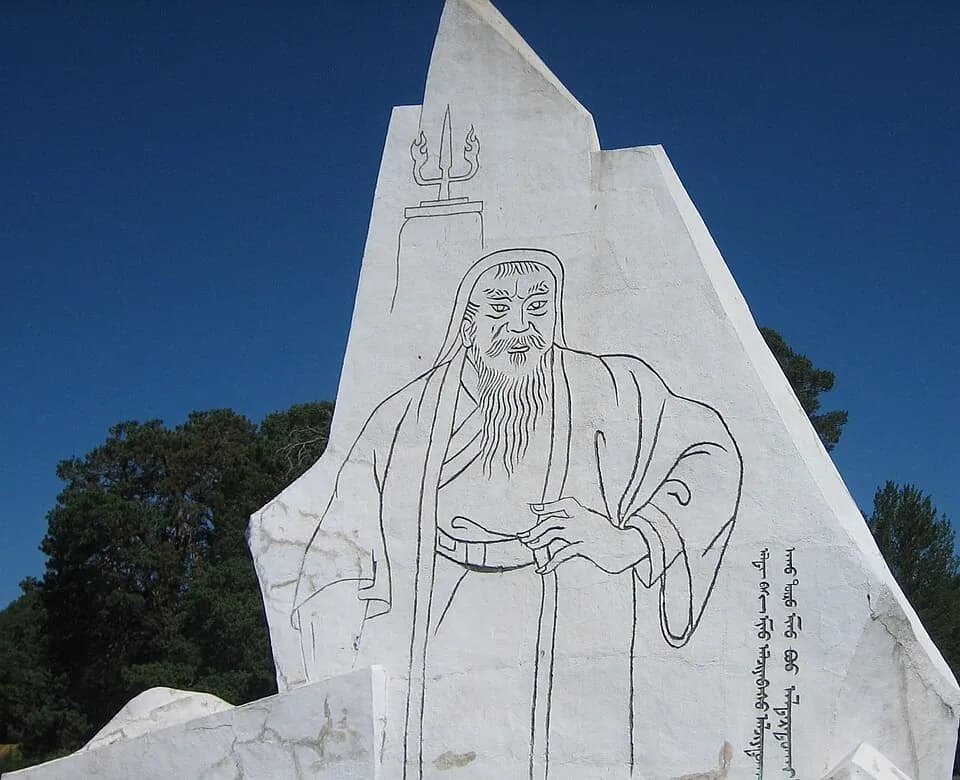
Deluun Boldog
The birthplace of Chinggis Khaan: Dadal soum in the Onon valley.
Frequently asked questions
When and where was Genghis Khan born?
He was born around 1162 (dates differ between sources) near the Onon River in today's Khentii province; Dadal and Deluun Boldog are the best-known claimed sites.
Where is Genghis Khan buried?
His burial place has never been found. Tradition links it to the Khentii Mountains around Burkhan Khaldun, but there is no confirmed evidence.
Where is the giant Genghis Khan statue?
The 40-metre stainless-steel equestrian statue stands at Tsonjin Boldog, east of Ulaanbaatar, roughly an hour's drive from the city.