Photo: Bogomolov.PL · Public domain · Wikimedia Commons
Ceremonial dishes
Boodog
Goat or marmot cooked from the inside with hot stones, in its own skin.
What it is
Boodog is one of the oldest ways of cooking meat on the steppe: a whole goat, or traditionally a tarbagan marmot, is cooked inside its own skin using hot stones. Instead of roasting the animal from the outside, the cook removes the bones and organs through a small opening at the neck, fills the empty skin with heated stones and pieces of meat, and seals it. The stones cook the meat from within while the outside is singed. It is food for special occasions and for groups, not something families make every week.
How it is made
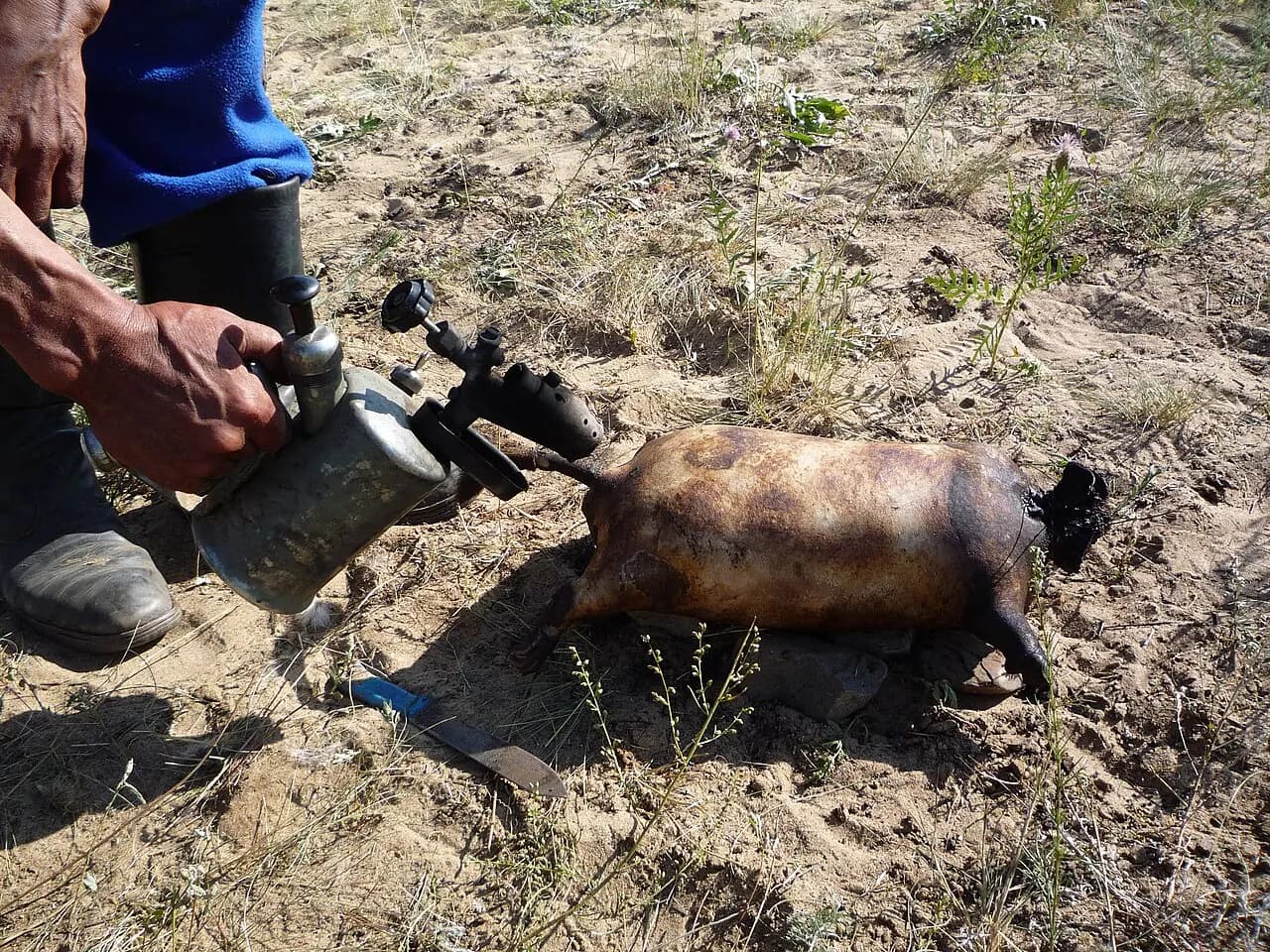
Boodog is an outdoor job for two or more people. The skin is kept whole apart from a slit at the neck, and through it the cook draws out the bones (except those of the feet) and the internal organs. Hot stones, onion, salt and cut meat go back inside, and the body is squeezed and pressed so the contents touch the stones. The neck is closed, often with wire, and the hair is burned off the outside. This used to be done over embers; today a gas burner or blowtorch is common. The whole process takes around an hour and a half.
When it is ready, the outside is washed and the skin is cut open to reach the meat and the juices that have collected inside. Because the bones have already been removed, the meat is shared out more evenly than at a feast built around prestigious bone-in cuts, and boodog has traditionally been eaten within the household or among people in the same camp.
When and where to try it
Boodog is best made from animals that have fattened on summer and autumn pasture. Marmots were traditionally hunted in autumn, when they are heavy before hibernation. Some ger camps and tour operators arrange goat boodog for groups, usually with advance notice, and it is sometimes prepared at local celebrations.
Marmot boodog is a different matter. Marmots in parts of Mongolia carry plague, and there have been fatal cases linked to hunting and eating them, including a couple in Bayan-Ölgii in 2019 and a teenager in Gobi-Altai in 2020. Marmot hunting has been restricted by law. Travellers should stick to goat and decline marmot if it is offered.
Etiquette and tips
- Watching boodog being made is part of the experience, but ask before photographing the butchering, which some families prefer to keep private.
- Meat is passed around by hand; take what you are given and eat at least a little.
- The skin and fat are prized by many Mongolians. Do not feel obliged to eat them, but avoid making a show of discarding them.
- Ask your guide or host what animal is being cooked if you are unsure.
- Ingredients
- Goat (or marmot), river stones, salt
- How it is made
- Debone, fill with stones, seal, sear; about 90 minutes
- Health & season
- Made from fattened autumn animals. · Summer, Autumn
- Famous in
- Khangai & Central, Western Mongolia, Eastern Mongolia
Photo: Bogomolov.PL · Public domain · Wikimedia Commons
Where to eat real Mongolian food in Ulaanbaatar