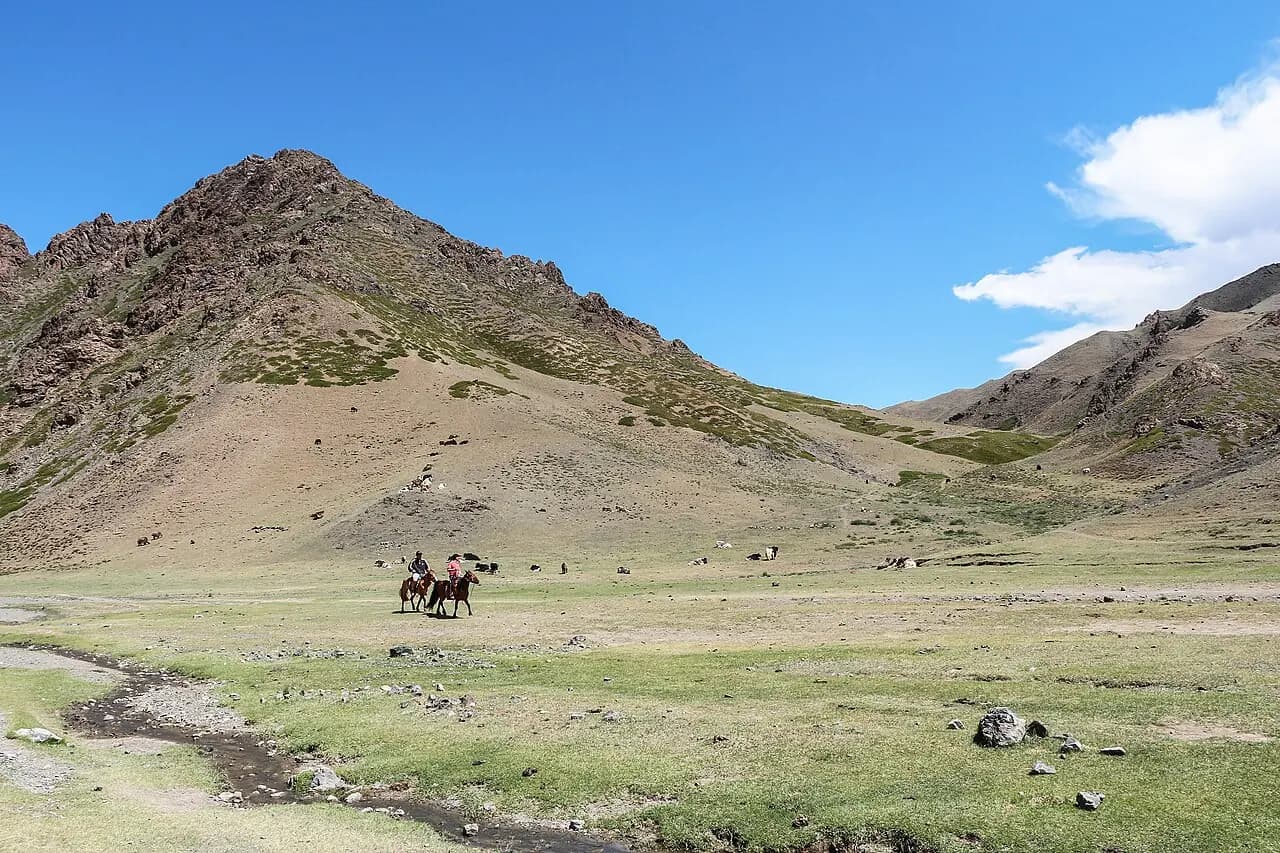
An ice-filled gorge in the heart of the Gobi; the ice survives into midsummer.
Yolyn Am is a deep, narrow gorge in the Zuun Saikhan range, the eastern of the three 'Beauties' that make up the Gurvan Saikhan mountains. Its name means 'Lammergeier Valley', after the bearded vulture (yol) that nests on its cliffs. In winter a thick ice field builds up in the shaded canyon; by the end of winter it is several metres thick and can stretch for kilometres. It once lasted all year, but now it usually melts away by September.
A mountain refuge in the desert
The gorge lies inside Gobi Gurvan Saikhan National Park, Mongolia's largest national park. The mountains catch more moisture than the plains around them, so the valley floor has a stream, grassy meadows and summer flowers. Birds include the lammergeier, Himalayan and cinereous vultures, Altai snowcock, wallcreeper and Mongolian finch. Argali and Siberian ibex move along the upper slopes, and snow leopards live in the range, although visitors almost never see them. Pikas are common along the path, especially near the ice.
Walking the gorge
From the car park a level path follows the stream into the valley, which narrows until the cliffs are only a few metres apart. Most people walk to the ice and back in two to three hours. Scan the ridges with binoculars for ibex and vultures, and stop at the small national park museum at the gate to see the region's wildlife and plants.
Timing and care
Visit between late May and early July if you want to see the ice; by August little may remain. The gorge is cool and shady even in summer, so bring a warm layer. Ice and wet rock are slippery, and walking on thin ice over running water is unsafe. Do not feed the pikas or pick flowers, and stay on the main path to protect the meadows.
Photo: Bernard Gagnon · CC0 · Wikimedia Commons
Things to do at Yolyn Am
4 activities · best season: Summer, Spring, Autumn
Hiking · 2–3 h
Hike into the ice gorge
An easy path follows the stream about 2 km from the car park into a canyon only a few metres wide, where ice often lasts into July.
Wildlife · Any time
Watch for ibex, argali and vultures
The gorge is named after the lammergeier (yol). Scan the cliffs for ibex and argali sheep, and look for pikas along the path.
Horse riding · 1–2 h
Ride a horse up the valley
Local herders rent horses at the entrance for the ride to the gorge mouth.
Read the guide →Museum · 30 min
Visit the national park museum
The small museum at the park gate shows Gobi wildlife, plants and dinosaur finds.
When to go & how to get there
Weather by month
Getting there
The gorge is about 45 km west of Dalanzadgad, which has flights and daily buses from Ulaanbaatar. From Dalanzadgad the road to the park gate is partly paved; taxis and hired cars make the trip.
Where to stay
Dalanzadgad has hotels and guesthouses. Ger camps line the road towards the gorge, and more tourist camps lie in the Gobi Gurvan Saikhan foothills within an hour's drive.
Gallery
5 photos · tap to enlarge · sources credited on each photo
Where is Yolyn Am?
from Ulaanbaatar from Dalanzadgad · a dotted end marks a stretch with no road
Ömnögovi province · nearest town: Dalanzadgad
Guides that mention Yolyn Am
- Mongolian GeographyMongolian geography explained: the Altai, Khangai and Khentii ranges, Lake Khövsgöl, rivers, steppe, the Gobi Desert, the extreme climate and travel tips.
- Wildlife of MongoliaWildlife of Mongolia: snow leopards, Przewalski's horses, wild camels, Gobi bears, gazelles, eagles and taimen, plus where to see them responsibly.
- Tourism in MongoliaTourism in Mongolia explained: top regions from the Gobi to Khövsgöl and the Altai, the travel season, transport, ger camps and how trips are usually organised.
- Mongolia Travel MapMongolia travel map explained: the Gobi, Central Khangai, Khövsgöl in the north, the western Altai and the eastern steppe, with classic routes from Ulaanbaatar.
- Gobi Desert Tour MapGobi Desert tour map: the classic 6–8 day loop from Ulaanbaatar via Tsagaan Suvarga, Yolyn Am, Khongoryn Els, Bayanzag and Kharkhorin, with rough distances.
- 15 Facts About the Gobi Desert15 facts about the Gobi Desert: its size, cold climate, dunes, dinosaur fossils, Gobi bears, wild camels and mineral wealth, plus tips for visiting.
Gobi
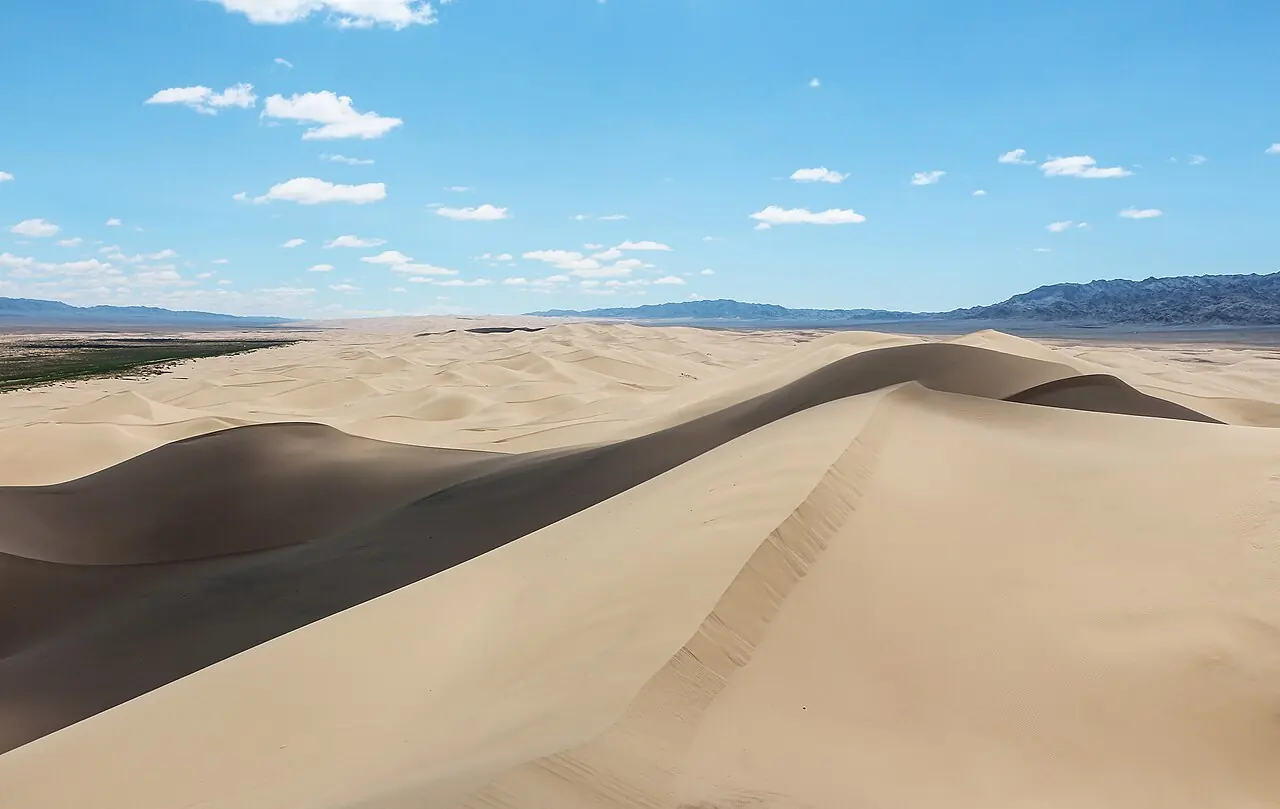
Khongoryn Els
The 'singing sands': one of Mongolia's largest dune fields, with ridges said to reach 300 m.
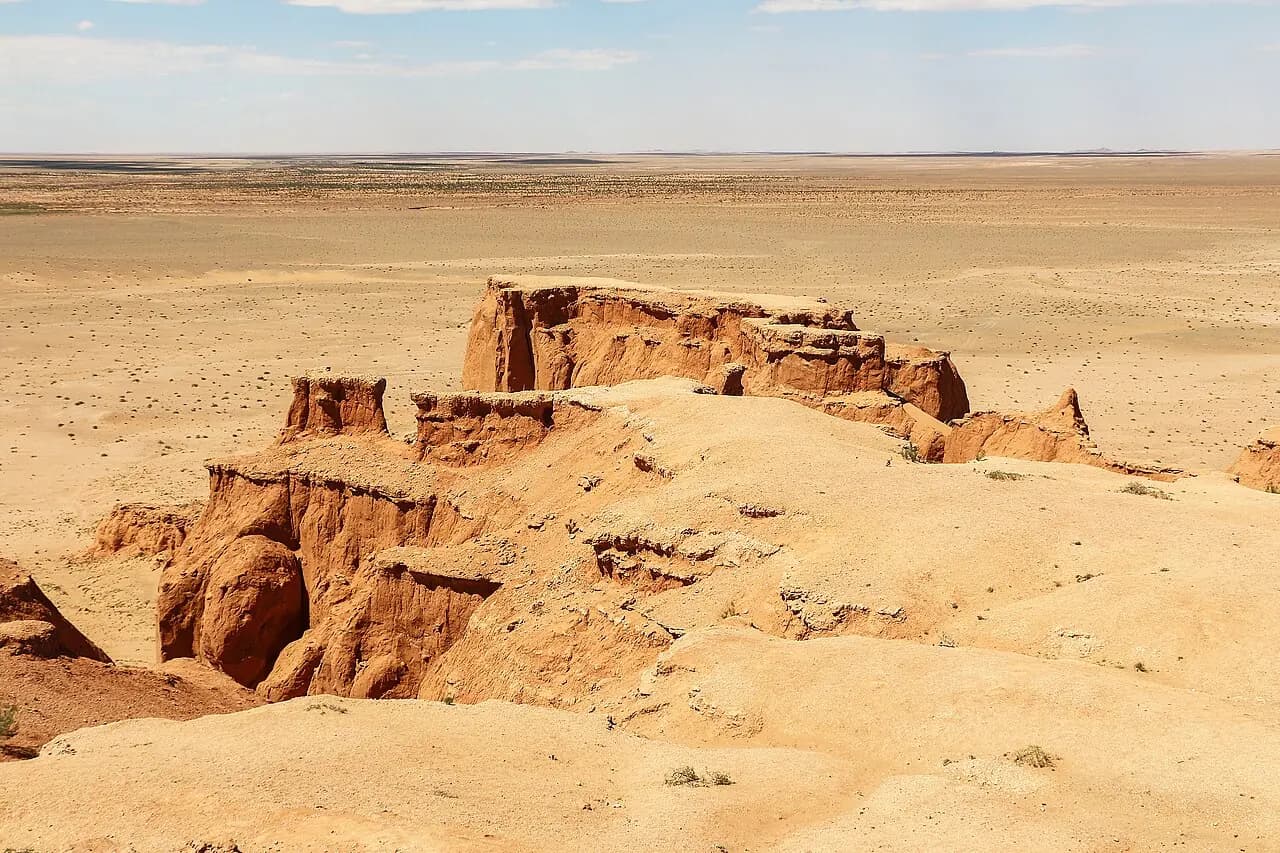
Bayanzag (Flaming Cliffs)
The red cliffs where dinosaur eggs were first discovered.
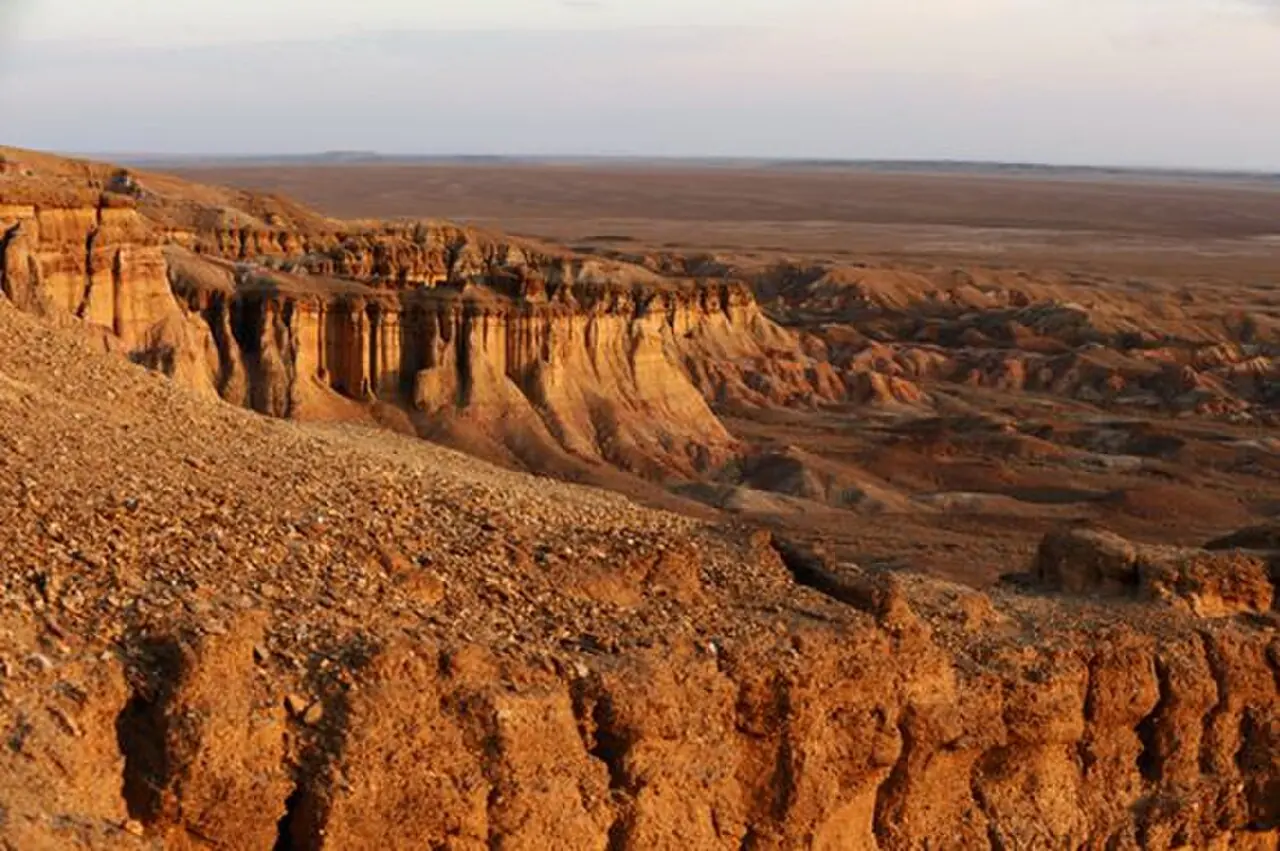
Tsagaan Suvarga
A 60 m wall of multicoloured clay, once a sea floor.