Cultural Tips for Visitors
Cultural tips for visiting Mongolia: greetings, ger etiquette, accepting food and vodka, monasteries and ovoo, photos and gifts. The key do's and don'ts.
3 min read · Updated
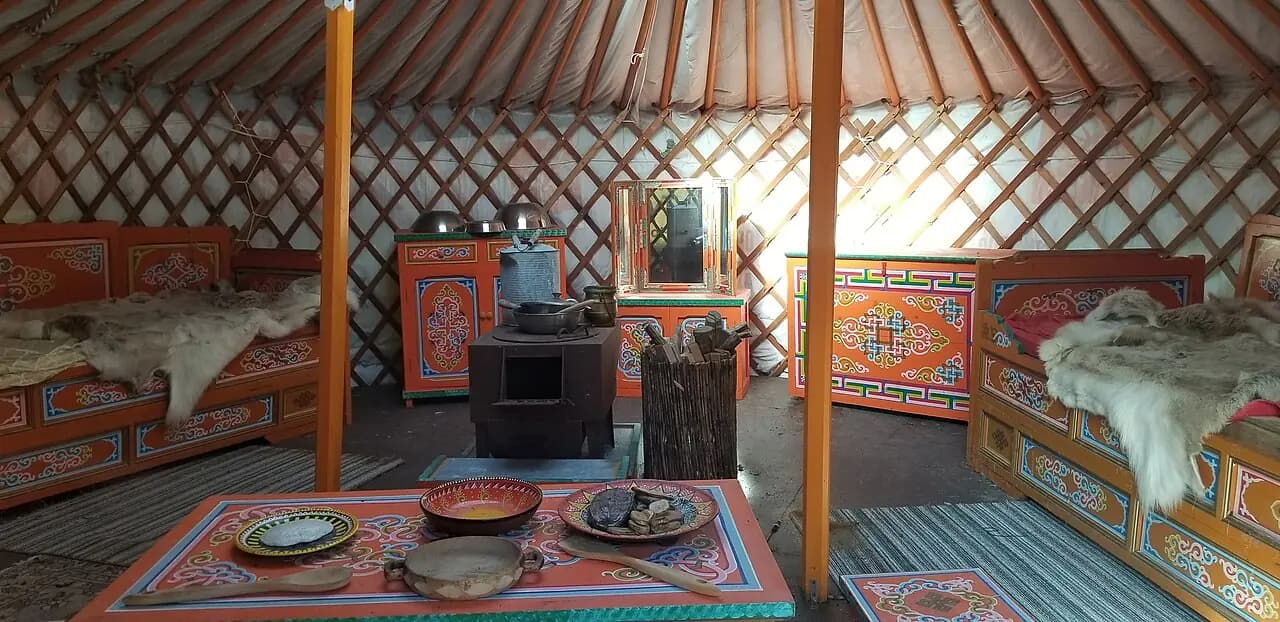
Photo: Silver Dovelet · CC BY-SA 4.0 · Wikimedia Commons
Mongolians are hospitable and forgiving towards visitors, but a few customs matter a lot: step over (never on) the threshold of a ger, accept things with your right hand, move clockwise, and respect the hearth, elders and sacred places. Knowing these do's and don'ts makes visits to herding families and monasteries easier and more rewarding for everyone.
Greetings and body language
The standard greeting is "Sain baina uu?" (Hello, how are you?). Handshakes are normal in cities; in the countryside, people often greet by asking whether you, your family and your animals are well. If you accidentally touch or kick someone's foot, shake their hand straight away — a small gesture that cancels the bad omen. Avoid pointing a single finger at people or sacred objects; gesture with the whole hand instead. Don't touch another person's head or hat, and don't step over people's legs or belongings.
Ger etiquette: do's and don'ts
- Let the family know you have arrived. If dogs are around, stay by the vehicle and ask someone to hold them — the phrase is "Nokhoi khori!"
- Step over the threshold; don't stand or sit on it.
- Once inside, move to the left (west) side and around clockwise. Don't walk between the two central columns or lean on them.
- Sit where you are invited, and avoid pointing your feet at the stove or the family altar.
- Don't whistle inside the ger, and never throw rubbish into the fire.
- Accept tea or food with your right hand, or with both hands; supporting your right elbow with your left hand is an extra sign of respect.
Food, drink and vodka
Milk tea, dairy snacks and in summer often airag (fermented mare's milk) will be offered. You don't have to finish everything — taking a sip or a small bite and returning the bowl is polite. When vodka is passed round, a common custom is to dip the ring finger of your right hand into the cup and flick drops towards the sky, the air and the earth, then drink or simply touch the cup to your lips and return it. Saying that you don't drink is perfectly acceptable. If you are offered a snuff bottle, receive it with your right hand, open it slightly or sniff the cap, and hand it back.
Monasteries, ovoo and sacred places
- Walk clockwise around temples, stupas and ovoo (sacred cairns); you may add a stone and circle three times.
- Dress modestly, remove your hat in temples and ask before photographing.
- Don't climb on an ovoo or take anything from it.
- Don't wash in, urinate near or pollute springs, rivers and lakes, which are considered sacred.
Photos, gifts and money
Ask before photographing people, especially elders and children. Small, practical gifts for host families — fruit, sweets, tea, school supplies, or prints of photos you send afterwards — are appreciated; give them with your right hand or both hands. If you stay with a family as part of a tour, agree payment in advance through your operator so hosts are fairly paid and you avoid awkward moments.
Practical tips for respectful travel
- Learn "Bayarlalaa" (thank you) and "Sain baina uu?" (hello).
- Ask your guide to explain local customs, which vary between regions and ethnic groups.
- Take your rubbish with you from the countryside.
- Be patient: rural plans are flexible, and that is part of the experience.
Frequently asked questions
What is the most important rule when entering a ger?
Step over the threshold without touching it, then move to the left and around clockwise. Also avoid leaning on the central columns or throwing anything into the fire.
Do I have to drink vodka or airag if offered?
No. You can take a small sip or just touch the cup to your lips and return it, and it is fine to say that you don't drink.
What gift should I bring to a herding family?
Small practical gifts such as fruit, sweets, tea or school supplies work well. Hand them over with your right hand or both hands.