Mongolian Values
Mongolian values explained: hospitality, respect for elders, reverence for nature, the horse and the hearth, with tips on how travellers can show respect.
3 min read · Updated
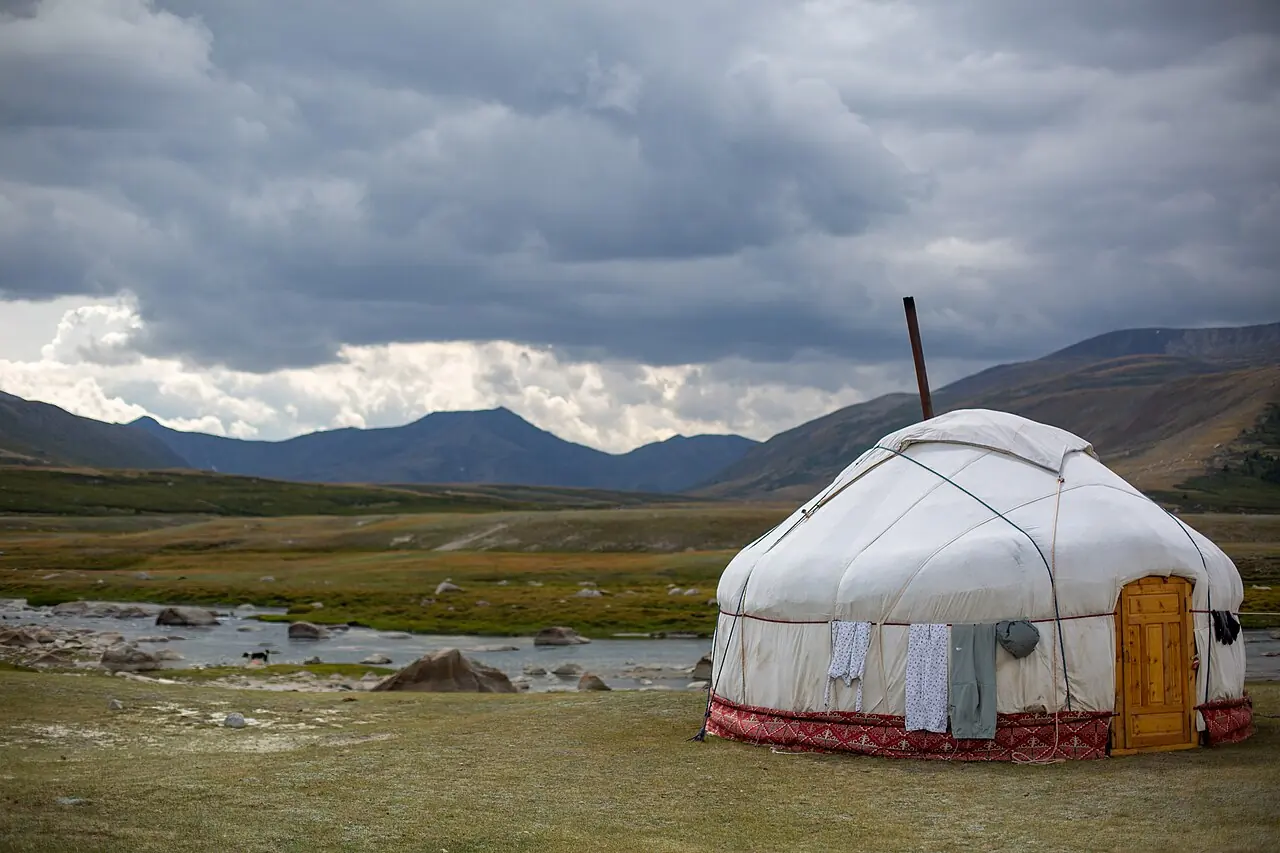
Photo: Bfreeproductions · CC BY-SA 4.0 · Wikimedia Commons
Mongolian values grow out of centuries of nomadic life on the steppe: generous hospitality, respect for elders, reverence for nature, a deep bond with the horse and care for the family hearth. These values still shape daily life in both the city and the countryside. Understanding them helps travellers feel welcome and avoid unintended offence.
Hospitality: the open door of the ger
On the steppe, where the next family might be many kilometres away, taking in travellers was a matter of survival, and hospitality remains a point of pride. A visitor to a ger is usually offered milk tea (süütei tsai) straight away, followed by dairy products, bread or a meal. Hosts rarely ask in advance how long you will stay. Accept what is offered with your right hand, or with both hands, and at least taste it; you do not need to finish everything. When you leave, a small practical gift and sincere thanks are appreciated.
Respect for elders
Age carries authority in Mongolian society. Elders are greeted first, seated in the place of honour at the back of the ger, and served first. During Tsagaan Sar, the Lunar New Year, younger people greet elders with the zolgokh greeting: they hold out their arms, palms up, and support the elder's forearms from below. Grandparents often help raise grandchildren, and adult children are expected to care for ageing parents. Use polite forms with older people, and let them speak first.
Reverence for nature
Traditional belief holds that mountains, rivers and springs have spirit masters, and many places are honoured with ovoo, stone cairns often decorated with blue khadag scarves. Travellers commonly walk clockwise around an ovoo three times and add a stone. Customs that protect nature include not polluting water sources, not digging the earth without reason and not cutting living trees. Several mountains, such as Bogd Khan Uul near Ulaanbaatar, have long been protected as sacred. Leaving no rubbish behind is the most practical way to share this value.
The horse in Mongolian life
A Mongolian proverb says that a Mongol without a horse is like a bird without wings. Horses carried herders, warriors and messengers, and they still matter in the countryside. Racehorses are celebrated in songs and poems, the morin khuur fiddle carries a carved horse head, and a horse's skull is sometimes placed on an ovoo as a mark of respect. Admire horses, but ask before touching or riding one.
The hearth: fire as the centre of the home
The hearth (gal golomt) is the symbolic heart of the family and its continuity across generations. The stove in the centre of the ger should be treated with respect: do not throw rubbish into the fire, do not point your feet at it, do not poke it with knives or sharp objects, and do not step over it. Pouring water onto the fire is also avoided except in an emergency.
Practical tips for showing respect
- Accept and pass things with your right hand, or both hands; never with the left hand alone.
- Do not lean on the ger's central posts, step on the threshold or whistle inside.
- Greet elders first and wait to be shown where to sit.
- Ask before photographing people, ovoo offerings or religious objects.
- Walk clockwise inside a ger and around ovoo and stupas.
Frequently asked questions
What should I know when visiting a Mongolian home?
Accept tea and food with your right hand and taste it, greet elders first, never throw rubbish into the fire and do not step on the threshold.
How should I walk around an ovoo?
Walk clockwise around the ovoo, usually three times, and add a stone or tie a blue khadag scarf if you wish.