The Ger: Mongolian Yurt
The Mongolian ger (yurt) explained: lattice walls, roof poles and crown, inside layout and customs, gers in modern Ulaanbaatar, and tips for staying in one.
3 min read · Updated
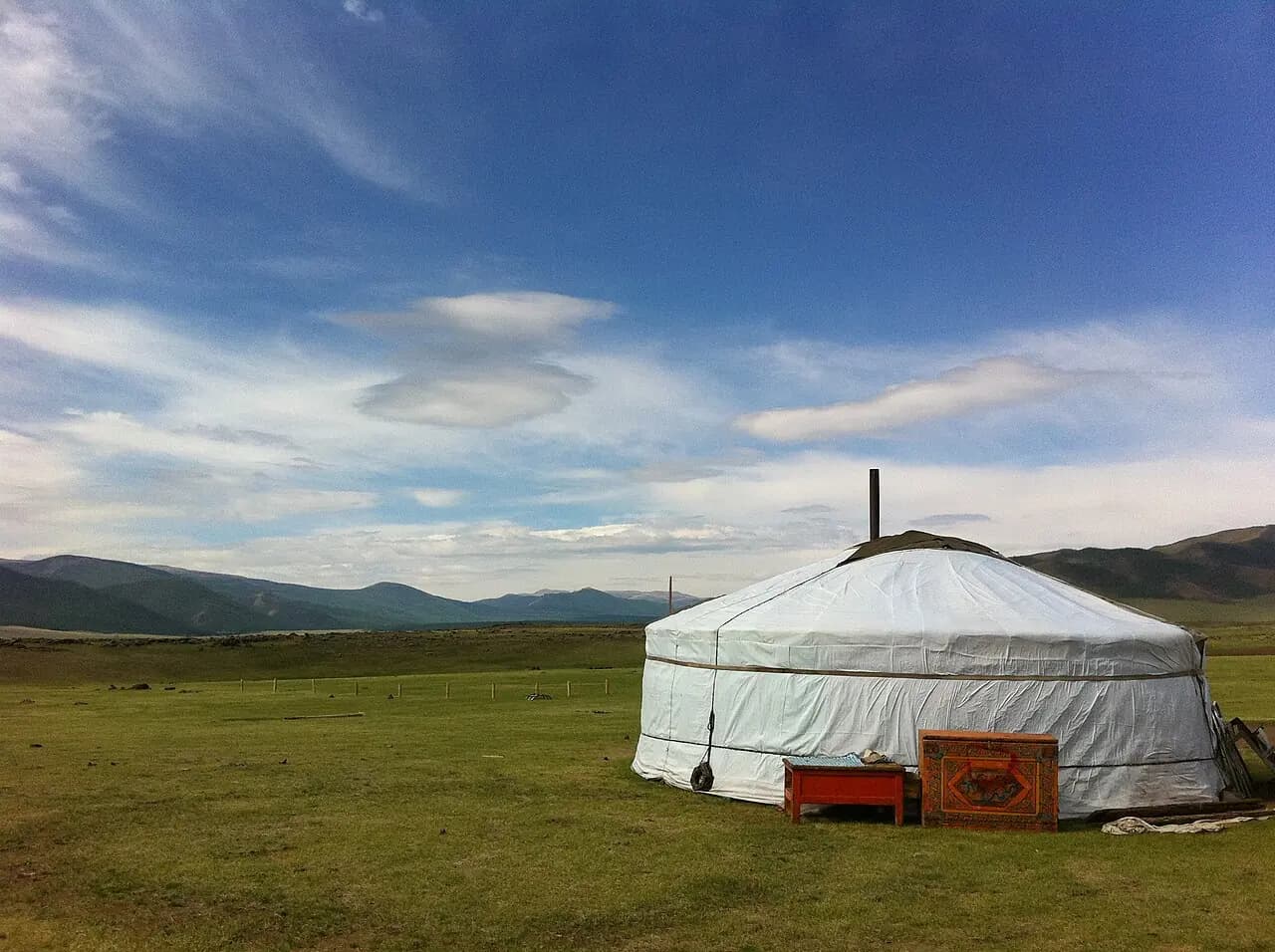
Photo: P.Lechien · CC0 · Wikimedia Commons
A ger is the round, felt-covered portable dwelling that Mongolian herders have lived in for centuries; in English it is often called a yurt. A family ger can be taken down, loaded onto a truck or camels and put up again in a few hours, and it stays warm in winter and cool in summer. Today gers are homes for herders and for many families in Ulaanbaatar's ger districts, and the standard accommodation in tourist camps.
How a Mongolian ger is built
A ger has a simple, ingenious frame:
- Khana — expanding wooden lattice wall sections; a typical family ger has four to six, and their number sets the size.
- Uni — long, often painted roof poles running from the top of the walls to the crown.
- Toono — the round wooden crown at the top, which lets in light and air and lets the stovepipe out.
- Bagana — two columns that support the crown.
- Khaalga — the wooden door, usually painted orange or red.
The frame is wrapped in layers of felt made from sheep's wool, covered with an outer canvas and tied down with ropes. In summer the lower edge of the felt can be rolled up for ventilation; in winter extra layers are added. The traditional craftsmanship of the Mongol ger and its associated customs are inscribed on UNESCO's list of Intangible Cultural Heritage.
Inside the ger: layout and meaning
The door faces south, away from the prevailing north-westerly winds. The stove or hearth stands in the centre and is treated with respect, as fire is sacred. The back of the ger, opposite the door, is the khoimor — the place of honour for elders and guests, where a family altar with Buddhist images or photographs is kept. Traditionally the west side (left as you enter) is the men's side, with saddles and tools, and the east side (right) is the women's side, with the kitchen and dairy utensils. Beds line the walls and painted chests hold belongings. The toono also served as a clock: herders could tell the time of day by where sunlight fell on the poles and walls.
Gers in modern Mongolia
Gers are not only rural. On the hillsides around Ulaanbaatar, large ger districts house a substantial share of the city's population, often in fenced plots with a ger and a small house side by side. These areas face challenges such as coal heating and limited water and sewage connections, which contribute to the capital's severe winter air pollution. Ger making is also a living craft and business, with workshops supplying herders, tourist camps and buyers abroad.
Staying in a ger as a traveller
Most countryside trips involve nights in tourist ger camps or with herding families. Tourist camps usually provide beds, a wood or dung stove and shared shower and toilet blocks, with standards ranging from basic to upmarket. In a family ger, conditions are simpler: the toilet is usually an outdoor pit, and you may share the space with your hosts.
Practical tips for ger stays
- Step over the threshold; never stand or sit on it.
- Move clockwise inside and sit where your host indicates.
- Don't lean on the two central columns or point your feet towards the stove or altar.
- Never throw rubbish into the stove.
- Nights can be cold even in summer: bring a warm layer and ask how to feed the stove safely.
- In tourist camps, check electricity, hot water and phone-charging arrangements before booking, as facilities vary and change.
Frequently asked questions
What is the difference between a ger and a yurt?
Essentially they are the same thing. Ger is the Mongolian word; yurt comes via Russian from Turkic languages and is the term commonly used in English.
How long does it take to put up a ger?
An experienced family can put up an ordinary ger in a few hours. Larger gers or inexperienced crews take longer.
Are gers warm in winter?
Yes, with extra layers of felt and a stove that is fed regularly. They cool down quickly once the fire goes out at night, though.