What is a Tourist Camp?
What is a tourist camp in Mongolia? Ger camps explained: what is inside a ger, meals, showers, electricity, camp types and how they differ from homestays.
3 min read · Updated
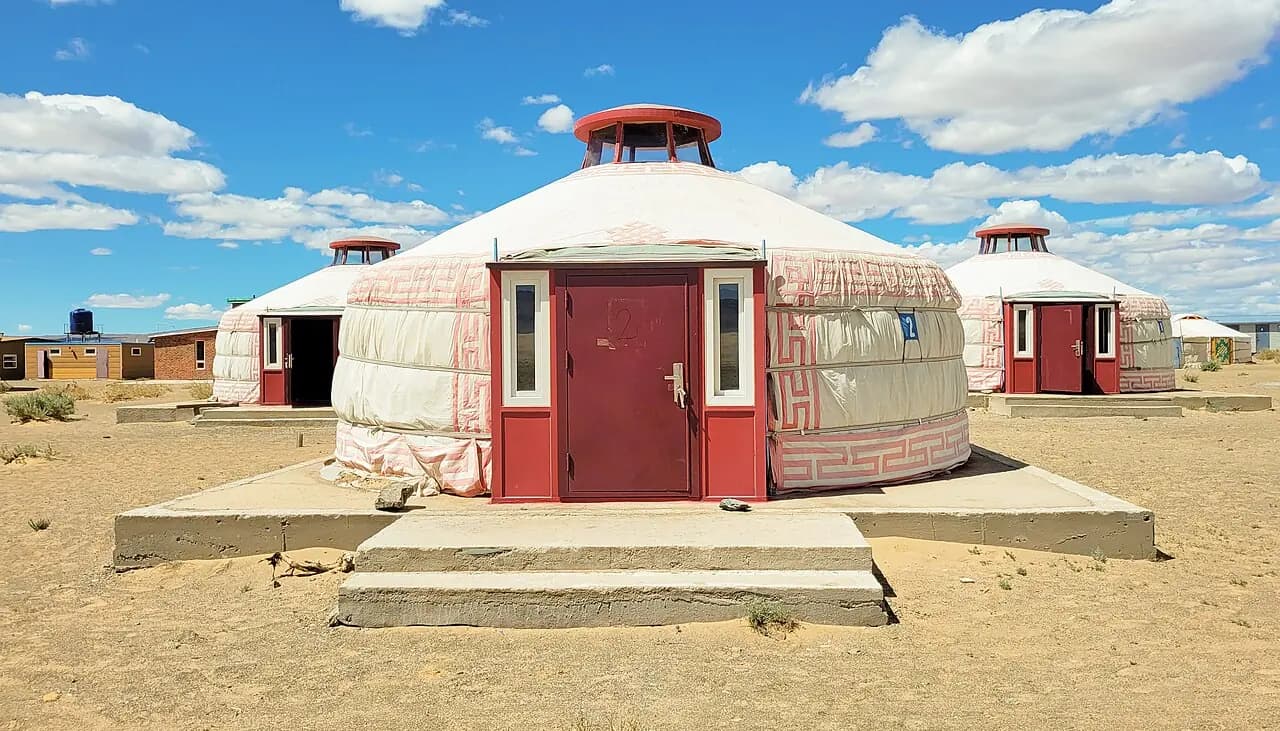
Photo: Bernard Gagnon · CC0 · Wikimedia Commons
A tourist camp in Mongolia (жуулчны бааз, juulchny baaz) is a small, purpose-built settlement of gers where travellers sleep, eat and wash while touring the countryside. Most have a central restaurant building, a shower and toilet block, and anywhere from about ten to several dozen gers set out in rows. Ger camps are the standard overnight stop on most organised tours, from the Gobi to Khövsgöl.
What a ger camp looks like
A typical camp sits in a scenic spot near a sight, such as at the foot of sand dunes, by a lake or in a river valley. The guest gers are traditional round felt tents on a wooden frame, often with a wooden floor and a painted orange door that faces south, as in a herder's ger. Around them you will find a larger building or a big ger used as the dining hall, a separate washroom block, and sometimes a reception, small shop, bar or sauna. Many camps also keep horses or camels for short rides.
What is inside a tourist ger
Most tourist gers sleep two to four people on single beds with sheets, blankets and pillows. In the centre stands a metal stove that burns wood or dried dung, with the chimney rising through the roof ring (toono). Expect a small table, a stool or two, a rug and coat hooks; some have a power socket or a single light. Staff usually light the stove in the evening and early morning when nights are cold, even in summer. The stove goes out after a few hours, so keep a warm layer near your bed.
Facilities, meals and services
- Bathrooms: usually a shared block with hot showers, flush toilets and sinks. Hot water may be limited to certain hours, and very remote camps may only have pit toilets.
- Meals: many camps include breakfast, lunch and dinner, or meals are arranged by your tour operator. Food is typically a mix of Mongolian and European dishes; ask in advance for vegetarian meals.
- Electricity: often from the grid, a generator or solar panels, sometimes only in the evening. Charging may be in the restaurant building.
- Internet: mobile coverage is common near larger sights, but do not count on Wi-Fi.
Types of tourist camps
- Basic camps: simple gers, shared facilities and home-style food, often run by local families.
- Standard camps: the most common type, with comfortable beds, a proper shower block and a restaurant.
- Upscale and luxury camps: larger gers with private bathrooms, better furnishings, sometimes en-suite showers, organised activities and wine lists.
Most camps open only in the main season, roughly from late May or June to September or early October; check opening dates with the camp or your operator.
Ger camp vs staying with a nomadic family
A tourist camp is a hotel in ger form: comfortable and predictable, but separate from everyday herding life. A homestay with a nomadic family means sleeping in or beside the family's own ger, sharing their food and following their routine. Many itineraries combine both. Whichever you choose, follow ger etiquette: move clockwise inside, do not step on the threshold, and accept offered food or tea with your right hand.
Practical tips
- Bring a headlamp, flip-flops for showers and a quick-dry towel.
- Pack a warm layer and hat for nights, even in July.
- Carry some cash: remote camps may not accept cards for drinks or extras.
- Ask how the stove works and keep the door clear of clutter.
Places in this guide
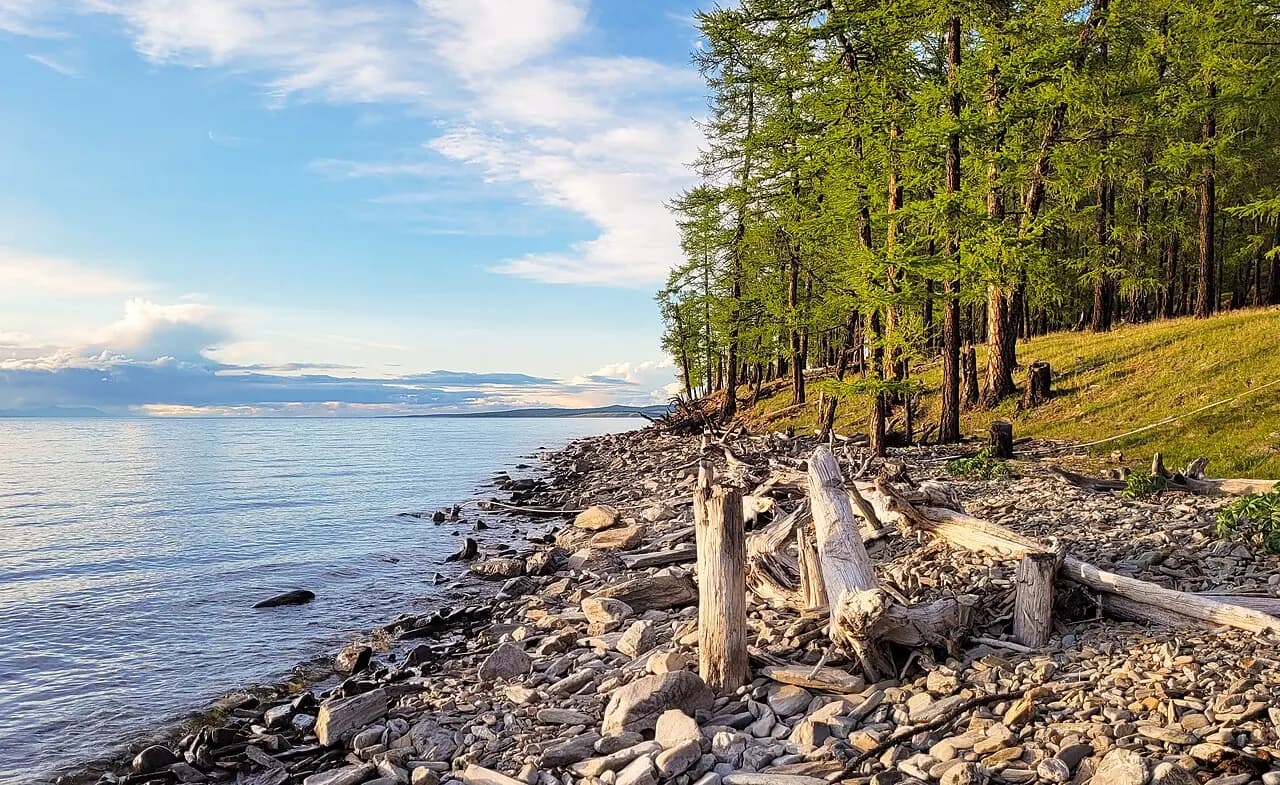
Lake Khövsgöl
The 'blue pearl of Mongolia', holding almost 70% of Mongolia's fresh water.
Frequently asked questions
Do ger camps in Mongolia have showers and toilets?
Most have a shared block with hot showers and flush toilets; upscale camps may offer private bathrooms, while very remote camps can be more basic.
Are ger camps cold at night?
Nights can be cold even in summer. Staff light the stove in the evening, but it burns out, so keep a warm layer handy.
When are tourist camps open?
Most operate from about late May or June to September or early October; a few near Ulaanbaatar stay open longer. Check dates with the camp.