Gobi Desert Weather by Month
Gobi Desert weather by month: day and night temperatures, spring dust storms, summer storms, the best time to visit and what to pack for the Mongolian Gobi.
3 min read · Updated
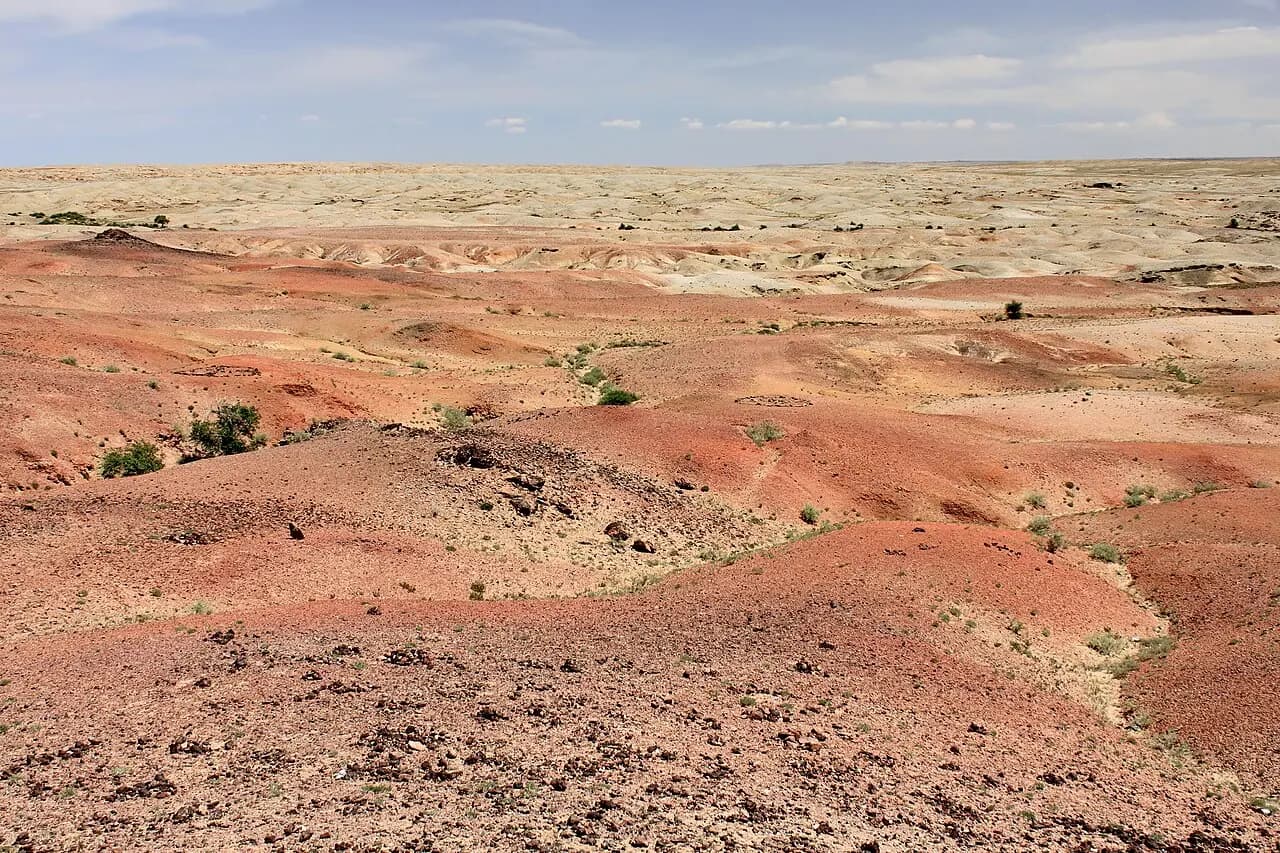
Photo: Marcin Konsek · CC BY-SA 4.0 · Wikimedia Commons
The Gobi Desert has an extreme continental climate: very cold, dry winters, hot summers and big swings between day and night. In the South Gobi, where most travellers go, summer days often reach 25–30 °C or more, while January nights can drop below -25 °C. The most comfortable months to visit are late May to June and late August to September. Figures below are typical values for the South Gobi around Dalanzadgad; individual days and years vary widely.
Gobi climate at a glance
The Gobi lies in the rain shadow of the high mountains and plateaus to the south and west, so it receives little rain, typically on the order of 100–200 mm a year across much of the Mongolian Gobi. Most of it falls in July and August, often in short, heavy storms. Spring is the windiest season. Skies are clear for much of the year, and the thin, dry air means strong sun by day and fast cooling after sunset, often by 15 °C or more.
Winter: December to February
- December: clear, dry and very cold. Days around -10 °C, nights near -20 °C.
- January: the coldest month. Days often stay below -5 °C, and nights around -20 to -25 °C, colder in low basins.
- February: still cold but sunnier and slightly milder; wind begins to pick up.
Snow is usually light, but the cold is serious. Few tourist camps are open.
Spring: March to May
- March: days near freezing, nights around -15 °C, increasingly windy.
- April: days of 10–15 °C, frosty nights, and frequent strong winds that can raise dust and sand storms.
- May: days of 20 °C or more, nights near freezing or a little above. Dust storms are still possible. Camps reopen in the second half of the month.
Summer: June to August
- June: warm days of about 25 °C, cool nights, and generally dry conditions. A popular month.
- July: the hottest month, with days often near 30 °C and peaks well above that in low-lying areas, where temperatures near 40 °C have been recorded. Short thunderstorms are possible.
- August: still hot, with the highest chance of rain. Sudden downpours can cause flash floods in dry riverbeds and make tracks muddy.
Autumn: September to November
- September: clear and pleasant, with days around 20 °C and cold nights near freezing. One of the best months to visit.
- October: days of about 10 °C and nights well below freezing; most camps close during the month.
- November: winter returns, with days below freezing and nights near -15 °C.
Best time to visit the Gobi
Late May to June and late August to September offer the best balance of warm days, fewer storms and open camps. July is fine if you accept the heat and plan dune climbs for early morning or evening. The Thousand Camel Festival in early February suits travellers prepared for cold, windy weather.
Practical tips
- Pack layers: a sun hat and light long sleeves for the day, a fleece or down jacket for nights, even in summer.
- Bring sunglasses, high-factor sunscreen and lip balm; the sun and dry air are intense.
- A buff or scarf protects your face during dusty winds.
- Carry more water than you think you need, especially on dune hikes.
- Never camp or park in a dry riverbed: storms upstream can send water down quickly.
- Weather forecasts change; check the National Agency for Meteorology and Environmental Monitoring of Mongolia and ask your driver before long drives.
Frequently asked questions
What is the hottest month in the Gobi Desert?
July is usually the hottest month, with days often near 30 °C in the South Gobi and higher in low-lying areas.
Does it get cold at night in the Gobi in summer?
Yes. Temperatures can drop by 15 °C or more after sunset, so a warm jacket is essential even in July.
When are dust storms most likely in the Gobi?
Spring, especially April and May, is the windiest period with the highest risk of dust and sand storms.