Khorkhog: Mongolian BBQ
Khorkhog, Mongolian BBQ: how meat is cooked with hot stones in a sealed churn, why the stones are passed around, how it differs from boodog and where to try it.
3 min read · Updated
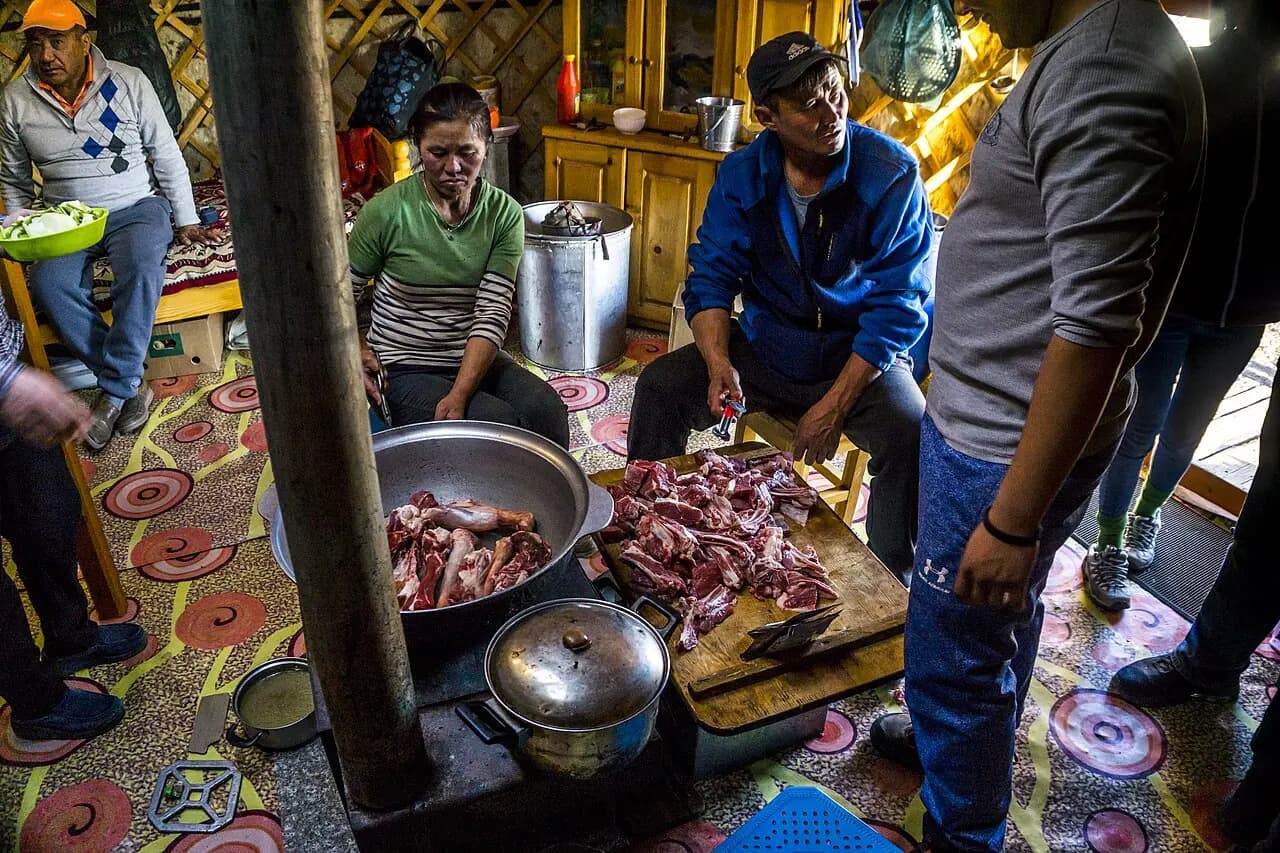
Photo: NuclearApples · CC BY-SA 4.0 · Wikimedia Commons
Khorkhog is Mongolia's festive barbecue: chunks of mutton or goat cooked with fire-heated stones inside a sealed metal container, together with a little water and vegetables, so the meat steams and roasts in its own juices. It is very different from the stir-fried Mongolian barbecue served in restaurants abroad, and it is usually prepared outdoors for guests, family gatherings and summer celebrations.
How khorkhog is made
Making khorkhog is a group effort that takes a few hours from start to finish:
- A sheep or goat is slaughtered and butchered, and the meat is cut into large pieces, mostly on the bone. A whole sheep feeds a large group.
- Smooth, fist-sized stones, ideally from a river bed, are heated in a wood or dung fire until they are very hot.
- The meat, hot stones, salt and often onion, carrot, potato and cabbage are layered inside a large milk churn or heavy pot with some water.
- The container is closed tightly and set on or beside the fire. Steam and the heat of the stones cook the meat from the inside, usually in around an hour or more, depending on the amount.
- When it is opened, the meat is shared out first, and the rich broth is drunk from bowls.
The hot stones and their meaning
Once the meat is served, the stones, now black and glossy with fat, are passed around and tossed from palm to palm. Many Mongolians believe that holding them warms the body, eases tiredness and is good for health. Treat them with care: they can stay very hot for a long time, so wait until they are comfortable to hold.
Khorkhog, boodog and Mongolian BBQ: what is the difference?
- Khorkhog cooks cut meat with hot stones inside a closed container.
- Boodog is a different dish: a whole goat is cooked inside its own skin, with hot stones placed through the neck opening while the outside is scorched over flame. Boodog was traditionally also made with marmot, but marmots can carry plague and their hunting is restricted, so travellers should never eat marmot.
- Mongolian barbecue in restaurants abroad is a stir-fry cooked on a large round griddle. It was developed in Taiwan in the 20th century and is not a traditional Mongolian dish, although similar restaurants now exist in Ulaanbaatar.
Eating khorkhog: etiquette
Khorkhog is eaten with the hands and a knife. The host usually offers the best pieces, including fatty cuts that Mongolians value, to elders and guests first. Accept food and drink with your right hand, or with both hands. Meals are often accompanied by toasts with vodka; it is fine to decline politely or touch the cup to your lips and pass it back.
Practical tips for trying khorkhog
- Ask your tour operator or ger camp in advance. Because khorkhog takes time and is usually made from a whole animal, it is normally arranged for groups and may have an extra charge; confirm details directly with the operator.
- Some traditional restaurants in Ulaanbaatar offer khorkhog, sometimes only by pre-order; check menus before going.
- Vegetarians should tell their host early, as meat dominates these meals.
- Bring wet wipes or a towel; it is a gloriously messy meal.
- Handle the stones with care and keep children away from the fire and the opened container.
Frequently asked questions
Is khorkhog the same as Mongolian BBQ in restaurants abroad?
No. Khorkhog is meat cooked with hot stones in a sealed container, while restaurant Mongolian BBQ is a griddle stir-fry that originated in Taiwan.
Why do Mongolians hold the hot stones?
Passing the greasy, warm stones from hand to hand is believed to warm the body, relieve tiredness and bring good health.
How can a traveller try khorkhog?
Ask your tour operator or ger camp to arrange it in advance, usually for a group. Some traditional restaurants in Ulaanbaatar serve it, often by pre-order.