Thousand Camel Festival
The Thousand Camel Festival now takes place in early February in Ömnögovi. Bactrian camel races, camel polo, Gobi herding culture and tips for a winter Gobi trip.
3 min read · Updated
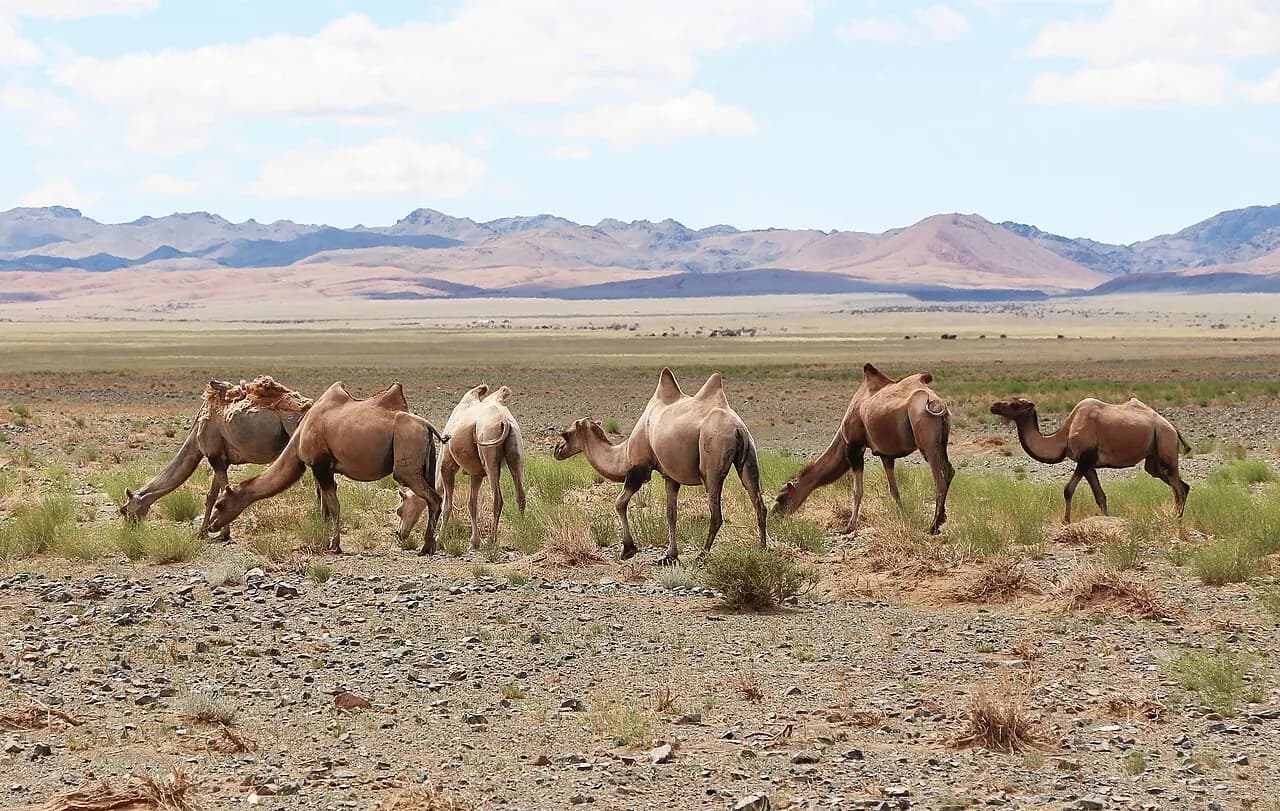
Photo: Bernard Gagnon · CC0 · Wikimedia Commons
The Thousand Camel Festival is a winter festival held in Ömnögovi (South Gobi) province, now usually in early February (until 2022 it was held in early March). Herders bring hundreds of two-humped Bactrian camels together for races, camel polo, decorated-camel contests and displays of Gobi herding life. It was started by local people to celebrate the Bactrian camel and encourage its protection, and it is one of the best reasons to visit the Gobi outside the summer season.
Why the Bactrian camel matters in the Gobi
The Bactrian camel is one of Mongolia's five traditional livestock animals and is superbly adapted to the Gobi. It can go long periods without drinking, eats thorny desert shrubs and copes with deep winter frost as well as summer heat. Gobi families use camels for transport, wool, milk and meat: camel wool is spun into warm socks, blankets and clothing, and fermented camel milk (khoormog) is a regional speciality. Domestic Bactrian camels should not be confused with the wild camel (khavtgai), a separate, critically endangered species that survives only in remote parts of the Gobi.
What to see at the Thousand Camel Festival
The festival's name reflects its aim of bringing a thousand camels together in one place, and the sight of so many animals on the frozen desert is memorable in itself. Typical events include:
- Camel races: a mass start across the open desert, with riders urging their camels over a long course.
- Camel polo: a slow, cheerful version of polo played from the saddle between the humps.
- Best-dressed camel and rider: camels decorated with traditional saddles, tack and ornaments, and riders in Gobi-style deel.
- Herding skills: loading and leading a caravan, saddling, and demonstrations of camel wool work.
- Music and food: folk songs, long song and morin khuur (horse-head fiddle) performances, with local dishes served at the site.
Programmes differ a little from year to year, and visitors are often offered a short camel ride.
Where and when the festival is held
The festival is now usually held in early February, often close to Tsagaan Sar (Lunar New Year), whose date changes each year. It takes place within Ömnögovi province, in recent years usually in Bulgan soum, north-west of the provincial centre Dalanzadgad, but the exact site and dates are set by the organisers each year, so confirm them with your tour operator or the provincial authorities before booking. Dalanzadgad is roughly 550–600 km south of Ulaanbaatar by paved road, a long day's drive, and is also served by domestic flights. A festival trip combines well with Khongoryn Els sand dunes and Yolyn Am gorge, which often holds ice into early summer.
The Gobi in winter: what to expect
Early February in the Gobi is cold, dry and windy. Daytime temperatures usually stay below freezing, nights can fall below -20 °C, and strong winds raise dust and sand. Snow may dust the dunes. Many tourist ger camps close for the winter, so the choice of accommodation is smaller than in summer, though some camps and hotels in Dalanzadgad stay open. On the plus side, there are very few tourists.
Practical tips for the Thousand Camel Festival
- Book through an operator experienced in winter Gobi trips, with a reliable vehicle and driver.
- Dress in layers with a windproof outer shell; bring a scarf or buff and sunglasses for dust, plus lip balm and moisturiser.
- Let handlers lead the camels and do not approach an animal from behind; camels can kick and spit when stressed.
- Carry cash in small notes for food and souvenirs. There are ATMs in Dalanzadgad, but not reliably in rural districts.
Places in this guide
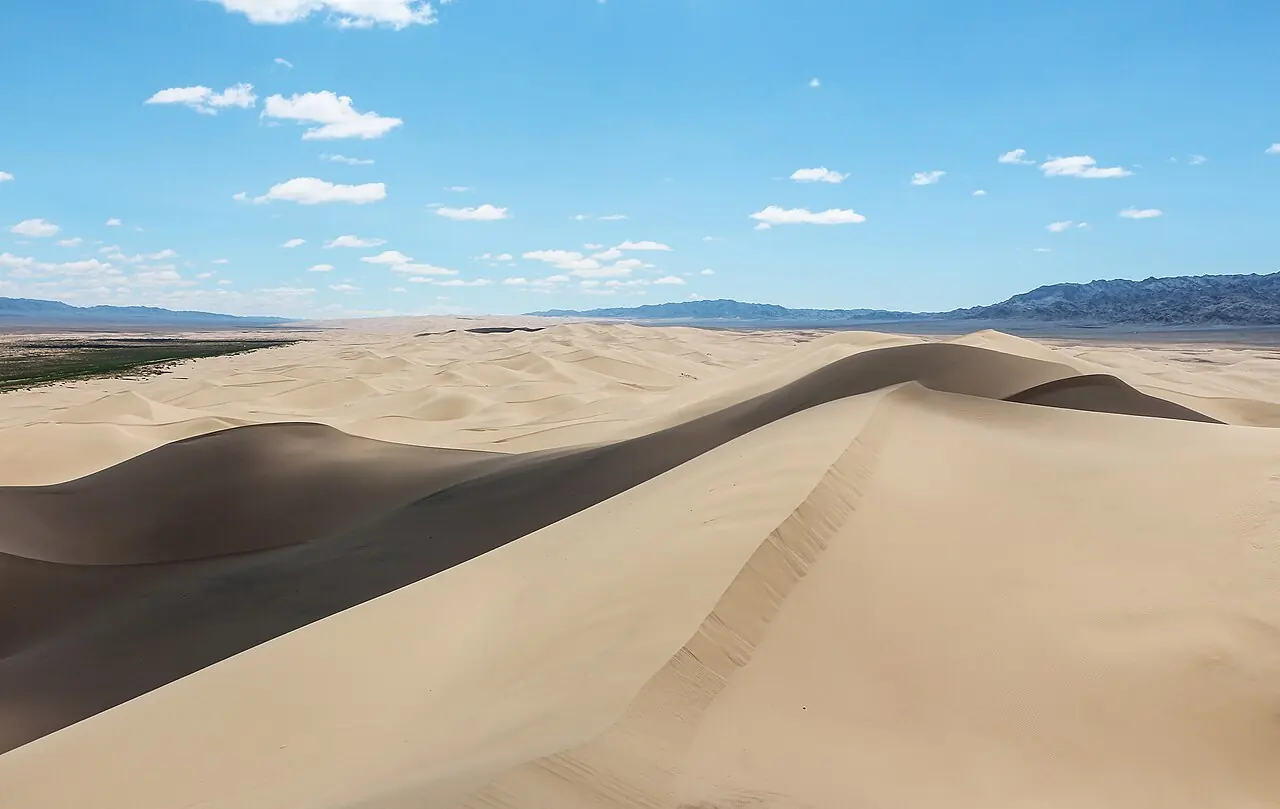
Khongoryn Els
The 'singing sands': one of Mongolia's largest dune fields, with ridges said to reach 300 m.
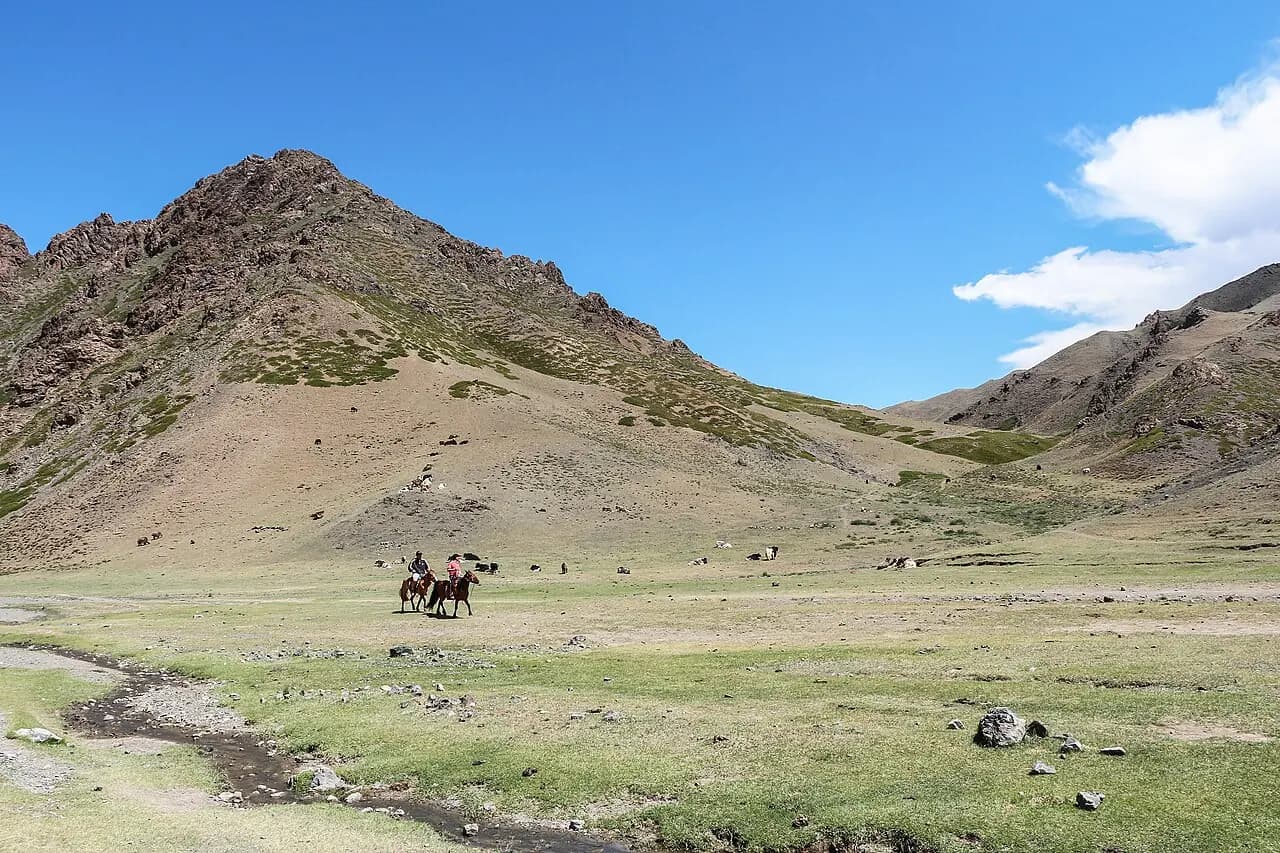
Yolyn Am
An ice-filled gorge in the heart of the Gobi; the ice survives into midsummer.
Frequently asked questions
When is the Thousand Camel Festival?
It is now usually held in early February in Ömnögovi province (it was held in early March until 2022). The exact dates and site are set by the organisers each year, so confirm in advance.
How cold is the Gobi in February?
Days usually stay below freezing and nights can drop below -20 °C, with strong winds. Warm layers and windproof clothing are essential.