Mongolian Calligraphy
Mongolian calligraphy explained: the vertical Mongolian script, brushes and ink, its 2013 UNESCO urgent safeguarding listing and the script's revival today.
3 min read · Updated
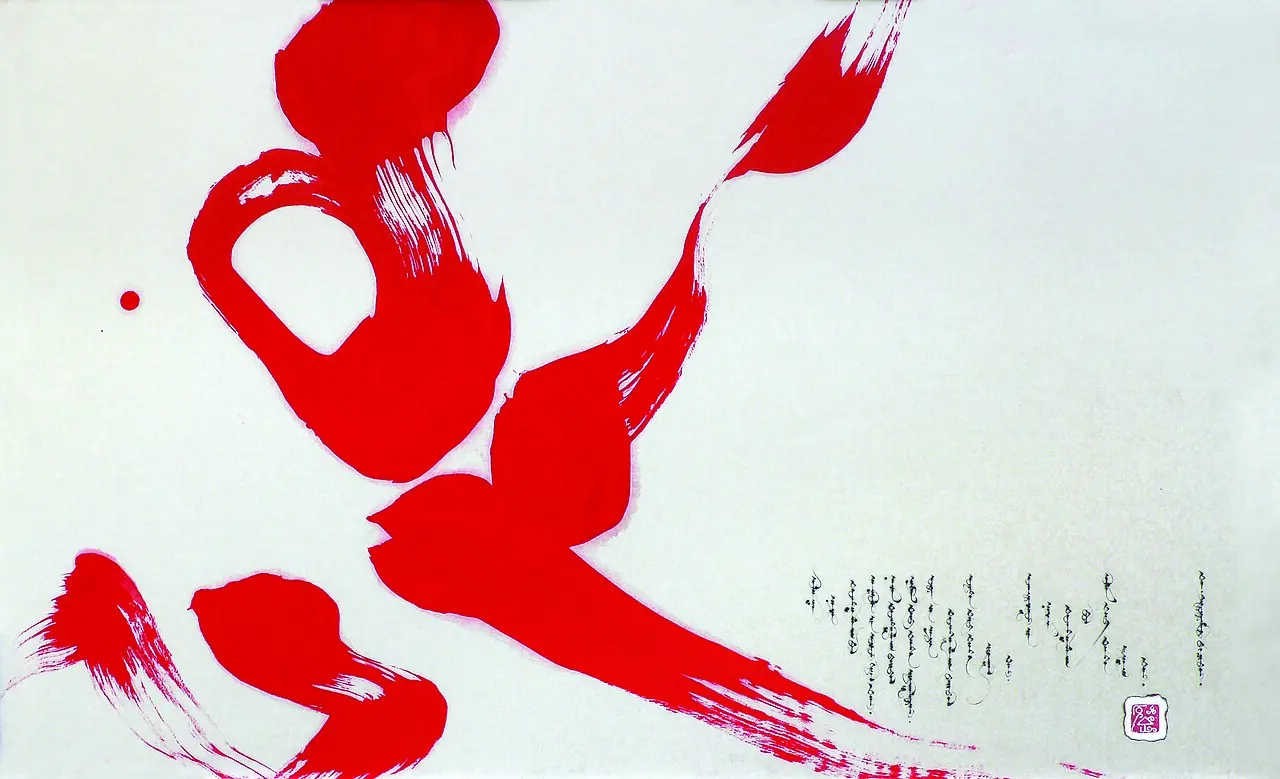
Photo: Battumur · CC BY-SA 4.0 · Wikimedia Commons
Mongolian calligraphy is the art of writing the traditional vertical Mongolian script with brush or pen. It was inscribed on UNESCO's List of Intangible Cultural Heritage in Need of Urgent Safeguarding in 2013. The script, written from top to bottom in columns that run from left to right, has been in use for around eight centuries and is again being taught and promoted across Mongolia.
The traditional Mongolian script
The classical Mongolian script, known as Mongol bichig or Uighurjin Mongol bichig, was adapted from the Old Uyghur alphabet in the early 13th century, around the time of Chinggis Khaan. Letters change shape depending on whether they stand at the beginning, middle or end of a word, and each word hangs from a central vertical stem, which gives the writing its flowing look. Other scripts were created later, including the Clear Script (Todo bichig) by Zaya Pandita in 1648 and the Soyombo script by Zanabazar in 1686, but the classical script remained the main written form for centuries. In the 1940s Mongolia switched to a Cyrillic-based alphabet for everyday use, while Mongols in Inner Mongolia, China, continued to use the vertical script.
Tools and technique
Calligraphers traditionally write with brushes, bamboo or wooden pens and black ink on paper or silk. Good calligraphy depends on the balance between thick and thin strokes, a steady rhythm along the vertical axis and careful spacing between columns. Historically, calligraphy was used for decrees, seals, Buddhist texts, letters and poetry. Today it appears on framed artworks, wall hangings, book covers, logos and gifts. A popular format is a single word or short phrase, such as a blessing or a well-known proverb, written large on a scroll.
UNESCO recognition and why it matters
UNESCO placed Mongolian calligraphy on its Urgent Safeguarding list rather than the Representative List because only a limited number of master calligraphers remained and passing the skill to younger generations was at risk. Mongolia committed to training, competitions and the documentation of masters' work. Calligraphy is linked to customs of respect: texts in the script were traditionally handled carefully and never stepped over or thrown away carelessly.
The revival of the Mongolian script
Since 1990 the traditional script has been taught in schools, and the Law on the Mongolian Language adopted in 2015 strengthened its status. The government has announced plans to use the traditional script alongside Cyrillic in official documents; the scope and timetable of this policy have been adjusted over time, so treat any specific date as subject to change. You will see the vertical script on banknotes, government buildings, shop signs and newspaper mastheads. Calligraphy exhibitions and competitions are held regularly, and studios in Ulaanbaatar offer classes.
Practical tips for travellers
- A framed calligraphy piece with your name or a blessing is a meaningful, flat and easy-to-carry souvenir; artists in galleries and souvenir shops in Ulaanbaatar often write names on request.
- Ask the calligrapher what the text says and request a translation on the back.
- Learn to recognise the word Mongol in vertical script; once you spot it, you will notice the script on signs all over the capital.
- If you would like to try it yourself, ask a museum, gallery or cultural centre about short workshops; schedules change, so confirm before planning around one.
- Treat written texts, especially religious ones, with respect: do not place them on the floor or step over them.
Frequently asked questions
Is Mongolian calligraphy a UNESCO heritage?
Yes. Mongolian calligraphy was inscribed on UNESCO's List of Intangible Cultural Heritage in Need of Urgent Safeguarding in 2013.
Do Mongolians still use the traditional script?
Everyday writing in Mongolia uses Cyrillic, but the traditional script is taught in schools and appears on signs, banknotes and official seals, and its official use is being expanded.
Which direction is Mongolian script written?
It is written vertically from top to bottom, with columns running from left to right.