Mongolian Culture
Mongolian culture explained for travellers: nomadic herding, the ger, hospitality, Naadam, Tsagaan Sar, khöömii, the morin khuur, script and core values.
3 min read · Updated
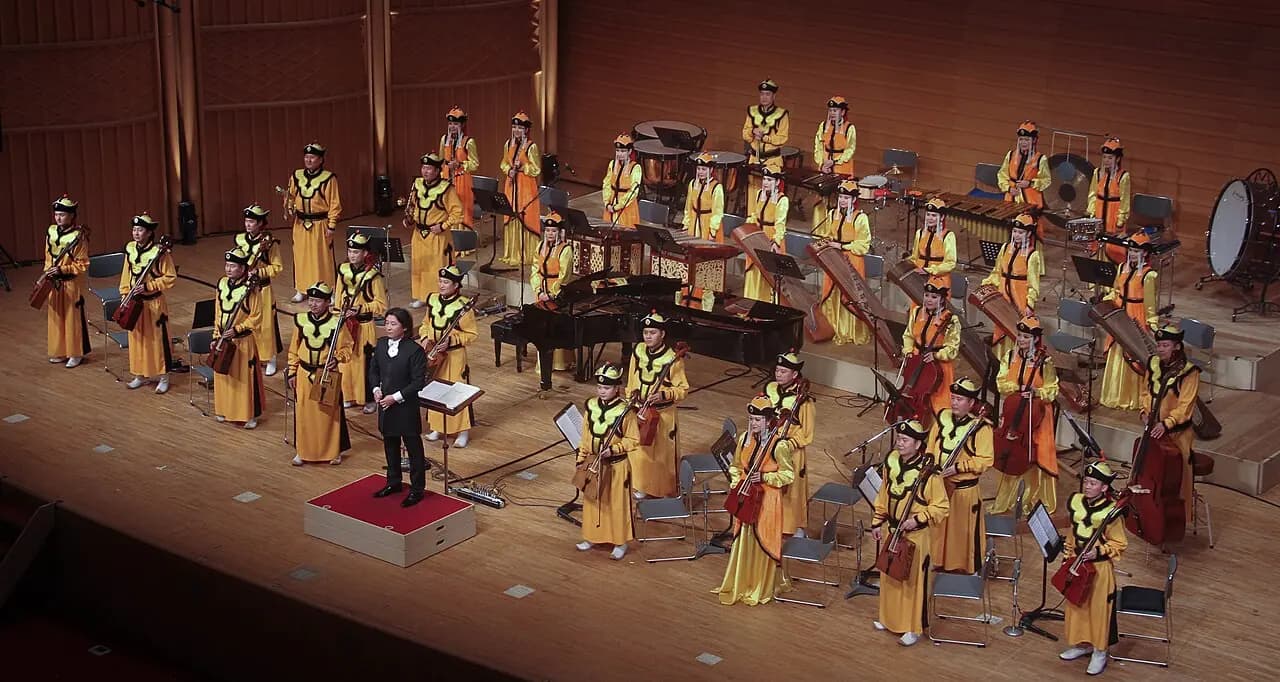
Photo: Улсын Филармони · CC BY-SA 4.0 · Wikimedia Commons
Mongolian culture is rooted in more than two thousand years of nomadic herding on the steppe. Its core is a way of life built around the ger, the five kinds of livestock and the rhythm of the seasons, expressed today through hospitality, music, festivals such as Naadam and Tsagaan Sar, and a strong sense of history. Even in modern Ulaanbaatar, these traditions shape everyday life.
Nomadic herding at the heart of Mongolian culture
For centuries most Mongolians lived as mobile herders, moving between seasonal pastures with their gers and animals. The "five snouts" (tavan khoshuu mal) — horses, cattle including yaks, sheep, goats and camels — provide food, transport, felt, wool and fuel. Many rural families still herd today, typically moving between two and four seasonal camps a year. Respect for pasture, water and land, and mutual help between neighbouring families, come directly from this way of life.
Roughly half of the population now lives in Ulaanbaatar, yet many city families keep close ties with herding relatives, head to the countryside in summer and see dairy products, meat and airag as part of who they are.
Hospitality and the ger
The ger (yurt) is both a home and a cultural symbol. Its layout follows fixed customs: the door faces south, the place of honour (khoimor) is at the back, men's things traditionally sit on the west side and the kitchen on the east. Travellers who arrive at a herder's ger are usually offered milk tea and dairy snacks without asking. On the open steppe, looking after strangers was a practical necessity, and it remains a point of pride.
Festivals: Naadam and Tsagaan Sar
Naadam, held nationally from 11 July (public holidays usually run 10–15 July), centres on the "three manly games" of wrestling, horse racing and archery, and is inscribed on UNESCO's list of Intangible Cultural Heritage. Tsagaan Sar, the Lunar New Year or "White Month", falls between late January and early March. Families visit elders in order of seniority, exchange formal greetings and serve buuz (steamed dumplings) and a tall ceremonial stack of biscuits called ul boov. Local festivals throughout the year celebrate eagles, camels, yaks and winter.
Music, arts and script
Mongolia has an unusually rich musical heritage. The morin khuur (horse-head fiddle), urtiin duu (long song) and khöömii (throat singing) are all recognised by UNESCO. Traditional arts include felt making, wood and silver work, and Buddhist painting and sculpture — the 17th-century religious leader and artist Zanabazar is the best-known master — as well as the bii biyelgee dance of western Mongolia.
Mongolian has been written in Cyrillic since the 1940s, while the vertical traditional Mongol script is taught in schools, used in calligraphy and increasingly appears in official use alongside Cyrillic.
Beliefs and values
Tibetan-style Buddhism and older shamanic beliefs both shape customs, from circling an ovoo (sacred cairn) clockwise to offering the first drops of milk to the sky. Respect for elders, the importance of family and attachment to the horse and open land are values you will notice again and again. Chinggis Khaan is honoured as the founder of the Mongol state, and his image appears on banknotes, monuments and everyday products.
Practical tips for experiencing Mongolian culture
- Arrange a homestay or visit to a herding family through a reputable tour operator, who can interpret and agree fair payment.
- Time your trip for Naadam (July) or a regional festival, and book accommodation early.
- See a traditional music and dance performance in Ulaanbaatar; check current schedules locally.
- Learn a few greetings such as "Sain baina uu?" (Hello) — the effort is appreciated.
- Read up on ger etiquette before your first visit to a family.
Frequently asked questions
What are the most important Mongolian traditions?
Nomadic herding customs, hospitality in the ger, the Naadam festival in July and the Lunar New Year, Tsagaan Sar, are the most widely observed. Music such as khöömii and the morin khuur is also central.
Is Mongolian culture still nomadic today?
Partly. Around half the population lives in Ulaanbaatar, but many rural families still herd livestock and move seasonally, and city dwellers keep strong ties to the countryside.
Which Mongolian traditions are on UNESCO's heritage lists?
Examples include Naadam, khöömii throat singing, the morin khuur, urtiin duu long song and the traditional craftsmanship of the Mongol ger.