Mongolian Family Values
Mongolian family values: close extended families, respect for elders, the youngest son as hearth keeper, the first haircut, Tsagaan Sar and modern city change.
3 min read · Updated
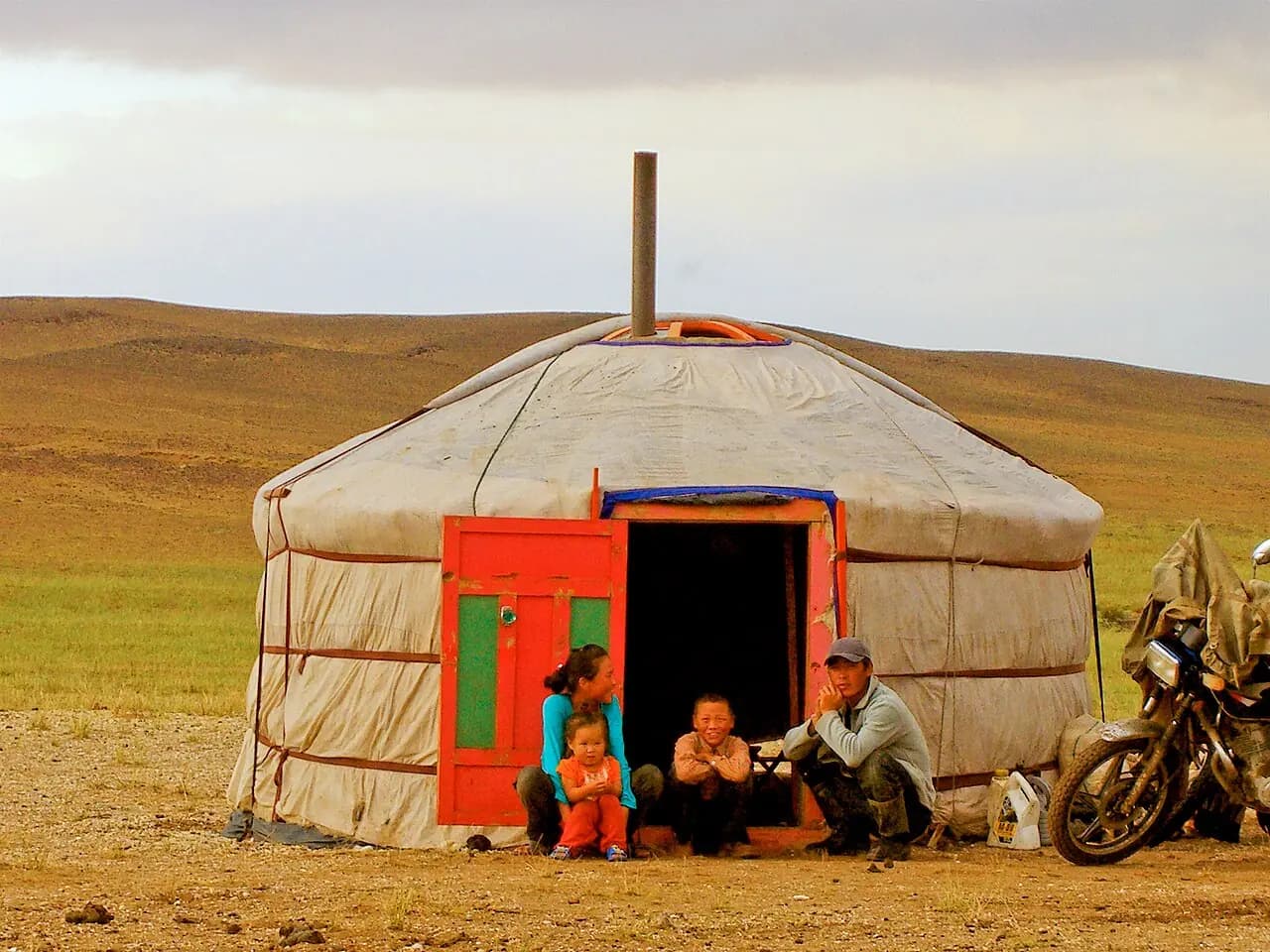
Photo: The Wandering Angel · CC BY 2.0 · Wikimedia Commons
Mongolian family values centre on a close extended family, respect for parents and elders, and mutual support between relatives. Grandparents, aunts, uncles and cousins play an active part in daily life, and family networks help with childcare, jobs and hard times. These ties remain strong even as more families move to apartments in Ulaanbaatar and have fewer children.
The extended family and kinship
Mongolians use the phrase "akh düü" — literally "elder and younger siblings" — for relatives in a broad sense, and the word stretches to close friends and people from the same home district. Cousins are often as close as siblings, and children may spend long periods living with grandparents or other relatives, especially in the countryside during summer. In the city, relatives from the provinces often stay with family while studying or looking for work, and family members expect to help each other with costs such as weddings, funerals and school fees.
Respect for parents and elders
Within the family, age sets the order of things. Children greet parents and grandparents first, serve them tea and food, and seek their advice on important decisions. Older siblings are expected to look after younger ones. Caring for ageing parents is considered a duty, and many elderly Mongolians live with an adult child rather than in a care home. During Tsagaan Sar, families gather first at the home of the most senior relatives, where younger family members greet elders with the zolgokh greeting and receive their blessings.
Traditions of the family hearth
Traditionally, older sons received a share of the herd and set up their own gers when they married, while the youngest son (otgon) stayed with his parents and inherited the family ger, keeping the hearth (gal golomt) alive. The idea of keeping the hearth still stands for continuity between generations. Important family rituals include:
- The first haircut (daakh üs ürgeekh): a child's first hair is cut at a family celebration, often when the child is between about two and five years old. Each guest snips a lock and gives a small gift or blessing.
- Weddings: today usually a mix of modern celebration and custom, such as the groom's family formally asking for the bride and the couple receiving a new ger or home.
- Tsagaan Sar and Naadam: the biggest occasions for reunions, with relatives travelling across the country to be together.
Women, children and modern change
Mongolian women have long run households and herds, and today they are well represented in education and the professional workforce; women make up a majority of university graduates. Children are cherished, and 1 June, Mother and Children's Day, is a public holiday marked with family outings. Urban life has brought smaller families, apartment living and new pressures such as long working hours and the cost of housing, while many young people work or study abroad. Even so, regular phone calls, shared holidays and remittances keep families connected across distances.
Tips for visitors
- When invited to a family home, bring a small gift such as sweets, fruit or a quality tea, and greet the eldest person first.
- If you meet a family during Tsagaan Sar, follow their lead on greetings and accept the food offered.
- Ask about family and home district; it is a natural, friendly topic of conversation in Mongolia.
- Children may be shy with strangers; ask parents before taking photographs.
Frequently asked questions
What role does the youngest son play in a Mongolian family?
Traditionally the youngest son stayed with his parents, inherited the family ger and kept the hearth alive, while older sons set up their own households.
What is the first-haircut ceremony?
It is a family celebration, usually when a child is between about two and five, at which guests each cut a lock of the child's hair and give a gift or blessing.