Mongolian Milk Vodka
Mongolian milk vodka, shimiin arkhi, explained: how herders distil it from fermented milk, its strength, the arz and khorz grades, and drinking etiquette.
2 min read · Updated
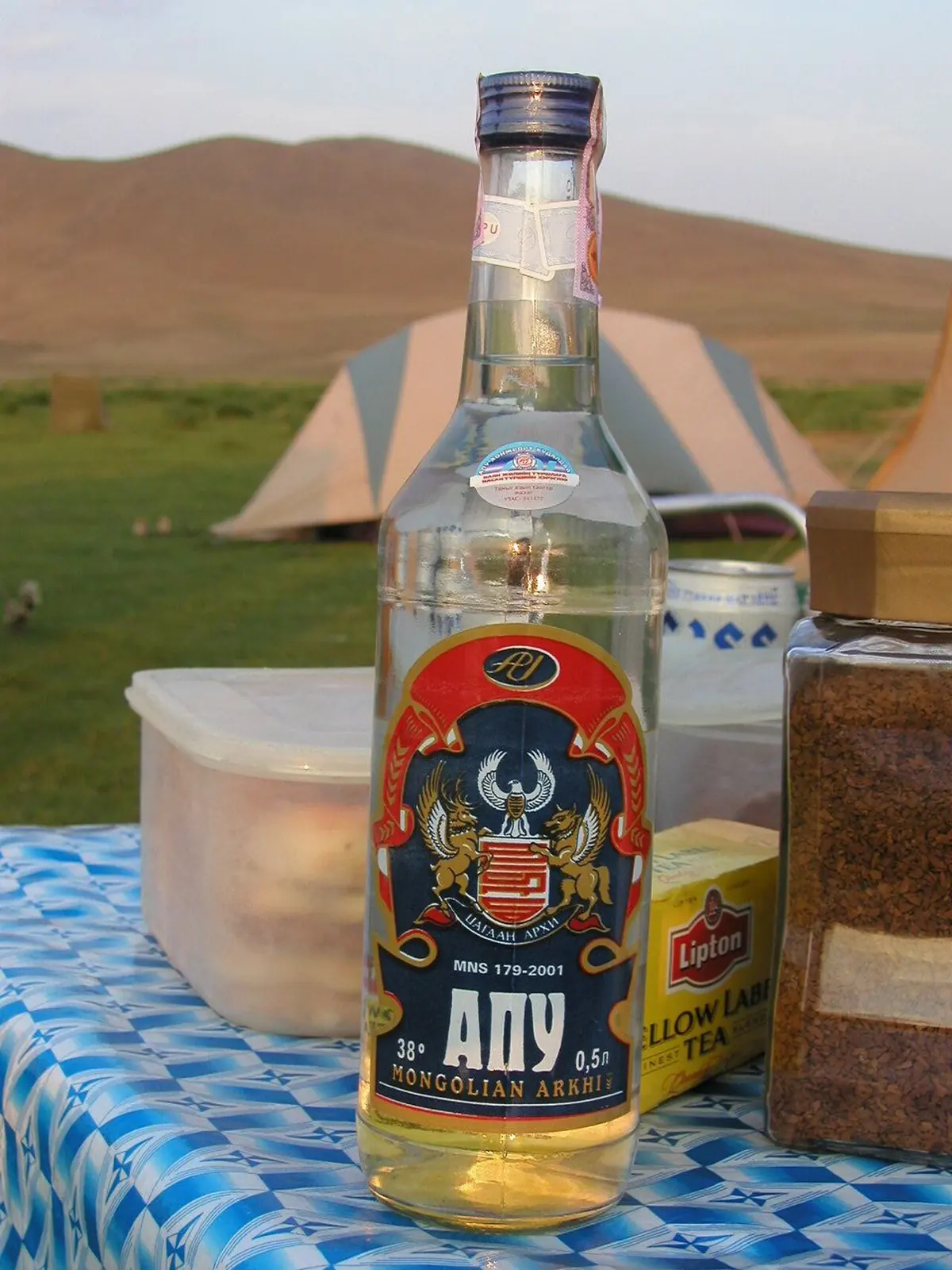
Photo: Chuck · Public domain · Wikimedia Commons
Mongolian milk vodka, or shimiin arkhi, is a clear, mild spirit distilled at home from fermented milk, most often cow's or yak's milk. Herding families make it in summer and early autumn when milk is plentiful. It is much weaker than commercial vodka, usually somewhere around 10 percent alcohol, though strength varies a lot with the milk and how many times it is distilled.
How shimiin arkhi is made
The process starts with milk that has been soured and fermented over several days into a tangy, yogurt-like base (tarag). This is poured into a large pot on the stove in the ger. On top of the pot sits a tall wooden or metal cylinder, open at both ends, and a small collecting vessel hangs or stands inside it. A basin of cold water is placed on top. As the fermented milk heats, alcohol-rich vapour rises, condenses against the cold base of the basin and drips into the collecting vessel. The water on top is changed as it warms. A batch takes a few hours, and nothing is wasted: the curd left in the pot is used to make aaruul (dried curds) and other dairy foods.
Stronger distillations: arz and khorz
The first distillation gives arkhi, the everyday milk vodka. Re-distilling it produces stronger spirits with their own names: arz after a second distillation and khorz after a third. Further rounds and their names vary between regions and families. Higher grades are kept for honoured guests and special occasions.
Taste and traditions
Shimiin arkhi is clear or slightly cloudy, with a soft, sour-milky aroma and a smooth taste. It is often served warm or at room temperature in small bowls rather than glasses. Before drinking, many Mongolians dip the ring finger of the right hand into the bowl and flick a few drops towards the sky and the earth as an offering. Milk vodka is served to guests, at Tsagaan Sar and at family celebrations, and is part of herders' hospitality in summer.
Milk vodka versus commercial vodka
Mongolia also has a large commercial vodka industry producing grain vodka, which is much stronger, typically 37.5 to 40 percent, and sold everywhere. Shimiin arkhi, by contrast, is homemade and rarely sold in shops, so you are most likely to taste it while staying with a herding family or at a ger camp in the countryside.
Practical tips for travellers
- Accept the bowl with your right hand, or with both hands. You can take a small sip, or simply touch it to your lips, and hand it back; politely declining is acceptable.
- Strength varies from batch to batch, so pace yourself.
- Never drink before riding a horse or driving.
- Homemade alcohol is not regulated or tested, so drink in moderation.
- If you want to take some home, check the duty-free alcohol allowance of your destination country and your airline's rules on liquids.
Frequently asked questions
How strong is Mongolian milk vodka?
Usually around 10 percent alcohol, but it varies widely; re-distilled grades such as arz and khorz are stronger.
What is shimiin arkhi made from?
It is distilled from fermented milk, usually cow's or yak's milk, using a traditional pot-and-cylinder still in the ger.
Can I buy milk vodka in shops?
It is rarely sold in shops; you are most likely to be offered it by herding families in the countryside.