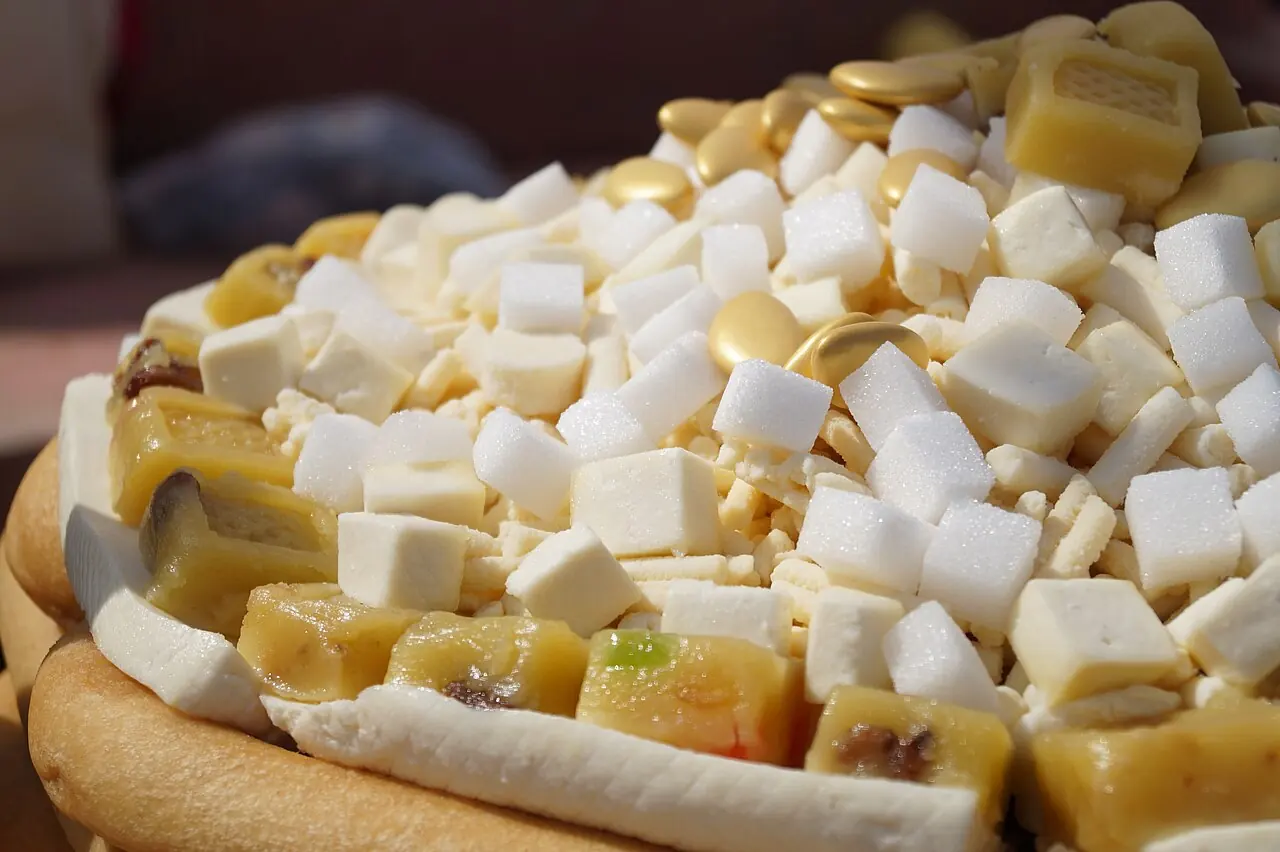
Photo: Satpal Dandiwal · CC BY-SA 4.0 · Wikimedia Commons
Dairy (tsagaan idee)
Eezgii
Milk cooked down until it caramelises into sweet dry grains.
What it is
Eezgii is a dried dairy food made by cooking milk curds slowly until all the moisture has gone and the curds turn golden or light brown. The long, gentle heat browns the milk proteins and sugars, so the finished grains taste toasty and faintly sweet, closer to caramel than to cheese. The texture is dry and crumbly to crunchy, somewhere between toasted breadcrumbs and granola. It is one of the many "white foods" that herding families make in the milking season to store for later in the year.
Eezgii is often confused with other Mongolian dairy products. Aaruul is pressed, sun-dried curd and is usually sour; byaslag is a fresh, pressed cheese. Eezgii is distinguished by being cooked down until it browns.
How it is made
Fresh milk is warmed and soured with a little yoghurt or another sour starter so that it separates into curds and whey. Instead of pressing the curds, the cook leaves them in the pot and keeps stirring over low heat for a long time, often two to three hours, while the whey evaporates. As the liquid disappears, the curds begin to colour. The browned grains are then spread out to cool and dry further, and once fully dry they keep well without refrigeration.
Sources describe the milk used varying with the season and the household. Rich milk is preferred, and sheep and yak milk, which are high in fat and protein, are often singled out as suited to making eezgii. Some families have traditionally used the especially rich first milk given after an animal gives birth.
When and where to try it
Eezgii is made in summer, when animals give the most milk, and is eaten as a snack through the year. In a ger it may appear in the bowl of dairy foods offered with tea. It is less widely sold than aaruul, so countryside visits in summer and early autumn give the best chance of tasting it, sometimes still warm from the pot.
Etiquette and tips
- Take a small pinch when it is offered and eat it from your palm; there is no need to ask for a spoon.
- If you watch a family making eezgii, ask before stirring or helping. Scorching the curds spoils the batch.
- Its sweetness comes from the milk itself. Some people sprinkle sugar on top, but the plain version is traditional.
- It is light and dry, which makes it a good snack to carry on hikes or long drives.
- Ingredients
- Milk, yoghurt
- How it is made
- Stir and boil 2 to 3 hours.
- Health & season
- A summer treat. · Summer
- Famous in
- Khangai & Central, Central
Photo: Satpal Dandiwal · CC BY-SA 4.0 · Wikimedia Commons