Where to Eat in Ulaanbaatar
Where to eat in Ulaanbaatar: Mongolian canteens, Korean, Japanese and Western food, cafés and vegetarian options, explained by area with practical tips.
3 min read · Updated
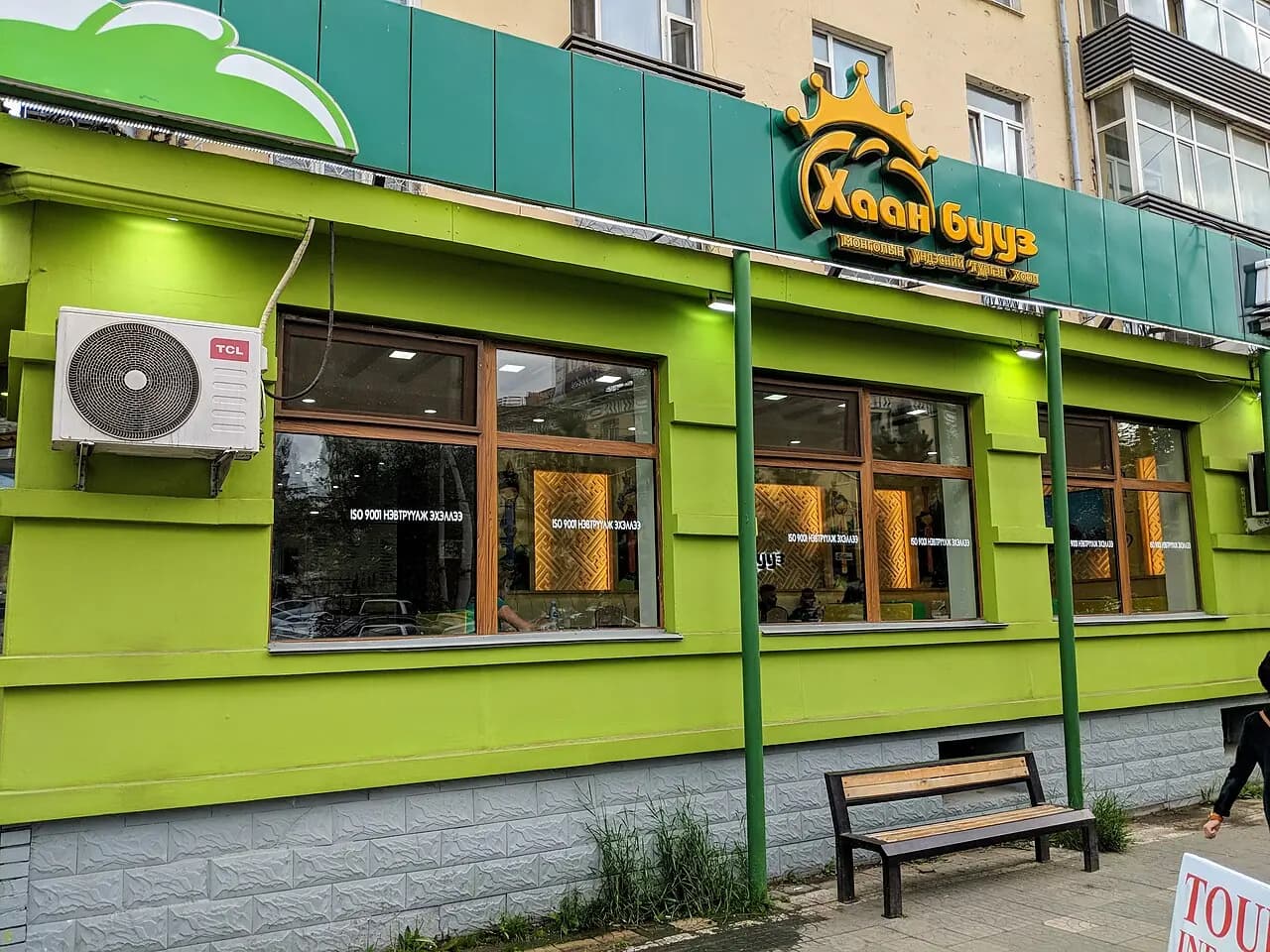
Photo: Jpatokal · CC BY-SA 4.0 · Wikimedia Commons
Ulaanbaatar has the widest choice of food in Mongolia: cheap Mongolian canteens serving buuz and khuushuur, Korean, Japanese, Chinese and Indian restaurants, Russian-influenced menus, Western cafés and a small but growing number of vegetarian places. Most restaurants are concentrated in the central districts around Sükhbaatar Square and Peace Avenue, with newer upscale options in the Zaisan area to the south. Restaurants open and close often, so treat any name below as a starting point to check, not a guarantee.
Traditional Mongolian food: canteens and local chains
The everyday way to eat Mongolian food is at a guanz (гуанз), a simple canteen with a short menu and low prices. Typical dishes are tsuivan (fried noodles with mutton and vegetables), buuz (steamed dumplings), khuushuur (fried meat pastries), bantan (a thick flour-and-meat soup), goulash with rice, and suutei tsai, salty milk tea. Portions are generous and meat-heavy, mostly mutton and beef.
Long-established local chains make an easy introduction. Khaan Buuz has served buuz and other quick Mongolian dishes for many years, and Modern Nomads is a well-known sit-down restaurant chain focused on Mongolian cuisine, including dishes cooked in a more festive style. Check current branches and hours before you go.
Korean, Japanese and other Asian cuisines
Korean food is everywhere in Ulaanbaatar, reflecting strong ties between the two countries: barbecue restaurants, kimbap and noodle shops, and Korean convenience-store chains such as CU and GS25 on many street corners. Japanese restaurants serving ramen, sushi and set meals are popular, as are Chinese hot pot places. Indian restaurants have long been a fixture of the city centre and are a reliable choice for vegetarians. You will also find Vietnamese, Thai and Turkish food.
Western food, Russian influences and café culture
Decades of Soviet influence left their mark: salads with mayonnaise, borscht and cutlets appear on many menus. European, steakhouse, pizza and burger restaurants are common in the centre and in hotels. Ulaanbaatar also has a lively café scene, with specialty coffee shops and bakeries that work well for breakfast or a laptop break. Vegetarian and vegan restaurants exist, some run by Buddhist groups, but in canteens a "meat-free" dish may still be cooked with meat stock.
Where to look by area
- Around Sükhbaatar Square and Peace Avenue: the densest mix, from canteens to hotel restaurants, all within walking distance.
- Seoul Street: long known for restaurants, pubs and late-evening eating.
- Near the State Department Store: side streets off Peace Avenue with cafés and casual restaurants.
- Zaisan and Khan-Uul: newer malls, family restaurants and upscale dining in the south of the city.
- Shopping malls: food courts are a simple, picture-menu option when you are unsure what to order.
Practical tips
- Menus are often only in Mongolian Cyrillic. Useful words: хонины мах (mutton), үхрийн мах (beef), тахиа (chicken), ногоо (vegetables), махгүй (without meat).
- Many restaurants offer a good-value lunch set (өдрийн хоол) on weekdays.
- Cards and QR payments are widely accepted in the city; keep some cash for small canteens.
- Tipping is not a strong tradition. Some restaurants add a service charge, so check the bill.
- Drink bottled or boiled water rather than tap water.
- Check recent reviews and opening hours on a map app or with the venue before setting out.
Frequently asked questions
Is it easy to find vegetarian food in Ulaanbaatar?
Yes, in the city centre there are vegetarian restaurants, Indian places and cafés with meat-free dishes, though traditional canteens are very meat-focused.
Do I need to tip in Ulaanbaatar restaurants?
Tipping is not expected, but rounding up for good service is appreciated. Some restaurants already add a service charge to the bill.
What should I order at a Mongolian canteen?
Try buuz, khuushuur or tsuivan with a bowl of suutei tsai; they are filling, cheap and available almost everywhere.